Active Listening: Unlocking the Secrets to Successful Communication
In our fast-paced world, effective communication has become more important than ever. Whether it’s in personal relationships, professional settings, or even within ourselves, being able to truly listen and understand others is a skill that can make all the difference. One technique that has gained popularity in recent years is active listening. But what exactly is active listening and why should we care?
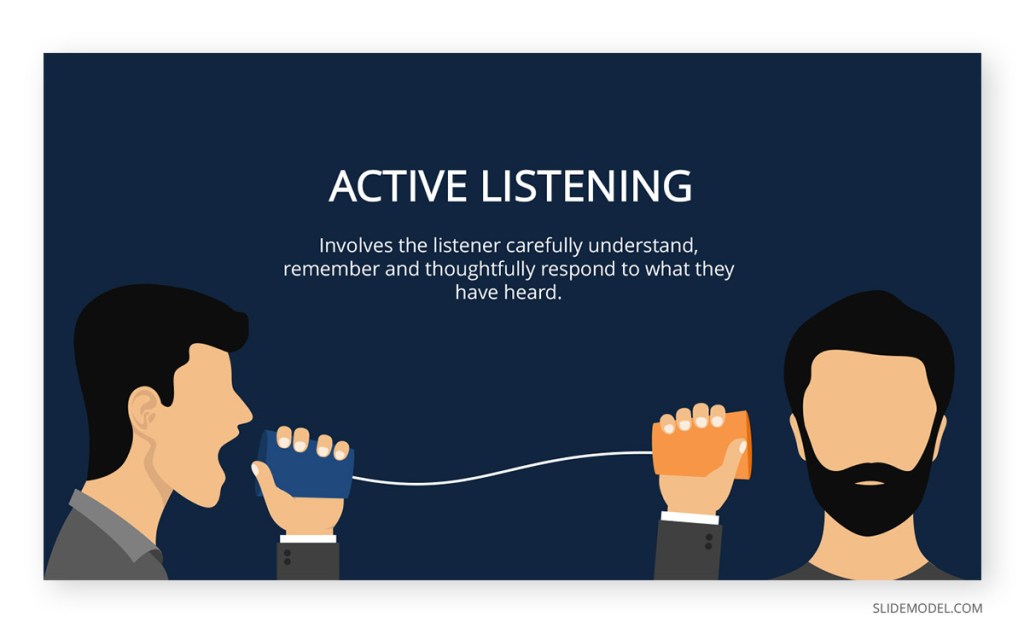
At its core, active listening involves fully engaging with the speaker by giving them our undivided attention and showing genuine interest in what they have to say. It goes beyond simply hearing words; it requires a conscious effort to comprehend both the explicit and implicit messages being conveyed.
One might argue that listening has always been an essential aspect of communication. However, in today’s digital age where distractions abound, true active listening seems like a lost art form. We’re often guilty of half-listening while multitasking or waiting for our turn to speak rather than genuinely absorbing what others are saying.
So how can we become better active listeners? Let’s explore some techniques:
1. Remove Distractions: In order to give someone your full attention, it’s crucial to minimize distractions around you. Put away your phone or any other electronic devices that may steal your focus. Find a quiet space where you can have uninterrupted conversations.
2. Maintain Eye Contact: Eye contact plays a pivotal role in demonstrating attentiveness and interest during conversations. Avoid constantly looking around or checking your watch as these actions can be perceived as disinterest or impatience.
3. Show Non-Verbal Cues: Nodding occasionally or using appropriate facial expressions can show the speaker that you are actively engaged in the conversation and encourage them to continue sharing their thoughts.
4. Ask Open-Ended Questions: Instead of relying on closed-ended questions that elicit simple yes/no answers, try asking open-ended questions that promote deeper reflection and discussion from the speaker. This not only helps to gather more information but also demonstrates your genuine interest in understanding their perspective.
5. Paraphrase and Summarize: After the speaker has finished conveying their message, paraphrasing or summarizing what they said is a great way to ensure that you understood them correctly. It also shows that you were actively listening and processing their words, which can foster a sense of trust and rapport between both parties.
Active listening doesn’t just benefit the person speaking; it can also have remarkable effects on the listener. By fully immersing yourself in someone else’s thoughts and experiences, you open yourself up to new ideas and perspectives. You become more empathetic, compassionate, and better equipped to handle conflicts or disagreements constructively.
In educational settings, active listening plays a vital role as well. Traditional teaching methods often emphasize one-way communication where teachers impart knowledge while students passively absorb it. However, by encouraging active listening in classrooms, students are empowered to take an active role in their learning process.
Imagine a classroom where students are encouraged to ask questions freely without fear of judgment or interruption from their peers. Where teachers create an environment that fosters open dialogue and values every student’s voice as an essential contribution to the collective learning experience. Active listening promotes critical thinking skills by allowing students to challenge ideas respectfully while promoting collaboration amongst peers.
Furthermore, incorporating active listening into school curricula can help address larger societal challenges such as prejudice and discrimination. By actively engaging with diverse perspectives through thoughtful discourse, students develop greater empathy towards others who may come from different backgrounds or hold contrasting viewpoints.
In essence, active listening lays the groundwork for fostering healthy relationships built on trust and understanding within communities at large.
However, let’s not forget that like any other skill worth acquiring; active listening requires practice. It might feel awkward initially since we’re conditioned to prioritize our own thoughts over those of others constantly. But by consciously making an effort to become better active listeners, we can transform the way we communicate and connect with others.
So, the next time you find yourself in a conversation, challenge yourself to be fully present. Set aside your preconceived notions and give the speaker your undivided attention. Engage with their words, thoughts, and emotions. You might be surprised by what you discover when you truly listen.
Active listening is not just a tool for effective communication; it’s an art form that can bring about positive change within ourselves and society as a whole. So let’s embrace this skill, practice it regularly, and watch as our relationships flourish and our understanding of the world deepens.
 Alternative Amie
Leave a comment