Project-Based Learning: Fostering Creativity and Critical Thinking
In traditional education systems, students often find themselves confined to the walls of a classroom, memorizing facts and regurgitating information for exams. However, as the world continues to evolve rapidly, it is becoming increasingly clear that these methods are inadequate in preparing students for the challenges they will face in their personal and professional lives.
Enter project-based learning (PBL), an innovative approach to education that has gained popularity in recent years. PBL is a student-centered instructional method where learners actively engage with real-world problems and construct knowledge through hands-on projects.
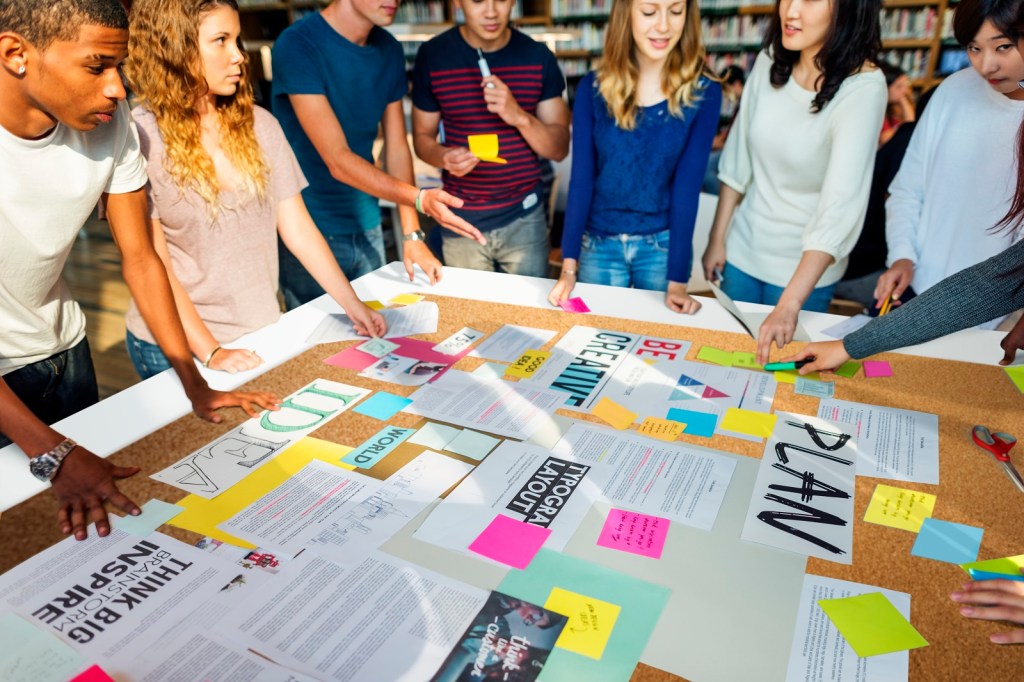
Unlike traditional teaching methods that prioritize lectures and textbooks, PBL provides a more immersive learning experience. Students are given opportunities to explore topics of interest, identify problems or questions related to those topics, conduct research, collaborate with peers, develop solutions or answers, and present their findings.
One key aspect of project-based learning is its emphasis on authenticity. Projects are designed to reflect real-life situations or scenarios that students may encounter outside the classroom. This approach helps bridge the gap between academic content and practical application by allowing students to see how what they learn connects directly with their everyday lives.
By working on projects aligned with authentic problems or challenges, students develop essential skills such as critical thinking, problem-solving abilities, creativity, collaboration skills, communication skills – all crucial competencies needed for success in today’s fast-paced world.
Moreover, project-based learning encourages self-directed learning. As students take ownership of their projects from start to finish – choosing topics of interest within certain parameters – they become active participants rather than passive recipients of information. This autonomy fosters intrinsic motivation and allows them to pursue individual passions while meeting curriculum objectives.
Another advantage of project-based learning lies in its ability to cater to diverse learning styles and preferences. Traditional classrooms often rely heavily on auditory teaching methods that may not resonate equally well with visual or kinesthetic learners. In contrast, PBL provides multiple entry points for students to engage with the content. Visual learners can create diagrams or infographics, while kinesthetic learners can build physical prototypes or conduct experiments.
Furthermore, project-based learning encourages interdisciplinary connections as students naturally integrate knowledge from various subjects to solve complex problems. This integration not only enhances their understanding of each subject but also mirrors the interconnectedness of real-world issues and challenges.
A common concern about project-based learning is that it might compromise academic rigor. However, well-designed projects that align with standards and objectives can ensure both academic depth and student engagement. Teachers play a crucial role in guiding students’ inquiry process, scaffolding their learning experiences through questioning techniques and providing timely feedback.
In addition to fostering essential skills and deeper understanding of content areas, project-based learning promotes social-emotional development. Collaborating on projects helps students develop empathy, respect for others’ perspectives, teamwork abilities, and negotiation skills – all qualities necessary for effective collaboration in the workplace.
Project-based learning has gained recognition worldwide due to its success in nurturing 21st-century competencies among students. Numerous schools have implemented this approach across various grade levels and disciplines with impressive outcomes such as increased student achievement, higher retention rates of learned material, improved problem-solving abilities, enhanced creativity, and heightened motivation towards learning.
For example, at Greenway High School in Phoenix, Arizona (USA), teachers have embraced project-based learning as an integral part of their curriculum. Students tackle real-world problems such as water scarcity by designing innovative solutions using sustainable technologies. This hands-on experience enables them to apply scientific concepts while developing critical thinking skills necessary for addressing global challenges.
Similarly inspired by project-based learning principles is Bialik College in Melbourne (Australia). The school’s Design Thinking program incorporates elements of PBL into every discipline taught across different year levels. By integrating creativity into science experiments or historical research projects through design thinking methodologies such as prototyping and iteration cycles – students become active participants in their learning journey.
It is worth noting that project-based learning is not a one-size-fits-all solution and requires careful planning, implementation, and assessment strategies. Teachers need sufficient training and ongoing support to effectively design projects that align with curriculum objectives while meeting the diverse needs of their students. Additionally, assessment methods must focus on evaluating deeper understanding rather than just final products or presentations.
In conclusion, project-based learning offers an engaging alternative to traditional education by providing students with opportunities for authentic learning experiences. It encourages critical thinking, problem-solving skills, creativity, collaboration, and communication – all essential competencies for success in today’s world. By empowering students to take ownership of their education through self-directed inquiry and interdisciplinary connections, PBL prepares them to face real-world challenges with confidence and competence.
 Alternative Amie
Leave a comment