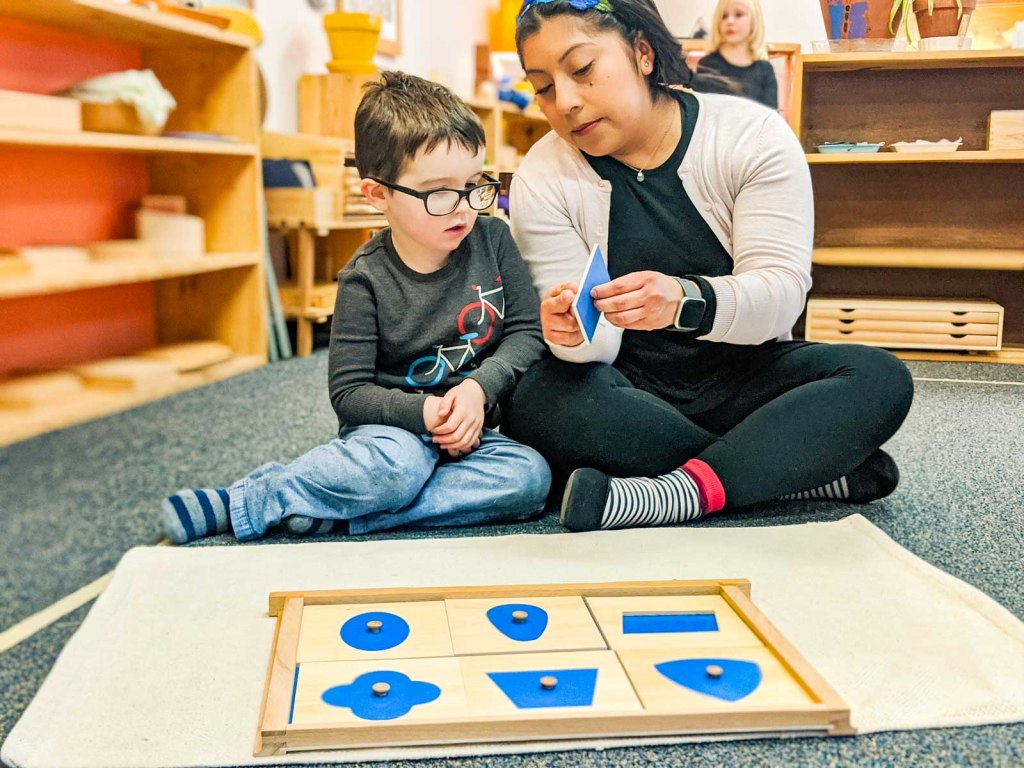
The Montessori method is an educational approach that has gained popularity over the years for its focus on child-centered learning, independence, and hands-on experiences. While initially developed by Maria Montessori for typically developing children, this educational philosophy has been found to be highly effective for children with special needs as well. In this article, we will explore the Montessori method specifically tailored to meet the needs of children with special needs.
1. Montessori Method for Children with Special Needs:
The Montessori method emphasizes individualized instruction and allows students to learn at their own pace. This approach is particularly beneficial for children with special needs who may have diverse learning styles and abilities. In a Montessori classroom, specially trained teachers create an environment that promotes independence, sensory exploration, and self-directed learning.
Adaptations are made within the classroom environment to accommodate different physical or cognitive challenges. For example, materials such as larger knobs or tactile objects can be added to support fine motor skills development in children with motor impairments. Visual aids and multisensory approaches are integrated into lessons to cater to students’ diverse learning styles.
2. Incorporating Technology in the Montessori Classroom:
With advancements in technology, there has been a growing debate about its role in education, including within the context of Montessori classrooms. While traditionalists argue against excessive screen time and believe that hands-on materials should remain central in a Montessori setting, others recognize that technology can be used thoughtfully as a tool to enhance learning experiences.
Incorporating technology in a Montessori classroom for children with special needs requires careful consideration of individual requirements and goals. Assistive technologies like speech-to-text software or specialized apps can help students overcome communication barriers or improve organizational skills.
Technology can also provide access to additional resources beyond what may be available physically within the classroom walls – virtual field trips, online research tools, or interactive videos can all help children with special needs explore and learn about various subjects.
3. Montessori-Inspired Outdoor Education:
The Montessori method aligns well with the philosophy of outdoor education, which emphasizes learning in natural environments. For children with special needs, nature-based learning can provide a multitude of benefits, including improved sensory regulation, increased physical activity, enhanced social skills development, and reduced stress levels.
Outdoor classrooms or nature-based activities can be incorporated into the Montessori curriculum to provide hands-on experiences that cater to individual interests and abilities. Whether it’s gardening, exploring nearby trails, or engaging in sensory activities like mud play or water experiments, these experiences offer unique opportunities for children with special needs to connect with their environment while also fostering a sense of wonder and curiosity.
4. The Role of Art and Creativity in Montessori Education:
Art and creativity play an essential role in the Montessori method as they encourage self-expression, imagination, problem-solving skills, and fine motor development. For children with special needs who may face challenges in communication or self-regulation, art provides a non-verbal outlet for expression.
In a Montessori classroom for children with special needs, art is integrated into different subject areas such as language arts (creating stories through illustrations), science (illustrating observations), math (using visuals to understand concepts), etc.
Adaptive materials like textured brushes or adapted scissors are provided to cater to diverse abilities. Additionally, collaborative projects allow students to work together on creative endeavors fostering teamwork and social interaction.
5. Montessori Approach to Teaching Mathematics:
Mathematics instruction within a Montessori classroom is hands-on and concrete-oriented – allowing students to internalize mathematical concepts through manipulatives before moving towards abstract understanding.
For children with special needs who may struggle with mathematical concepts due to cognitive challenges or learning disabilities such as dyscalculia (difficulty understanding numbers), this approach offers multiple entry points for comprehension.
Montessori math materials, such as the Golden Beads or Number Rods, provide a visual and tactile representation of mathematical concepts. Students can physically manipulate these materials to understand numbers, quantities, operations, and geometric shapes.
The Montessori method allows for individualized pacing in mathematics instruction. This is particularly beneficial for children with special needs who may require additional time or repetition to grasp mathematical concepts fully.
6. Implementing the Montessori Method in a Homeschooling Setting:
The flexibility of the Montessori method makes it highly adaptable for homeschooling environments. With personalized attention from parents or caregivers, children with special needs can benefit greatly from this child-centered approach within their home.
In a homeschool setting, parents have the freedom to tailor activities and materials specifically to their child’s interests and abilities. They can create an environment that supports independence and self-directed learning by providing accessible resources and adapting materials as needed.
Collaboration with other homeschooling families or participation in online support groups allows for social interaction while maintaining the benefits of one-on-one attention provided by homeschooling.
7. Montessori Philosophy and Its Impact on Child Development:
The Montessori philosophy emphasizes holistic development – nurturing not only intellectual growth but also fostering emotional well-being, physical coordination, social skills development, and moral values.
For children with special needs who may face challenges in any of these areas due to cognitive disabilities or developmental delays, the Montessori approach offers a comprehensive framework that addresses each aspect of their growth individually.
By creating an inclusive classroom environment that celebrates diversity and respects individual differences, children with special needs develop self-confidence while feeling valued as contributing members of their community.
8. Montessori Materials and Their Significance in Learning:
One distinctive feature of a Montessori classroom is its carefully curated set of learning materials designed to facilitate hands-on exploration and discovery-based learning.
Montessori materials are created based on Maria Montessori’s understanding of child development and the specific needs of children at different stages. These materials provide a concrete representation of abstract concepts, allowing children to engage in self-correcting activities that foster independent learning.
For children with special needs, Montessori materials can be adapted or modified to meet individual requirements. This ensures that each child has access to resources that cater to their unique learning styles and abilities.
9. The Importance of Practical Life Activities in the Montessori Curriculum:
Practical life activities form an integral part of the Montessori curriculum for all students, including those with special needs. These activities focus on developing everyday life skills such as dressing, pouring, cleaning, cooking, etc., which are essential for independence and functional living.
Children with special needs often require additional support in developing these practical skills due to motor impairments or cognitive challenges. In a Montessori classroom tailored for children with special needs, adaptations are made in terms of material size or accessibility aids (e.g., adaptive utensils) so that every student can participate actively.
Engaging in practical life activities not only facilitates skill development but also enhances concentration, fine motor coordination, problem-solving abilities, and self-esteem for all learners.
10. Supporting Social-Emotional Development in a Montessori Environment:
The social-emotional well-being of students is highly valued within the Montessori philosophy. Children with special needs may face challenges related to social interactions and emotional regulation; therefore fostering these skills is crucial for their overall development.
In a Montessori environment specifically designed for children with special needs, there is an emphasis on creating a nurturing community where mutual respect and empathy are key values.
Mixed-age classrooms enable older students to act as mentors or role models for younger peers while also providing opportunities for cooperation and collaboration among diverse age groups.
Teachers facilitate discussions about emotions during circle time or group meetings using visuals or storytelling techniques. They guide students towards conflict resolution strategies, empathy-building activities, and self-regulation techniques.
11. Montessori Approach to Teaching Science and Nature Studies:
Science education within a Montessori classroom focuses on hands-on exploration of the natural world. For children with special needs who may have sensory processing difficulties or difficulty generalizing knowledge from one context to another, this approach offers concrete experiences that cater to their individual learning styles.
Nature studies allow students to engage in direct observations, experiments, and outdoor explorations. They learn about different plants, animals, ecosystems, weather patterns, etc., through firsthand experiences.
Adaptive materials or additional supports like visual aids or simplified language can be provided to ensure comprehension for children with special needs. Teachers also modify activities or experiments based on individual abilities while maintaining the integrity of scientific inquiry.
12. Integrating Music and Movement into the Montessori Curriculum:
Music and movement play a vital role in a child’s development – enhancing coordination skills, promoting self-expression, fostering creativity, improving concentration levels, and encouraging social interaction.
Incorporating music and movement within a Montessori curriculum for children with special needs provides opportunities for multisensory learning experiences that cater to diverse abilities.
Rhythm instruments or adapted musical tools can be introduced allowing every student an opportunity to participate actively. Movement activities like dancing or yoga sessions can be modified based on individual mobility requirements while still providing inclusive opportunities for all learners.
13. The Role of Play in a Montessori Classroom:
Play is considered essential in early childhood education as it facilitates cognitive development, language acquisition, problem-solving skills development as well as social-emotional growth.
In a Montessori classroom tailored for children with special needs where play-based learning is highly valued; teachers create an environment that encourages imaginative play while incorporating educational objectives specific to each child’s goals.
Materials are carefully selected to support open-ended play opportunities that foster creativity and problem-solving skills development. Adapted toys or sensory materials may be provided to accommodate different physical or cognitive needs.
Play also serves as a means of self-expression and communication for children with limited verbal abilities, allowing them to engage in meaningful interactions with peers and teachers.
14. Promoting Independence and Self-Regulation Through the Montessori Method:
One of the core principles of the Montessori method is promoting independence and self-regulation skills in students. For children with special needs who may struggle with executive functioning, emotional regulation, or adaptive skills development, this aspect becomes even more crucial.
In a Montessori classroom tailored for children with special needs, teachers provide opportunities for students to make choices independently, take responsibility for their actions, and develop problem-solving skills through hands-on activities.
Adaptive strategies are implemented based on individual requirements – visual schedules or social stories can support routines and transitions; sensory breaks or calming corners can help regulate emotions; choice boards can facilitate decision-making processes.
15. Cultural Diversity and Global Awareness in a Montessori School Setting:
The Montessori philosophy places great importance on nurturing global citizens who appreciate diversity and understand interconnectedness among cultures worldwide.
For children with special needs who may have difficulty relating to others due to cognitive challenges or social difficulties associated with their disabilities, fostering cultural awareness helps create an inclusive environment where everyone feels valued.
Teachers incorporate diverse literature featuring characters from various backgrounds into reading sessions. Multicultural celebrations allow students to explore traditions from around the world while learning about similarities and differences among cultures.
16. The Benefits of Mixed-Age Classrooms in the Montessori System:
Mixed-age classrooms are a hallmark of the Montessori system that promotes peer-to-peer learning opportunities by placing students at different developmental stages together within one classroom community.
For children with special needs who may face challenges related to social interactions or communication deficits; mixed-age classrooms offer unique benefits. Older peers serve as role models or mentors while younger classmates receive additional support from experienced students.
The diverse range of abilities within a mixed-age classroom fosters empathy, understanding, and acceptance among students. It also allows for individualized instruction and pacing – children can progress at their own rate without feeling pressured to keep up with peers.
17. Supporting Language Acquisition Through the Montessori Approach:
Language development is a fundamental aspect of the Montessori curriculum, which recognizes that communication skills are essential for academic success as well as social interactions.
For children with special needs who may struggle with language acquisition due to cognitive or speech difficulties; Montessori language materials and activities provide multiple entry points for learning.
Teachers incorporate multisensory approaches utilizing visuals, manipulatives, or sign language to support comprehension. Individualized goals are set based on each child’s level of ability while ensuring meaningful engagement in language-rich experiences such as storytelling sessions or group discussions.
18. Parent Involvement and Collaboration in a Montessori School Community:
The involvement of parents and caregivers plays a crucial role in supporting the educational journey of children with special needs within the Montessori system.
In an inclusive school community, collaboration between teachers and parents is highly valued. Open lines of communication allow for sharing information about each child’s strengths, challenges, and progress both at home and in school settings.
Parents are encouraged to participate actively by volunteering in classrooms, attending parent-teacher conferences or workshops focused on strategies that can be implemented at home to support their child’s development effectively.
19. Incorporating Mindfulness Practices into the Montessori Curriculum:
Mindfulness practices have gained recognition for their positive impact on mental health and overall well-being across all age groups. For children with special needs who may experience heightened stress levels or difficulty regulating emotions; mindfulness techniques offer valuable tools for self-awareness and emotional regulation.
Incorporating mindfulness practices such as breathing exercises or guided visualizations into daily routines helps create calm classroom environments where students can focus on tasks more effectively.
Teachers model mindfulness techniques and provide opportunities for students to engage in group or individual mindfulness exercises. Visual cues like calming jars or meditation corners can also be introduced as additional supports.
20. Outdoor Classrooms and Nature-Based Learning Within the Montessori Framework:
Outdoor classrooms and nature-based learning are an integral part of the Montessori approach that provides unique opportunities for hands-on exploration, sensory experiences, and connection with the natural world.
For children with special needs who may benefit from sensory integration activities or have mobility challenges; outdoor environments offer a safe space for physical activity, social interactions, and multisensory engagement.
In a Montessori classroom tailored specifically for children with special needs, teachers create nature-based learning experiences by incorporating activities such as gardening, bird watching, nature walks, or investigating natural materials like leaves or rocks.
Adaptive strategies are implemented to ensure accessibility – wheelchair-accessible paths or adjusted heights of garden beds allow all students to participate fully in outdoor activities.
In conclusion, the Montessori method provides a flexible framework that can be adapted to meet the diverse needs of children with special needs. By creating inclusive environments that value independence, self-regulation skills development, hands-on learning experiences, cultural diversity appreciation, and collaboration between teachers and parents – children with special needs can thrive academically while also fostering their overall growth and well-being.
 Alternative Amie
Leave a comment