Mnemonic techniques for memorization:
One of the most effective strategies for improving memory and retention is the use of mnemonic techniques. Mnemonics are memory aids that help individuals remember information by associating it with something more familiar or easier to recall. These techniques can be particularly helpful when trying to memorize long lists, sequences, or complex concepts.
There are several types of mnemonic techniques that can be employed. One common method is creating acronyms, where each letter represents a word or concept in a list. For example, to remember the order of operations in mathematics (parentheses, exponents, multiplication and division from left to right, addition and subtraction from left to right), one could use the acronym PEMDAS.
Another useful technique is visualization. This involves creating vivid mental images that connect new information with existing knowledge or physical objects. For instance, if you need to remember a shopping list consisting of milk, eggs, bread, and apples, you could imagine an image of a cow holding a carton of milk while sitting on top of a giant egg-shaped loaf of bread surrounded by apple trees.
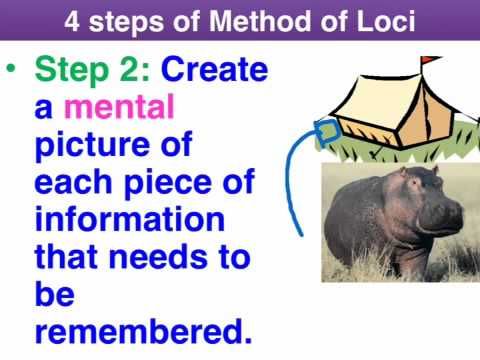
The method of loci (also known as the memory palace technique) involves mentally placing items you want to remember in specific locations within an imaginary building or along a familiar path. As you mentally walk through these locations later on, you can easily recall the information associated with each place.
In addition to these techniques, chunking is another effective strategy for memorization. Chunking involves breaking down large amounts of information into smaller chunks or groups that are easier to manage and remember. This allows our working memory capacity to process more efficiently by organizing information into meaningful patterns or categories.
Speed reading strategies:
In today’s fast-paced world filled with information overload, speed reading has become an essential skill for those seeking efficient learning and productivity gains. Speed reading refers to various methods used to increase reading speed without sacrificing comprehension.
One popular strategy is called “skimming,” where readers quickly glance over the text to get a general idea of the content. Skimming involves looking at headings, subheadings, and the first sentence or two of each paragraph to grasp the main points.
Another technique is called “meta-guiding” or using a pointer (e.g., finger or pen) to guide your eyes along the lines as you read. This helps prevent regression (re-reading sentences) and minimizes distractions by maintaining a steady pace.
Furthermore, eliminating subvocalization (pronouncing words in your mind while reading) can significantly increase reading speed. By training yourself to suppress this habit, you can read faster without sacrificing comprehension.
Mind mapping for enhanced learning:
Mind mapping is a visual technique that aids in organizing information and enhancing understanding. It involves creating diagrams that connect various concepts or ideas in a hierarchical structure around a central theme or topic.
To create a mind map, start by writing down the main idea in the center of your page or whiteboard. From there, branch out with related topics or subtopics connected to the central idea by lines. Each subsequent level may have further branches connecting more specific details.
The benefit of mind mapping lies in its ability to facilitate both creativity and logical thinking simultaneously. By visually representing relationships between different concepts, it becomes easier to see connections and patterns that might not be apparent when studying linearly.
Neuroplasticity and accelerated learning:
Neuroplasticity refers to our brain’s ability to reorganize itself by forming new neural connections throughout life. This phenomenon has profound implications for accelerated learning as it suggests that our brains are adaptable and capable of change even into adulthood.
By understanding how neuroplasticity works, we can optimize our learning strategies accordingly. One key factor is repetition – repeatedly exposing ourselves to new information strengthens these synaptic connections, making them more efficient over time.
Additionally, engaging multiple senses during learning enhances neuroplasticity. For example, combining visual stimuli with auditory or kinesthetic experiences can reinforce connections between different brain regions, leading to better memory retention and comprehension.
Dual coding theory in education:
Dual coding theory posits that combining verbal and visual information enhances learning and memory. When we encode information using both visual and verbal channels simultaneously, it creates multiple pathways for retrieval later on.
For instance, when studying a complex diagram or chart, annotating the visuals with written descriptions helps solidify understanding by activating both the visual-spatial processing areas of the brain as well as language-based regions.
Educators can apply this theory in various ways to support learners. They could provide visually engaging materials such as infographics or diagrams alongside written explanations, encourage students to create their own visual representations of content during note-taking or presentations, or incorporate multimedia resources like videos and images into lessons.
The remaining topics will be covered in part 2 of this article. Stay tuned for more strategies to enhance learning!
 Alternative Amie
Leave a comment