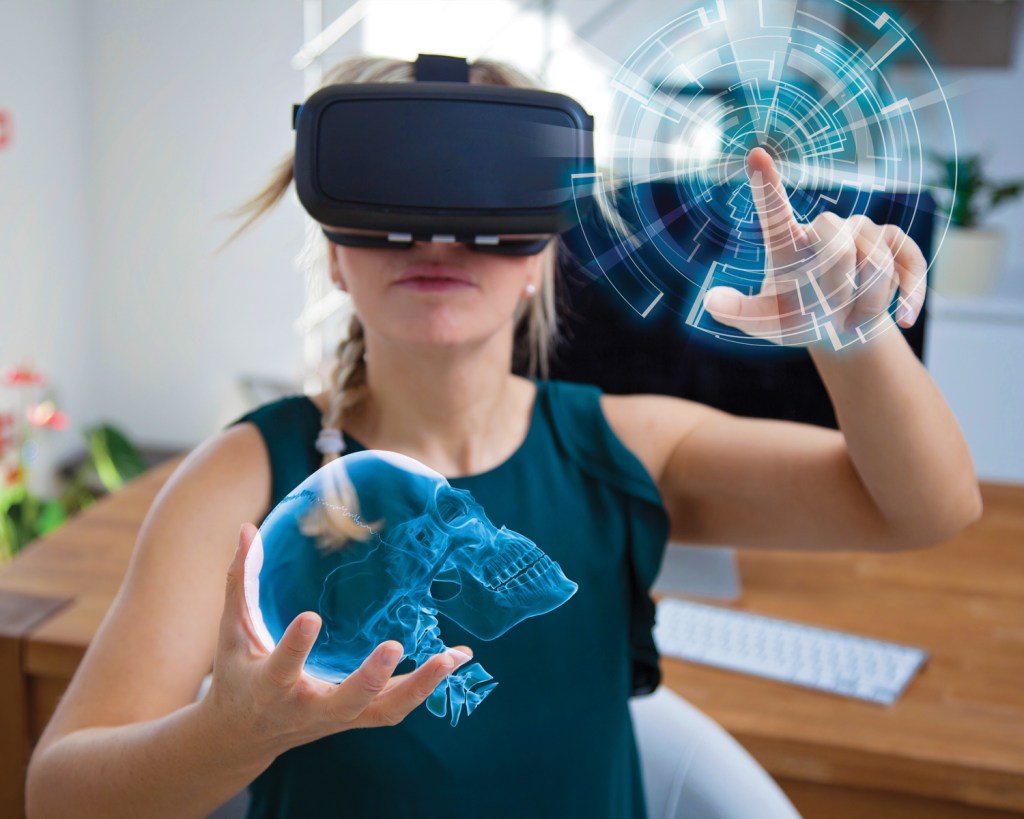
Virtual Reality in Education: An Immersive Learning Experience
Education has always been about expanding the boundaries of knowledge and providing students with engaging learning experiences. In recent years, virtual reality (VR) technology has emerged as a game-changer in the field of education. By creating immersive and interactive environments, VR opens up new possibilities for teaching and learning that were previously unimaginable. From science to history, art to mathematics, VR is revolutionizing education by making subjects come alive and sparking students’ curiosity like never before.
One of the key advantages of using virtual reality in education is its ability to transport students to places they may not otherwise have access to. For example, imagine studying ancient civilizations through textbooks or lectures alone. With VR, students can explore ancient ruins like Machu Picchu or walk through the majestic halls of the Great Pyramids of Giza firsthand. This level of immersion allows learners to gain a deeper understanding and appreciation for historical contexts that traditional methods simply cannot provide.
Additionally, virtual reality offers an invaluable tool for hands-on learning experiences. Science experiments that were once limited by safety concerns or lack of equipment can now be simulated in a virtual laboratory environment. Students can conduct experiments virtually, manipulating variables and observing outcomes in real-time without any risk involved. Not only does this ensure a safer learning experience but it also enhances critical thinking skills as students analyze data and draw conclusions from their observations.
Moreover, VR can greatly enhance the study of complex concepts such as anatomy or molecular structures. Instead of relying solely on static images or diagrams in textbooks, students can now visualize three-dimensional models in virtual reality environments. They can dissect organs layer by layer or manipulate molecular structures with their own hands – an experience that brings abstract concepts to life and aids in better comprehension.
Another area where VR excels is language learning. Immersion is often considered one of the most effective ways to learn a foreign language; however, not everyone has access to native speakers or the ability to travel abroad. With virtual reality, learners can be transported to virtual environments where they can practice conversational skills with virtual native speakers. Whether it’s ordering food in a café or navigating through a bustling marketplace, VR provides an authentic language learning experience that bridges cultural and geographical barriers.
Furthermore, virtual reality encourages collaboration and teamwork among students. Many VR applications allow multiple users to interact and engage in collaborative tasks within shared virtual spaces. This fosters communication, problem-solving, and cooperation skills while also promoting inclusivity by allowing students from different locations to work together on projects.
In addition to its impact on student learning experiences, VR also has the potential to transform teacher training and professional development. Educators can use VR simulations to practice classroom management techniques or experiment with innovative teaching methods without any real-world consequences. By providing realistic scenarios and instant feedback, VR enables teachers to refine their instructional strategies effectively.
Of course, like any emerging technology, there are challenges associated with implementing virtual reality in education. Cost is one significant barrier as acquiring high-quality VR equipment can be expensive for schools on limited budgets. However, as technology advances and becomes more accessible over time, these costs are likely to decrease.
Another challenge lies in creating content that aligns with curriculum standards and educational objectives. It is crucial for developers of educational VR applications to collaborate closely with educators during the design process so that the content meets specific learning goals while maintaining engagement.
Privacy concerns also need consideration when using immersive technologies like VR in classrooms. Schools must ensure student data protection protocols are in place before implementing such technologies extensively.
Despite these challenges, the potential benefits of incorporating virtual reality into education far outweigh the obstacles involved. The engaging nature of VR captivates students’ attention spans and enhances their motivation for learning across various subjects.
As we move towards a future driven by technological advancements, it is essential for educators to embrace innovations like virtual reality as powerful tools for transforming traditional teaching methods. By harnessing the potential of VR, we can create a more engaging and inclusive learning environment that prepares students for the challenges of the 21st century.
 Alternative Amie
Leave a comment