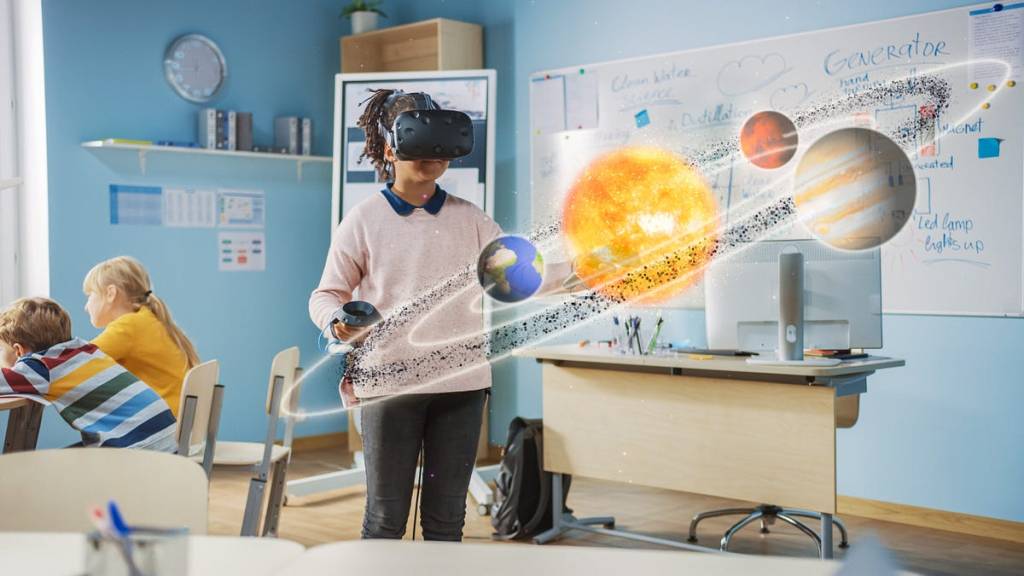
Virtual Reality (VR) technology has made significant advancements in recent years, and its potential to revolutionize education is becoming increasingly evident. By providing immersive and interactive experiences, VR can enhance the learning process by engaging students on a whole new level. In this article, we will explore eight ways virtual reality can be used in education to create exciting and meaningful learning experiences.
1. Field Trips without Leaving the Classroom: One of the most exciting aspects of VR in education is the ability to take students on virtual field trips to various locations around the world. Students can explore ancient ruins, visit museums, or even travel into space – all from the comfort of their classroom. This allows students to experience places they may not have access to otherwise, making learning more accessible and inclusive.
2. Science Simulations: Virtual reality offers an opportunity for students to engage in hands-on science experiments that might otherwise be too dangerous or costly to conduct in a traditional classroom setting. For example, physics simulations can allow students to experiment with gravity or study complex molecular structures at a microscopic level.
3. Historical Time Travel: History lessons often involve reading textbooks and looking at static images; however, VR can transport students back in time by recreating historical events or periods with stunning accuracy. By immersing themselves in historical worlds through VR headsets, students can develop a deeper understanding of different eras while igniting their curiosity about history.
4. Language Learning: Learning a new language requires practice and immersion – two things that are often challenging within traditional classrooms. With VR language platforms, learners can simulate real-life scenarios like ordering food at a restaurant or conversing with native speakers without leaving their classrooms. This immersive environment helps improve pronunciation skills and builds confidence when using the language outside of class.
5. Career Exploration: Virtual reality provides an excellent tool for helping students explore potential career paths before committing years of study towards them. By simulating different professional environments such as hospitals, laboratories, or construction sites, students can gain a realistic understanding of what various careers entail. This firsthand experience allows them to make more informed decisions about their future.
6. Special Education Support: Virtual reality also presents significant opportunities for students with special needs. By creating customized virtual experiences tailored to individual requirements, VR can offer personalized learning environments that cater to different learning styles and abilities. For example, students with autism can practice social skills in controlled virtual scenarios.
7. Collaborative Learning: VR technology enables collaborative learning experiences by connecting classrooms across the globe. Students from different countries and cultures can work together on projects and share perspectives in real-time within a shared virtual space. This fosters cultural understanding and helps develop crucial skills such as teamwork and communication.
8. Emotional Empathy Building: In addition to academic benefits, VR has the potential to develop emotional empathy within students by allowing them to step into someone else’s shoes virtually. Through simulations that recreate challenging situations or present diverse perspectives, learners can develop a deeper understanding of others’ experiences and foster empathy towards different cultures, backgrounds, or marginalized communities.
In conclusion, virtual reality has immense potential in transforming education by providing immersive and engaging learning experiences for students of all ages and abilities. From taking field trips without leaving the classroom to exploring historical events or practicing new languages in authentic settings – VR opens up countless possibilities for alternative schooling approaches. As this technology continues to evolve, educators should embrace its power as an educational tool that enhances traditional teaching methods while preparing students for the challenges of tomorrow’s world.
 Alternative Amie
Leave a comment