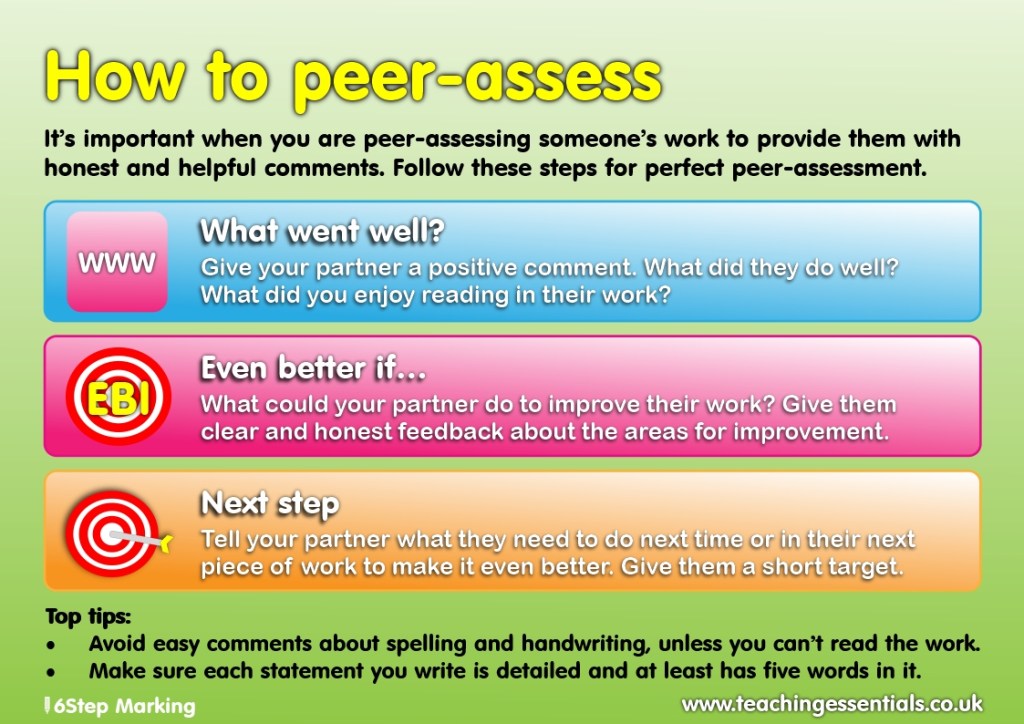
Peer Assessments: A Powerful Tool for Alternative Schooling and Education
Introduction
Alternative schooling and education have gained considerable attention in recent years, with many individuals seeking alternatives to traditional educational models. One aspect of alternative education that has proven to be highly effective is the use of peer assessments. By involving students in the evaluation and assessment process, peer assessments foster a sense of ownership over learning outcomes while promoting collaboration, critical thinking, and personal growth. This article aims to provide an overview of peer assessments as a powerful tool within alternative schooling and education.
What are Peer Assessments?
Peer assessments involve students evaluating and providing feedback on each other’s work or performance within an educational setting. Unlike teacher-led evaluations, peer assessments give students the opportunity to assess their peers’ work based on specific criteria set by the instructor or collaboratively established by the class.
The Benefits of Peer Assessments
1. Development of Critical Thinking Skills
Engaging in peer assessments requires students to analyze their peers’ work critically. By evaluating others’ strengths and weaknesses against predetermined criteria, they develop a deeper understanding of what constitutes quality work themselves. This process enhances critical thinking skills as students learn how to identify areas for improvement constructively.
2. Active Learning & Collaboration
Through participating in peer assessments, learners become active participants in their own educational journey rather than passive recipients of information from teachers alone. Collaborative learning experiences promote knowledge sharing among peers and encourage teamwork skills that are essential for success beyond academic settings.
3. Constructive Feedback & Reflection
Peer assessments can facilitate constructive feedback exchanges between students while fostering self-reflection on one’s own work through comparing it with others’. By receiving feedback from peers who may have similar perspectives or challenges, learners gain insights into different approaches that can enhance their future performance.
4. Increased Motivation & Engagement
When given the opportunity to evaluate their peers’ work, students feel a greater sense of responsibility towards producing high-quality outputs themselves. Peer assessments can motivate learners to put forth their best effort, as they understand that their work will be evaluated by classmates who have a vested interest in the learning process.
5. Diverse Perspectives & Cultural Awareness
In alternative schooling environments, where students come from different backgrounds and experiences, peer assessments provide a platform for diverse perspectives to be acknowledged and respected. By evaluating the work of peers with varying viewpoints, learners develop cultural awareness and empathy towards others’ unique circumstances.
6. Improved Communication Skills
Engaging in peer assessments requires effective communication skills such as active listening, articulating thoughts clearly, sharing feedback tactfully, and providing constructive criticism. These skills are vital for personal growth and future success in professional settings where collaboration is crucial.
Implementing Peer Assessments Effectively
To maximize the benefits of peer assessments within alternative schooling and education, certain factors must be considered:
1. Clear Guidelines: Provide students with clear assessment criteria or rubrics outlining expectations for their evaluations. This ensures fairness and consistency throughout the process while enabling students to focus on specific areas of improvement.
2. Training & Support: Offer training sessions on how to provide constructive feedback effectively. Students should receive guidance on techniques for delivering feedback respectfully while emphasizing both strengths and areas needing improvement.
3. Structured Reflections: Encourage students to reflect upon received feedback from their peers and use it as an opportunity for self-improvement rather than becoming defensive or dismissive of criticism.
4. Balanced Assessment Load: Ensure that each student receives adequate opportunities to assess their peers’ work while managing workload distribution fairly across the class.
5. Teacher Involvement: While peer assessments empower students by giving them agency over evaluation processes, teacher involvement remains essential for addressing any concerns or disputes that may arise during the assessment phase.
Examples of Peer Assessment Methods
Peer assessment methods can vary based on educational goals, subject matter, or project type; here are some commonly used approaches:
1. Rubric-based Assessments: Students evaluate their peers’ work using a pre-established rubric that outlines specific criteria and performance indicators. This method ensures objectivity and consistency in evaluations.
2. Group Evaluations: In collaborative projects, students assess the contributions of their group members based on established expectations for individual participation, teamwork, and overall project outcomes.
3. Critique Sessions: Students present or display their work to the class, allowing classmates to provide immediate feedback verbally or in written form during designated critique sessions.
4. Self & Peer Evaluation Combination: Combining self-evaluations with peer assessments allows students to reflect on their own work before assessing others’. This approach promotes personal growth while developing empathy towards peers’ efforts and challenges.
Conclusion
Peer assessments are an invaluable tool within alternative schooling and education models, offering numerous benefits to learners. By engaging in critical thinking, active learning, collaboration, constructive feedback exchanges, reflection opportunities, and improved communication skills; students gain essential skills for success both academically and professionally. With proper implementation strategies and clear guidelines in place, peer assessments can significantly enhance the educational experience by fostering a sense of ownership over one’s learning journey while promoting inclusive classroom environments that celebrate diverse perspectives.
 Alternative Amie
Leave a comment