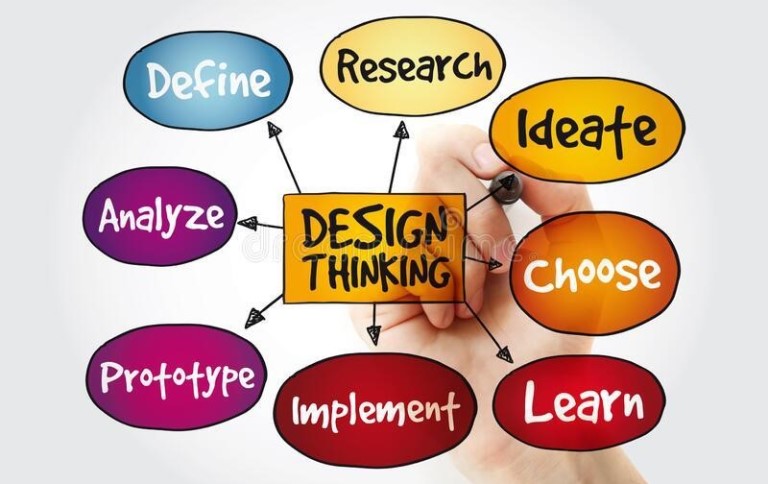
Design thinking is a powerful approach that has been gaining traction in the field of education. It offers a new way of problem-solving, encouraging students to think creatively and critically while also fostering empathy and collaboration. By incorporating design thinking into the classroom, educators can provide students with a more engaging and relevant learning experience.
At its core, design thinking is about understanding the needs of users or learners and designing solutions that meet those needs. It follows a cyclical process that involves empathizing with the user, defining the problem, ideating potential solutions, prototyping them, and testing them out before iterating on the design.
One of the key benefits of design thinking in education is its emphasis on empathy. By encouraging students to put themselves in someone else’s shoes and consider their perspective, it helps develop their social-emotional skills as well as their ability to understand others’ needs. This can foster better communication and collaboration among students, creating a positive classroom environment where everyone feels heard.
In addition to empathy, design thinking also promotes critical thinking skills. Students are encouraged to analyze problems from multiple angles and come up with creative solutions. This process allows them to think outside the box and challenge conventional wisdom. By embracing failure as part of the iterative process, students learn resilience and perseverance when faced with obstacles or setbacks.
Furthermore, design thinking encourages innovation by instilling an entrepreneurial mindset in students. They become comfortable with taking risks and exploring different possibilities rather than sticking to traditional approaches. This can lead to breakthrough ideas that have real-world applications beyond just academic scenarios.
Integrating design thinking into education doesn’t mean replacing existing subjects but rather infusing it across various disciplines. For example, science classes could involve designing experiments or conducting research based on real-world problems; literature classes could focus on creating innovative narratives; while math classes could explore how mathematical concepts can be applied practically.
Moreover, technology plays a crucial role in facilitating design thinking in education. Tools like 3D printers, coding platforms, and virtual reality can enhance students’ ability to prototype and test their ideas. Online collaboration tools also enable students to work together remotely, breaking down geographical barriers and allowing for global connections.
To successfully implement design thinking in education, educators need support and professional development opportunities. They should be encouraged to collaborate with each other, share best practices, and learn from experts in the field. Schools can also partner with organizations that specialize in design thinking or provide resources specifically tailored to the needs of educators.
In conclusion, design thinking is a valuable approach that can transform education by equipping students with essential skills for the future. It encourages empathy, critical thinking, creativity, collaboration, and innovation – all qualities necessary for success in an ever-evolving world. By incorporating design thinking into classrooms across various disciplines and utilizing technology as an enabler, we can create a more engaging and relevant learning experience for students.
 Alternative Amie
Leave a comment