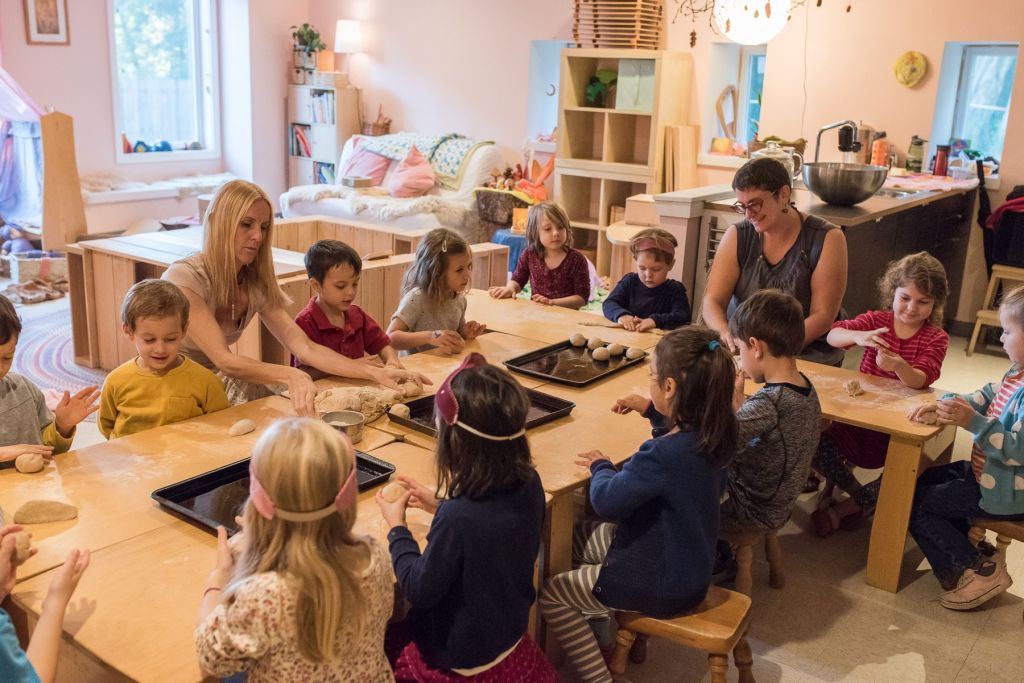
Panel Discussion: Exploring the Benefits of Waldorf Education
Moderator: Welcome to today’s panel discussion on alternative education methods, specifically focusing on Waldorf education. We have a diverse group of experts here today to discuss various aspects of this approach. Let’s begin by discussing the impact of interest-led learning on academic achievement and college readiness.
Expert 1: Interest-led learning is central to the Waldorf philosophy, where students are encouraged to follow their passions and explore topics that truly engage them. This approach has been found to enhance academic achievement because when students are genuinely interested in what they’re studying, they tend to be more motivated, focused, and willing to put in the effort required for success.
Expert 2: I completely agree. When students have a say in what they learn and can connect their studies with their own interests and experiences, it deepens their understanding and retention of knowledge. Moreover, interest-led learning fosters critical thinking skills that are vital for college readiness. Students become independent learners who can dig into subjects deeply and develop strong research skills.
Expert 3: One concern often raised by parents is whether interest-led learning adequately prepares students for standardized tests or entrance exams required for college admission. While it’s true that Waldorf schools typically do not focus heavily on test preparation or rote memorization, research shows that students from these schools perform just as well if not better than their peers in traditional settings.
Expert 4: That’s because instead of teaching solely for test outcomes, Waldorf education focuses on developing well-rounded individuals capable of navigating complex real-world challenges. These students usually excel at problem-solving tasks due to the interdisciplinary nature of their curriculum.
Moderator: On that note, let’s discuss fostering global awareness and cultural competency through alternative education methods like Waldorf.
Expert 5: By emphasizing arts integration across subjects such as music, drama, dance, literature from different cultures etc., Waldorf fosters a deep appreciation for diversity and helps students develop cultural sensitivity. They learn to understand and respect different perspectives, which is crucial in today’s interconnected world.
Expert 6: Absolutely. Waldorf also encourages direct experiences with different cultures through activities like international student exchanges, service-learning trips, or even hosting international festivals on campus. This exposure broadens their horizons and nurtures a global mindset.
Moderator: It’s clear that interest-led learning has many benefits, but how do we address parental concerns about its effectiveness?
Expert 7: Open communication between parents and teachers is key. Parents need to understand the underlying philosophy of Waldorf education and how it supports their child’s development holistically. Teachers can provide evidence of successful outcomes from alumni who have transitioned well into higher education or careers.
Expert 8: Additionally, schools can organize workshops or information sessions specifically tailored to address parental concerns about specific aspects of interest-led learning such as college readiness or standardized testing preparedness.
Moderator: Moving on to the role of mentors and experts in guiding interest-led education – what are your thoughts?
Expert 9: Mentors play a vital role in Waldorf education by supporting students’ interests and offering guidance when needed. They help facilitate connections between students’ passions and real-world applications, whether it be through internships, apprenticeships, or mentorship programs within the community.
Expert 10: Experts from various fields can also be invited into classrooms as guest speakers or workshop facilitators to share their knowledge and experiences. This not only enhances the quality of learning but also exposes students to diverse career possibilities they might not have considered otherwise.
Moderator: Let’s discuss another important aspect – promoting self-reflection and metacognition within an interest-led curriculum.
Expert 11: In Waldorf education, reflection is encouraged through regular journaling exercises where students record their thoughts, feelings, insights gained during their studies. This practice helps them become more aware of their own learning processes, strengths, and areas for growth.
Expert 12: Metacognition is also developed through ongoing dialogue between teachers and students. By encouraging students to think about how they learn best, set personal goals, and reflect on their progress, they develop a deep understanding of themselves as learners. This self-awareness serves them well beyond the classroom.
Moderator: Interdisciplinary studies are often highlighted in Waldorf education. How does this approach benefit students?
Expert 13: Interdisciplinary studies allow students to make connections across different subjects, breaking down artificial barriers between disciplines. This holistic approach encourages creative thinking and problem-solving skills by presenting real-world challenges that require knowledge from multiple domains.
Expert 14: Moreover, interdisciplinary learning helps students see the relevance of what they’re studying. They understand that knowledge is not compartmentalized but interconnected, which fosters a deeper understanding of the world around them.
Moderator: Let’s shift our focus now to experiential learning and travel opportunities within alternative education methods like Waldorf.
Expert 15: Experiential learning is highly valued in Waldorf education as it connects theory with practice. Students participate in hands-on activities such as field trips, outdoor expeditions or even community service projects where they can apply their knowledge in real-life situations – fostering deep engagement with the subject matter.
Expert 16: Travel is another integral part of many Waldorf programs where students get the opportunity to explore different cultures firsthand. Immersion experiences broaden their perspectives and help cultivate tolerance, empathy while developing an appreciation for diversity.
(To be continued)
 Alternative Amie
Leave a comment