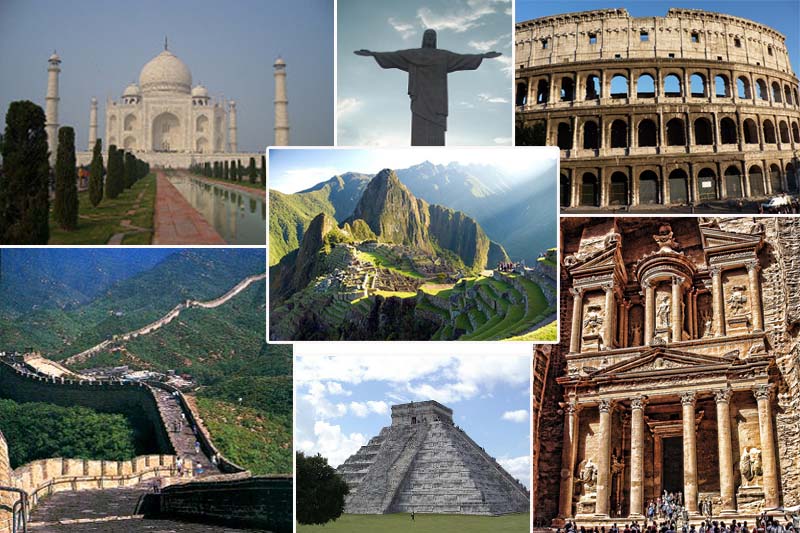
Nestled within the tapestry of history are numerous landmarks and sites that offer a window into the past. These places serve as reminders of our collective heritage, offering valuable educational opportunities for alternative schooling and education. From ancient ruins to cultural treasures, let us explore some of these remarkable historical sites.
1. Machu Picchu, Peru:
Located high in the Andes Mountains, Machu Picchu is an awe-inspiring Incan citadel that transports visitors back to the 15th century. This UNESCO World Heritage site showcases stunning architectural feats and offers insight into the sophisticated urban planning of the ancient civilization. Students can learn about Incan culture, engineering marvels such as terraces and aqueducts, and gain a deeper understanding of South American history.
2. The Great Wall of China, China:
Stretching over 13,000 miles across China’s vast landscape, the Great Wall stands as a symbol of human ambition and determination. Constructed over several centuries by different dynasties to protect against invasions from northern tribes, this monumental structure provides insights into Chinese history and military strategies employed throughout its construction period.
3. The Colosseum, Italy:
The iconic amphitheater located in Rome offers an immersive experience into Ancient Roman life – both glorious and brutal. With its grand architecture and seating capacity exceeding 50,000 spectators during its heyday, students can learn about gladiatorial combat events while gaining knowledge about Roman engineering techniques used to build this magnificent structure.
4. The Pyramids of Giza, Egypt:
Standing tall on the outskirts of Cairo are three pyramids that have captivated minds for centuries: Khufu (Great Pyramid), Khafre (Chephren), and Menkaure (Mycerinus). These colossal structures were built as tombs for pharaohs during Egypt’s Old Kingdom era around 2550-2490 BCE. Visiting these pyramids provides an opportunity to delve into the mysteries of ancient Egyptian civilization, their belief systems, and the remarkable engineering prowess required for their construction.
5. Angkor Wat, Cambodia:
Considered one of the largest religious monuments in the world, Angkor Wat is a testament to Khmer architecture and spirituality. Constructed in the 12th century as a Hindu temple dedicated to Vishnu but later transformed into a Buddhist site, this sprawling complex showcases intricate carvings depicting religious stories and offers insight into Southeast Asia’s cultural history.
6. The Acropolis, Greece:
Perched high above Athens stands the iconic Acropolis – an architectural masterpiece that encapsulates Greek civilization’s golden age. Dominated by the Parthenon, this UNESCO World Heritage site allows students to explore ancient Greek philosophy, artistry, democracy, and mythology while admiring the stunning marble columns and sculptures.
7. Petra, Jordan:
Hidden deep within rugged desert canyons lies Petra – an archaeological marvel carved out of rose-colored sandstone cliffs. Known as “The Lost City,” it was once a thriving trading hub during Nabatean times (around 4th century BCE – 2nd century CE). Students can wander through narrow rock passages known as Siq before reaching iconic structures like Al-Khazneh (The Treasury) or Al-Deir (The Monastery), gaining insights into ancient trade routes and Arab culture.
8. Stonehenge, England:
Located on Salisbury Plain in Wiltshire County is Stonehenge – a prehistoric monument shrouded in mystery. This Neolithic stone circle constructed over several phases between 3000-2000 BCE continues to intrigue scholars with its purpose and significance. Alternative schooling visits allow students to explore theories about its celestial alignment possibilities while unraveling connections with ancient British cultures like those of Druids.
9. Chichen Itza, Mexico:
A prominent Mayan city-state from 600-1200 CE, Chichen Itza is an archaeological site that showcases the sophisticated architecture and astronomical knowledge of the Mayan civilization. El Castillo (The Castle), a towering pyramid at its center, serves as a testament to their mathematical precision and celestial observations. Students can learn about Mesoamerican cultures while exploring this UNESCO World Heritage site.
10. Hiroshima Peace Memorial, Japan:
A poignant reminder of the devastating impact of nuclear weapons, the Hiroshima Peace Memorial stands as a symbol of hope for global peace. Originally known as the Atomic Bomb Dome, it was one of the few buildings left standing after the atomic bombing in 1945. Visiting this memorial offers students an opportunity to reflect on human resilience, war’s consequences, and advocate for peaceful resolutions.
In conclusion, these historical landmarks and sites provide alternative schooling and education programs with invaluable opportunities to engage students in immersive learning experiences. By stepping into the past through these remarkable places, students can gain insights into diverse cultures, engineering marvels, ancient civilizations’ achievements and shortcomings – fostering a deeper appreciation for our shared human history.
 Alternative Amie
Leave a comment