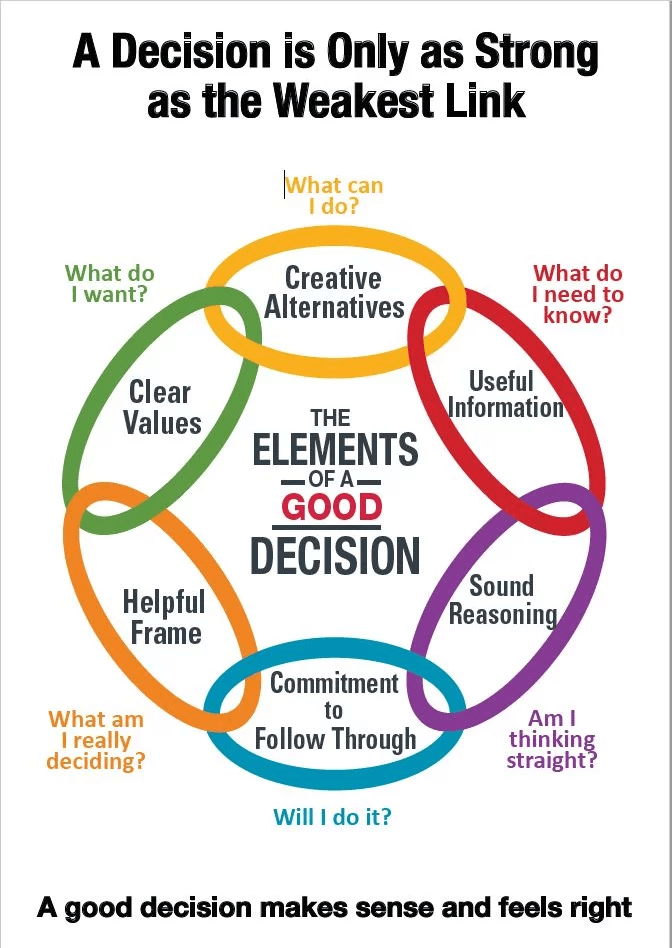
Making decisions is an integral part of our daily lives. From choosing what to wear in the morning to deciding on a career path or making major life choices, we are constantly faced with the need to make decisions. However, decision-making can sometimes be challenging and overwhelming, especially when faced with complex situations or conflicting options. In this article, we will explore various decision-making processes and strategies that can help individuals navigate through these challenges.
1. Define your goal:
Before making any decision, it is essential to have a clear understanding of your objective or desired outcome. Clearly defining your goal not only helps you stay focused but also ensures that the choices you make align with your overall vision. Take some time to reflect on what truly matters to you and identify the specific results you want to achieve.
2. Collect information:
Once you have defined your goal, gather relevant information that will assist you in making an informed decision. This could involve conducting research, seeking advice from experts or people with experience in the area of concern, reading books or articles related to the topic at hand, and exploring different perspectives. The more knowledge and insight you acquire about the situation or options available, the better equipped you will be to make a well-rounded decision.
3. Evaluate pros and cons:
Consider the advantages and disadvantages associated with each option before reaching a conclusion. Create a list outlining both sides of each alternative so that you can visually assess their respective merits and drawbacks objectively. Analyzing pros and cons enables critical thinking by weighing different factors against one another while considering potential risks involved.
4. Consider long-term consequences:
While short-term gains may seem appealing at times, it is crucial to think about how your decisions might impact your future self or those around you in the long run. Evaluating possible outcomes beyond immediate gratification allows for more thoughtful decision-making based on sustainability rather than instant gratification.
5.Seek input from others:
Seeking input from trusted friends, family members, or mentors can provide a fresh perspective and valuable insights that you may not have considered on your own. Engaging in open discussions with others who have diverse opinions can broaden your understanding of the situation and offer alternative viewpoints. However, it is important to remember that ultimately, the decision rests with you.
6. Trust your intuition:
While rational analysis is essential in decision-making, it is equally important to trust your gut instincts. Intuition often serves as an inner compass guiding us towards choices that align with our values and desires. Pay attention to any feelings of uncertainty or unease when considering different options; they may be telling signs that should not be ignored.
7. Consider a trial period:
In certain cases where decisions involve significant commitment or investment, consider implementing a trial period before making a final choice. By testing out different options on a smaller scale, you can gain firsthand experience and better understand the potential consequences or benefits associated with each alternative.
8.Set realistic expectations:
It is crucial to set realistic expectations for yourself during the decision-making process. Understand that no decision will ever be perfect, and there will always be some level of risk involved. Avoid getting paralyzed by indecision due to fear of making mistakes; instead, focus on minimizing risks by thoroughly evaluating available information and seeking advice when necessary.
9.Take action:
Once you have gone through all the necessary steps mentioned above, it’s time to take decisive action based on the conclusions reached through careful consideration of alternatives and evaluation of their respective merits. Delaying decisions indefinitely only prolongs uncertainty and hinders personal growth.
10.Learn from outcomes:
Regardless of whether your decisions lead to success or failure, view each outcome as an opportunity for learning rather than dwelling on regret or disappointment. Reflect upon the results obtained from previous choices so that future decisions are more informed and refined based on past experiences.
In conclusion, effective decision-making involves defining clear goals, collecting relevant information, evaluating pros and cons, considering long-term consequences, seeking input from others, trusting your intuition, considering trial periods when applicable, setting realistic expectations, taking action, and learning from outcomes. By following these steps and incorporating them into your decision-making process, you can enhance your ability to make informed choices that align with your values and aspirations. Remember that decision-making is a skill that can be cultivated over time through practice and self-reflection.
 Alternative Amie
Leave a comment