Waldorf Education: Nurturing the Whole Child
Education plays a vital role in shaping an individual’s intellect, character, and values. In recent years, alternative educational approaches have gained attention for their focus on holistic development rather than solely academic achievement. One such approach is Waldorf education.
Rooted in the philosophy of Rudolf Steiner, Waldorf education emphasizes nurturing the whole child—mind, body, and spirit. Central to this pedagogy is the belief that children learn best when they are actively engaged in meaningful activities that integrate artistic expression with academic subjects.
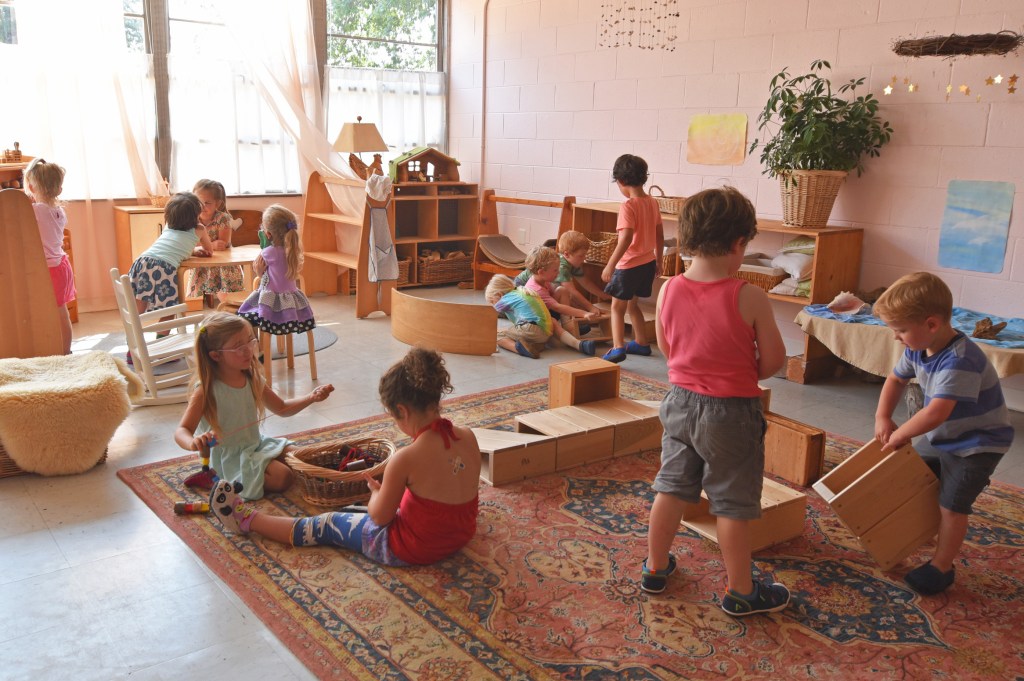
At a Waldorf school, you won’t find traditional desks or standardized tests. Instead, classrooms are designed to be warm and inviting spaces where creativity can flourish. The curriculum includes music, art, drama, movement, and hands-on learning experiences alongside language arts, mathematics, science, and social studies.
Teachers play a crucial role in fostering students’ growth by staying with them throughout their primary school years. This allows educators to develop deep connections with their students and tailor their teaching methods to suit each child’s unique needs.
One notable aspect of Waldorf education is its emphasis on imaginative play during early childhood. Young children engage in unstructured free play that stimulates imagination while building social skills and problem-solving abilities—a stark contrast to our fast-paced technologically driven world.
Critics argue that this approach neglects necessary academic skills; however, research suggests otherwise. Studies have shown that graduates of Waldorf schools often excel academically as well as socially-emotionally compared to their peers from traditional educational settings.
Furthermore, proponents argue that by fostering a love for learning through creative endeavors like storytelling or painting before introducing formal academics later on (typically around age seven), children develop strong foundations upon which future knowledge can be built more effectively.
Beyond academics alone lies the core tenet of Waldorf education—the cultivation of empathy and ethical responsibility towards oneself and others. By emphasizing the importance of community and cooperation, Waldorf schools aim to produce individuals who are not only academically proficient but also compassionate global citizens.
In a world where many educational systems focus solely on test scores and rote memorization, Waldorf education offers an alternative that nurtures the whole child. By combining artistic expression with academic subjects and fostering imagination, creativity, and social-emotional development, it prepares students for a future that demands critical thinking skills, adaptability, and empathy.
Whether you agree with its methods or not, there is no denying the impact that Waldorf education has had on countless children worldwide. It serves as a reminder that education should be about more than just filling young minds with knowledge—it should strive to cultivate well-rounded individuals capable of making meaningful contributions to society.

 Alternative Amie
Leave a comment