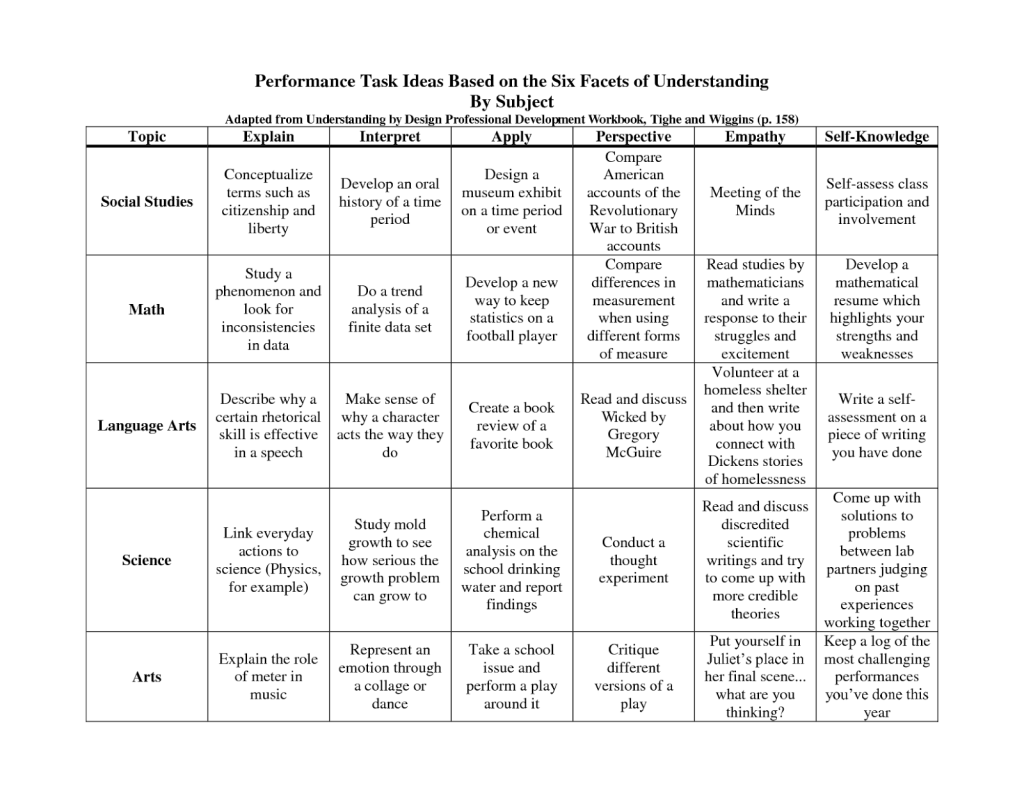
Performance Tasks: Engaging and Effective Assessments in Alternative Education
In alternative schooling and education, educators often strive to create innovative and engaging learning experiences for their students. One powerful tool that can be used to accomplish this goal is performance tasks. Unlike traditional tests or quizzes, performance tasks provide students with opportunities to demonstrate their knowledge and skills through real-world applications, allowing for a more authentic assessment of their understanding.
What are Performance Tasks?
Performance tasks are hands-on activities that require students to apply what they have learned in meaningful ways. These tasks typically involve problem-solving, critical thinking, collaboration, creativity, and communication skills – all essential competencies for success beyond the classroom walls.
The beauty of performance tasks lies in their ability to engage students by connecting academic concepts with real-life situations. By tackling relevant challenges or projects, learners develop a deeper understanding of the subject matter while simultaneously honing vital 21st-century skills.
Benefits of Performance Tasks
1. Authentic assessment: Performance tasks mirror real-world scenarios where knowledge application matters most. This type of assessment measures not only what students know but also how well they can use that knowledge in practical contexts.
2. Personalized learning: Since performance tasks are often open-ended and allow for multiple solutions or approaches, they promote individuality and cater to diverse learning styles.
3. Deeper understanding: Through hands-on experiences provided by performance tasks, students gain a deeper comprehension of complex concepts as they actively explore them.
4. Collaboration and communication skills: Many performance tasks require teamwork and effective communication among students. Working together fosters social-emotional growth and prepares learners for future collaborative endeavors.
5. Higher-order thinking skills: Students engage in critical thinking as they analyze problems, evaluate information from various sources, make informed decisions, and creatively solve challenges posed by the task.
6. Motivation boost: The interactive nature of performance tasks increases student motivation compared to traditional assessments like tests or exams.
7. Real-world relevance: Performance tasks bridge the gap between classroom learning and real-life application, making education more meaningful and preparing students for future endeavors.
Examples of Performance Tasks
1. Design a sustainable community: In this project-based performance task, students work in groups to design an environmentally friendly community. They must consider factors such as renewable energy sources, waste management systems, transportation options, and green spaces. By integrating knowledge from science, math, social studies, and other subjects, learners apply their understanding of sustainability principles to create a comprehensive plan.
2. Create a business proposal: This performance task challenges students to develop a business idea from concept to pitch. They must conduct market research, identify target audiences, design marketing strategies, and create financial projections. Through this task, students learn about entrepreneurship while applying concepts from economics and marketing.
3. Analyze historical events through role-playing: Students immerse themselves in history by assuming the roles of key figures involved in significant events or eras. Through role-playing scenarios like mock trials or debates, learners explore different perspectives and analyze historical arguments using critical thinking skills.
4. Build a Rube Goldberg machine: This hands-on performance task involves designing and constructing an elaborate machine that performs simple tasks through complex chain reactions. Students engage with principles of physics while demonstrating creativity and problem-solving skills.
5. Conduct a scientific investigation: In this inquiry-based performance task focused on science subjects such as biology or chemistry, students formulate research questions related to specific phenomena or problems they want to investigate further. They design experiments or collect data using appropriate methods before analyzing results and drawing conclusions.
Implementing Performance Tasks
To effectively implement performance tasks in alternative schooling settings:
1. Align tasks with curriculum goals: Ensure that the chosen performance tasks align with your educational objectives while incorporating multiple subject areas if possible.
2. Provide clear instructions and expectations: Clearly communicate the purpose of each task along with any guidelines or rubrics for assessment.
3. Offer sufficient time: Performance tasks may require more extended periods for completion compared to traditional assessments due to their complexity and hands-on nature.
4. Encourage reflection and self-assessment: Provide opportunities for students to reflect on their performance, identify areas of growth, and evaluate their own learning.
5. Foster a supportive environment: Create a classroom culture that values risk-taking, embraces mistakes as learning opportunities, and encourages collaboration among students.
In conclusion, performance tasks are powerful tools that promote deeper learning and engagement in alternative education settings. By allowing students to apply knowledge in authentic contexts while honing essential skills, these tasks prepare learners for success beyond the classroom. Educators who incorporate performance tasks into their teaching practices witness higher levels of student motivation, critical thinking abilities, collaboration skills, and real-world relevance in the educational experience.
 Alternative Amie
Leave a comment