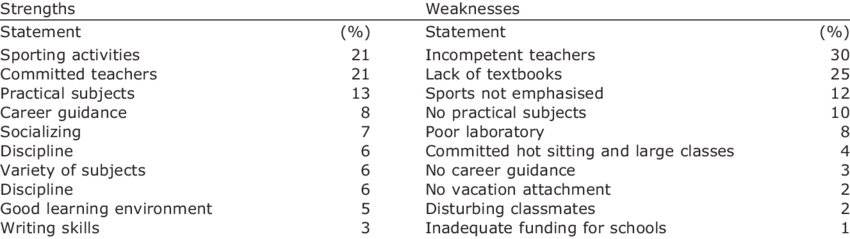
Strengths and weaknesses are inherent aspects of every individual. When it comes to education, understanding our strengths and weaknesses can greatly impact the way we learn and succeed. In alternative schooling and education, where personalized learning is key, acknowledging strengths and weaknesses becomes even more crucial. Let’s dive into this topic by exploring the strengths and weaknesses that students may possess.
Strengths in alternative schooling can vary greatly from student to student. One common strength is self-motivation. Alternative education often requires students to take ownership of their learning journey, setting goals and managing their time effectively. Self-motivated students thrive in this environment as they are driven to explore subjects deeply without constant external pressure.
Another strength often found in alternative learners is creativity. These students tend to think outside the box, coming up with innovative solutions or approaches to problems. They excel in projects that allow them to express themselves creatively, such as arts or writing assignments.
Critical thinking skills are also an asset for alternative learners. These individuals have a natural ability to analyze information critically, evaluate different perspectives, and make informed decisions independently. Such skills are highly valued in alternative schools where students engage in problem-solving activities regularly.
On the other hand, weaknesses can pose challenges for some students within alternative schooling environments. For example, time management might be a weakness for certain individuals who struggle with organizing their workloads effectively without external guidance or strict schedules.
Additionally, some students may find it difficult to adapt to self-paced learning due to a lack of discipline or motivation. Without regular deadlines or accountability structures provided by traditional schools, these individuals might procrastinate on assignments or struggle with completing tasks independently.
Furthermore, social interaction can be a weakness for some alternative learners who prefer working alone rather than collaborating with peers on group projects or discussions. This preference may limit their exposure to diverse viewpoints and hinder their development of strong interpersonal skills.
It’s important for both educators and parents/guardians involved in alternative schooling to recognize and address these weaknesses. By providing targeted support, such as time management strategies, goal-setting techniques, or facilitating group interactions, students can develop skills necessary for success in alternative education.
In conclusion, strengths and weaknesses play a significant role in alternative schooling and education. Recognizing and leveraging strengths allows students to excel in personalized learning environments. Similarly, addressing weaknesses through targeted support helps individuals overcome challenges that may arise within alternative education settings. By understanding their strengths and weaknesses, students can make the most of their educational journey, equipping them with valuable skills for future endeavors.
 Alternative Amie
Leave a comment