The Role of Play in Waldorf Education
Play is an essential part of childhood development, and nowhere is this more evident than in the philosophy of Waldorf education. In a Waldorf school, play is not seen as merely recreational but as a vital tool for learning and growth.
Waldorf education places great emphasis on nurturing the whole child – their physical, emotional, intellectual, and spiritual well-being. Play provides a natural avenue for children to explore and develop all these aspects of themselves.
Through play, children engage in imaginative scenarios that allow them to make sense of the world around them. Whether it’s building with blocks, dressing up in costumes, or pretending to be characters from stories they’ve heard – play enables children to experiment with different roles and situations while developing their creativity and problem-solving skills.
In a Waldorf classroom, teachers create an environment that encourages open-ended play. Toys are often made from natural materials such as wood or cloth rather than plastic or electronic gadgets. This choice is intentional, as it allows children’s imaginations to take center stage without being limited by pre-determined outcomes.
Integrating Arts and Crafts in the Curriculum
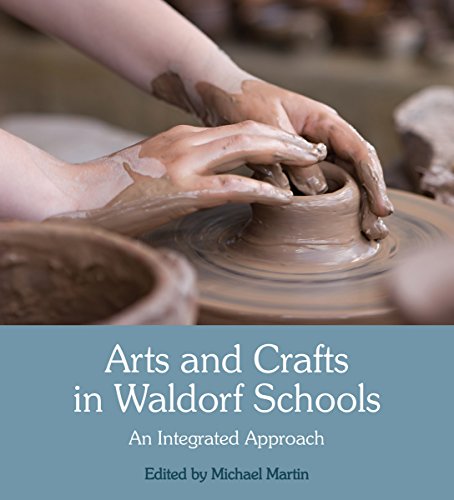
Artistic expression plays a central role in the curriculum of Waldorf schools. Through arts and crafts activities such as painting, drawing, knitting, sewing, woodworking, and clay modeling – students are given opportunities to engage their hands alongside their minds.
These creative pursuits have multiple benefits for children’s cognitive development. They help refine fine motor skills while promoting concentration and focus. Engaging with different art forms also cultivates aesthetic sensitivity and fosters an appreciation for beauty in various forms.
Moreover, artistic activities provide channels for self-expression which can be especially valuable for those who struggle with verbal communication or processing emotions verbally. Art serves as a universal language through which feelings can be explored safely without judgment or constraint.
Storytelling: A Cornerstone of Waldorf Education
Storytelling holds a special place in Waldorf education. It is the primary means through which knowledge, values, and cultural heritage are transmitted to students. Through stories, children engage with rich imagery and language that stimulates their imagination and cultivates a love for literature.
In Waldorf classrooms, teachers often tell stories orally rather than relying solely on books. This approach allows for a more interactive experience as children can actively participate by visualizing the narrative in their minds. Stories are also frequently accompanied by puppetry or dramatic performances, further enhancing the immersive quality of the storytelling experience.
Storytelling not only ignites children’s imaginations but also serves as an important tool for moral and character development. By hearing tales that reflect universal themes of kindness, courage, resilience, and empathy – students learn valuable life lessons that shape their values and actions.
Outdoor Education: Learning in Nature’s Classroom
Waldorf education recognizes the importance of connecting with nature as an integral part of learning. Outdoor education plays a significant role in Waldorf schools where students spend ample time exploring natural environments firsthand.
Through outdoor experiences such as gardening, hiking, camping trips or simply playing amidst trees and open spaces – children develop a deep appreciation for the natural world around them. They develop an understanding of ecological systems while fostering a sense of responsibility towards environmental stewardship.
Outdoor activities provide opportunities for hands-on learning where academic concepts can be experienced directly rather than merely studied theoretically in textbooks. Whether it’s observing plants grow from seeds or identifying different animal tracks – these real-world encounters leave lasting impressions on children’s minds while bringing joy to their hearts.
Anthroposophy: Guiding Principles behind Waldorf Education
The philosophy underpinning Waldorf education is known as Anthroposophy – developed by Austrian philosopher Rudolf Steiner. Anthroposophy emphasizes the interconnectedness between individuals and their spiritual dimensions alongside physical existence.
In Waldorf schools, this holistic perspective informs teaching methods that aim to nurture the whole child. Anthroposophy recognizes that children progress through distinct developmental stages, and education should align with these phases.
Teachers in Waldorf schools strive to create an environment that supports students’ unfolding development by providing activities and experiences suited to their specific needs at each stage. By understanding the unique characteristics of childhood at different ages, educators can tailor instruction to maximize children’s learning potential.
Promoting Social-Emotional Development
In a Waldorf classroom, social-emotional development is considered as important as academic success. Teachers focus on creating a safe and nurturing environment where students feel valued and supported in their emotional growth.
Various practices are employed to foster social-emotional well-being. For instance, daily routines and rituals provide a sense of security and predictability for children, enabling them to develop self-regulation skills. Circle time is another essential element in Waldorf classrooms where students come together for group discussions, songs or games – promoting cooperation, empathy, and active listening.
Additionally, conflict resolution strategies are taught so that children can learn how to express themselves respectfully while resolving disagreements peacefully. These practices support the cultivation of healthy relationships based on mutual respect and understanding.
Conclusion
Waldorf education offers a holistic approach that nurtures every aspect of a child’s being – physical, emotional, intellectual, and spiritual. Through play-based learning experiences; integration of arts,culture& crafts; storytelling; outdoor exploration; anthroposophical principles; fostering social-emotional development; movement activities such as eurythmy; nurturing creativity & imagination; holistic assessment methods;rhythm & routine within the classroom;& fostering community engagement – this educational philosophy creates an enriching environment conducive to lifelong learning&sustainable personal growth.
 Alternative Amie
Leave a comment