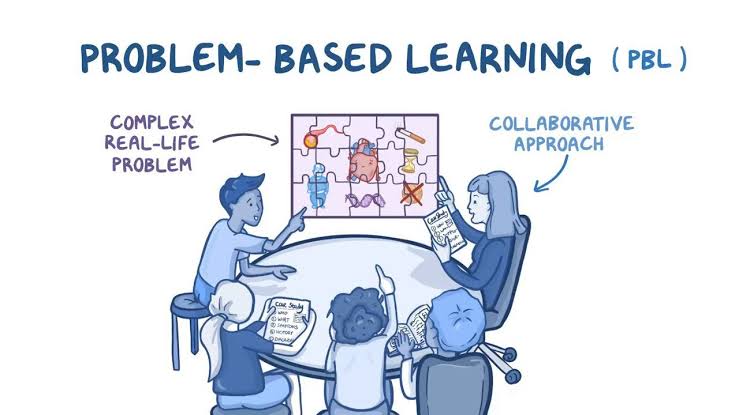
Problem-based learning (PBL) is an innovative educational approach that focuses on real-world problem-solving. Unlike traditional methods of instruction, where students passively absorb information from textbooks or lectures, PBL encourages active engagement and critical thinking skills. This method not only helps students gain a deeper understanding of the subject matter but also equips them with essential skills necessary for success in the 21st century.
In PBL, students are presented with a complex, open-ended problem or scenario that reflects real-life situations. They then work collaboratively to identify the underlying issues, gather relevant information, analyze data, generate possible solutions, and evaluate their effectiveness. Throughout this process, students actively engage in research and inquiry while applying knowledge from various disciplines.
One of the key benefits of PBL is its ability to foster deep learning. Instead of memorizing facts and regurgitating them during exams, students delve into comprehensive investigations that require critical thinking and problem-solving skills. By tackling authentic problems relevant to their lives or communities, learners develop a sense of ownership over their education as they see how their efforts can make a tangible impact.
Moreover, PBL provides an opportunity for interdisciplinary learning. Real-world problems rarely have straightforward solutions; instead, they often require insights from multiple fields of study. For instance, when exploring ways to address climate change at a local level, students might need to understand scientific concepts related to renewable energy sources while also considering social dynamics and economic implications. Through collaboration and integration across subjects such as science, mathematics, humanities,
and
technology
,
students gain a holistic understanding of complex issues.
Another strength of PBL lies in its ability to promote teamwork and communication skills. In today’s interconnected world,
collaboration
is crucial for success in any field or profession. By working together on projects within a supportive environment facilitated by teachers,
students learn how to effectively communicate ideas
and resolve conflicts constructively
as part
of the problem-solving process. These interpersonal skills are essential not only for academic success but also for future careers.
PBL also encourages self-directed learning, as students take ownership of their education and become more active participants in the learning process. Rather than relying solely on teachers for answers, students learn to seek out information independently and develop strategies to solve problems. This autonomy helps build confidence, resilience, and a lifelong love of learning.
In addition to these cognitive benefits, PBL offers numerous advantages in terms of engagement and motivation. When students see the real-world relevance of what they are studying,
they become
more motivated to learn and apply knowledge. The practical nature of PBL helps bridge the gap between theory and practice, making learning more meaningful.
Moreover,
by allowing students to explore topics that interest them or affect their lives directly,
PBL taps into their intrinsic motivation
and curiosity
. As learners invest themselves in finding solutions to authentic problems,
their level of engagement naturally increases.
Implementing PBL effectively requires careful planning and support from educators. Teachers act as facilitators rather than traditional instructors, guiding students through the problem-solving process while providing necessary scaffolding when needed. They help frame open-ended questions that stimulate critical thinking while ensuring that all relevant content standards are addressed.
Furthermore,
teachers play a crucial role in assessing student progress throughout the project by providing regular feedback on both individual work and group collaboration. This continuous feedback loop enables learners to reflect on their strengths and areas for improvement.
To fully leverage the potential of PBL, schools must create an environment conducive to this approach.
Flexible classroom spaces that allow for small-group discussions
and collaborative work
are essential components of successful implementation.
Additionally,
access to resources such as technology tools, libraries, laboratories,
and community partnerships can enhance student research opportunities beyond traditional textbooks or online sources.
While there is no one-size-fits-all approach when it comes to implementing PBL in schools, some best practices can guide educators in maximizing its effectiveness. First and foremost, it is essential to carefully select problems or scenarios that are relevant, meaningful, and align with curriculum objectives. By doing so, students can see the connection between their learning and real-world contexts.
Furthermore,
providing clear guidelines and expectations while allowing for flexibility within those parameters allows students to take ownership of their learning journey. Teachers should also foster a culture of respect and collaboration where diverse perspectives are valued.
Lastly,
reflecting on the process and evaluating both individual and group outcomes helps students develop metacognitive skills—skills that enable them to think about their thinking—and improve future problem-solving efforts.
In conclusion, problem-based learning is an effective educational approach that fosters deep understanding, critical thinking skills,
and
collaboration among students. By engaging in authentic problem-solving experiences, learners develop the necessary knowledge, skills
,
and attitudes required for success in the 21st century. From interdisciplinary learning to self-directed inquiry,
PBL empowers students by making education more relevant
and prepares them for real-world challenges they may face beyond school. As schools continue to adapt their curricula to meet the needs of today’s learners, PBL stands out as a powerful tool for providing an alternative approach to traditional education methods.
 Alternative Amie
Leave a comment