Mnemonic techniques for memorization have been used for centuries to aid in the retention of information. These techniques involve creating associations or visualizations that make it easier to remember specific facts or details. For example, the method of loci involves mentally associating each piece of information with a specific location in a familiar setting, such as your home. When you need to recall the information, you can mentally walk through your home and retrieve the associated details.
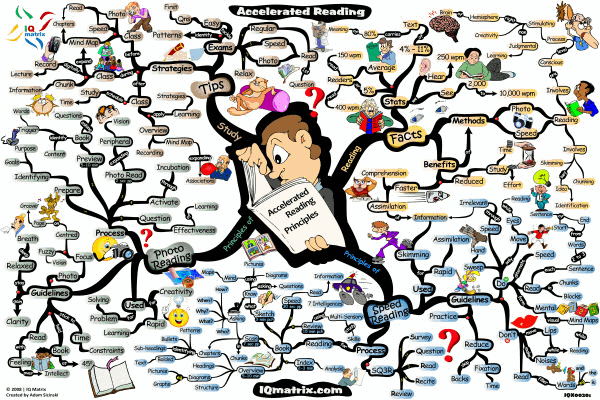
Speed reading strategies are another valuable tool for accelerated learning. By utilizing techniques like skimming and scanning, readers can quickly identify key points and main ideas without getting caught up in every word. This allows them to cover more material in less time.
Mind mapping is a powerful technique utilized by many learners to enhance their understanding and retention of information. Mind maps visually represent concepts and ideas using interconnected branches and nodes. This helps learners see relationships between different pieces of information, making it easier to grasp complex topics.
The concept of neuroplasticity has revolutionized our understanding of how the brain learns and adapts. Research has shown that continuous learning activates neural pathways, leading to better cognitive function over time. By engaging in regular study sessions or practicing new skills, we can harness this neuroplasticity to accelerate our learning process.
Music has long been recognized as a powerful tool for improving focus and concentration during studying or learning activities. Listening to instrumental music or certain genres like classical or ambient music can help drown out distractions and create an environment conducive to deep concentration.
Gamification is increasingly being incorporated into educational settings as a means of accelerating learning outcomes. By turning lessons into interactive games or challenges, students become more engaged and motivated while also reinforcing their knowledge.
Polyglotism involves simultaneously learning multiple languages—an approach that offers numerous cognitive benefits such as enhanced memory capacity, improved problem-solving skills, increased creativity, and greater cultural awareness.
Visualization techniques are excellent tools for enhancing comprehension when studying complex subjects. Creating mental images or diagrams of concepts can help learners better understand and remember information.
Nootropics, also known as cognitive enhancers or “smart drugs,” are substances that claim to improve cognitive function and enhance learning abilities. While some nootropics have shown promising results in certain studies, their long-term effects and safety profile still need further research.
Biohacking is another emerging trend in the field of accelerated learning. It involves making lifestyle changes or using technologies to optimize brain health and cognitive performance. This includes practices like optimizing nutrition, sleep patterns, exercise routines, and utilizing tools like brain-training apps or neurofeedback devices.
Sleep plays a crucial role in the consolidation of learned information. During sleep, the brain processes and strengthens newly acquired knowledge. Adequate sleep is therefore essential for optimal learning outcomes.
Optimal nutrition is vital for maintaining healthy brain function and improving learning abilities. A well-balanced diet rich in nutrients such as omega-3 fatty acids, antioxidants, vitamins B6 and B12, iron, zinc, and magnesium supports cognitive functions like memory, attention span, and problem-solving skills.
Mindfulness practices such as meditation or deep breathing exercises can significantly enhance learning retention by reducing stress levels and improving focus.
Physical exercise has been proven to positively impact cognitive function by increasing blood flow to the brain and promoting the release of neurotransmitters that support memory formation.
Virtual reality (VR) technology offers immersive educational experiences that make learning more engaging and interactive. VR allows students to explore virtual environments related to their subjects of study while actively participating in simulations or experiments.
Spaced repetition is a highly effective technique for retaining information over time. By reviewing material at spaced intervals rather than cramming it all at once before an exam or deadline, learners reinforce their memory recall pathways more effectively.
Critical thinking skills are essential for analyzing complex problems from multiple perspectives. Techniques such as Socratic questioning encourage students to challenge assumptions, evaluate evidence critically, and develop logical reasoning abilities.
Curiosity is a powerful motivator for learning. By tapping into students’ natural sense of wonder and fostering an environment that encourages exploration, educators can fuel their desire to learn and discover new things.
Creative problem-solving strategies involve thinking outside the box and finding innovative solutions to challenges. This approach nurtures creativity, adaptability, and resilience in students while also enhancing their ability to tackle real-world problems.
Emotional intelligence plays a significant role in effective learning by promoting self-awareness, empathy, and positive relationships with others. Educators can incorporate activities that encourage emotional intelligence development to enhance students’ overall learning experience.
Storytelling has been used as an educational tool for centuries due to its ability to captivate learners’ attention and make complex subjects more accessible. Incorporating storytelling techniques into lessons helps create meaningful connections between content and enhances retention.
Building resilience and perseverance in students is crucial for overcoming obstacles they may face during the learning process. Encouraging a growth mindset—a belief that intelligence is not fixed but can be developed through effort—helps foster resilience in the face of challenges.
Effective note-taking methods are essential for organizing information during lectures or readings. Techniques such as Cornell notes or mind mapping enable learners to capture key points, summarize concepts effectively, and review material efficiently later on.
Utilizing technology tools like educational apps, online platforms, or interactive whiteboards can enhance educational outcomes by providing access to various resources, facilitating collaboration among students, and offering personalized learning experiences tailored to individual needs.
Self-directed learning approaches empower students to take control of their education by allowing them to explore topics of interest independently. These approaches promote autonomy, motivation, critical thinking skills, and lifelong learning habits.
Integrating art and creativity into the curriculum helps engage different parts of the brain associated with imagination and creative thinking. Artistic activities not only foster self-expression but also support cognitive development across multiple domains.
Peer-to-peer teaching methods, such as collaborative group work or mentoring programs, are effective in alternative education settings. Students learn from one another, develop communication and leadership skills, and gain a deeper understanding of the material through teaching others.
Reflection and metacognition—thinking about one’s thinking—are crucial for deepening learning and improving long-term retention. Encouraging students to reflect on their learning experiences facilitates self-awareness, goal setting, and continuous improvement.
In conclusion, alternative schooling and education incorporate a wide range of techniques and strategies to accelerate learning outcomes. From mnemonic techniques for memorization to incorporating storytelling into educational practices, these approaches aim to engage learners actively while enhancing comprehension, memory retention, critical thinking skills, creativity, emotional intelligence development, resilience building, and overall cognitive function. By embracing innovative approaches that leverage technology tools or prioritize individualized learning experiences, alternative schools can empower students with the necessary skills for success in an ever-evolving world.
 Alternative Amie
Leave a comment