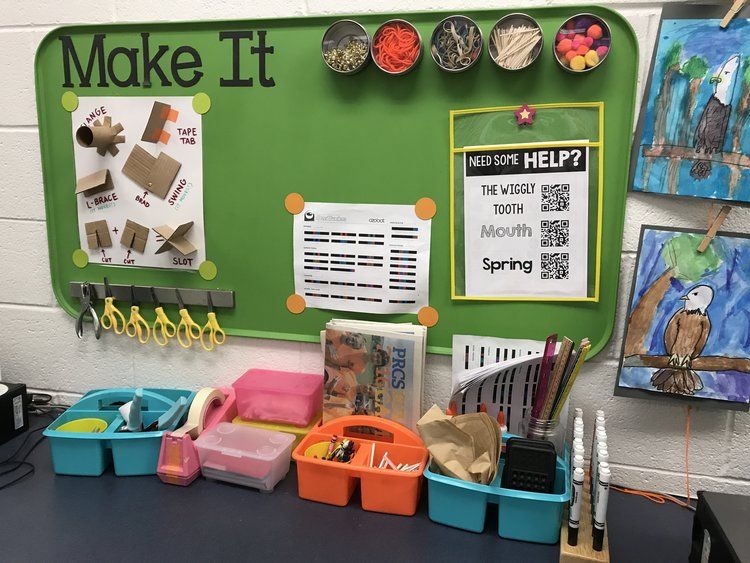
Maker Spaces for Education: Fostering Creativity, Empowering Students
In recent years, education has undergone a significant transformation as educators and policymakers strive to create more engaging and student-centered learning environments. One approach that has gained considerable traction is the integration of maker spaces into educational settings. These dedicated spaces provide students with the tools and resources to engage in hands-on, project-based learning experiences.
So what exactly are maker spaces? At their core, maker spaces are collaborative workspaces equipped with various materials, tools, and technologies that allow individuals to tinker, explore, and create. They encourage a multidisciplinary approach where students can merge concepts from science, technology, engineering, arts, and mathematics (STEAM) to solve real-world problems.
One of the key benefits of incorporating maker spaces into education is the fostering of creativity. Traditional classrooms often prioritize rote memorization or standardized testing over creative thinking. Maker spaces offer an antidote to this by providing an environment where students can think critically and experiment freely. Here they have the freedom to design their own projects from scratch or modify existing ones according to their interests or needs.
By engaging in hands-on activities within these spaces, students develop essential skills such as problem-solving abilities and resilience in the face of challenges. The trial-and-error nature of making encourages them to learn from their mistakes rather than fear failure—a mindset crucial for success not only in academic pursuits but also in life beyond school.
Moreover, maker spaces promote collaboration among peers. Students working on projects together learn how to communicate effectively, share ideas openly, compromise when necessary, and appreciate diverse perspectives. These interpersonal skills are invaluable in today’s interconnected world where teamwork is highly prized across industries.
Another advantage of maker spaces is their ability to bridge theory with practice by providing authentic learning experiences. In conventional classrooms isolated from real-world contexts, it can be challenging for students to see the relevance or practicality of what they’re being taught. Maker spaces break down these barriers by allowing students to apply theoretical knowledge in tangible ways.
For example, a physics lesson on simple machines becomes more meaningful when students have the opportunity to build their own pulley systems or inclined planes in a maker space. This hands-on engagement not only deepens understanding but also sparks curiosity and enthusiasm for learning—something that textbooks alone often fail to achieve.
Furthermore, maker spaces foster innovation and an entrepreneurial mindset among students. As they engage in creative problem-solving, students develop a sense of agency and become proactive learners rather than passive recipients of information. They learn how to identify problems in their communities or the world at large and devise innovative solutions using available resources—a skill set increasingly sought after in today’s rapidly changing job market.
Moreover, maker spaces can help address disparities in access to educational opportunities. By providing a shared space equipped with tools and materials, schools can ensure that all students have equal access regardless of socioeconomic background. This leveling of the playing field empowers traditionally marginalized groups who may not have had exposure to such resources outside of school.
It is worth noting that incorporating maker spaces into education requires thoughtful planning and support from educators. Teachers need professional development opportunities to familiarize themselves with new technologies and instructional approaches relevant to maker spaces. Additionally, collaboration between teachers across disciplines is crucial for designing integrated projects that allow for cross-curricular connections within the context of making.
While some may argue that allocating resources towards establishing maker spaces detracts from traditional academic subjects like mathematics or language arts, research suggests otherwise. Studies have shown positive correlations between involvement in making activities and improved academic performance across various subjects. The interdisciplinary nature of making inherently integrates multiple disciplines fostering holistic learning experiences rather than sidelining any particular subject area.
In conclusion, maker spaces offer tremendous potential for transforming education by cultivating creativity, critical thinking skills, collaboration abilities, practical application of knowledge, innovation mindset, equity considerations while facilitating deeper learning experiences among students. By embracing these spaces, educators can empower students to become active participants in their own educational journeys and equip them with the skills necessary for success in an increasingly complex world.
 Alternative Amie
Leave a comment