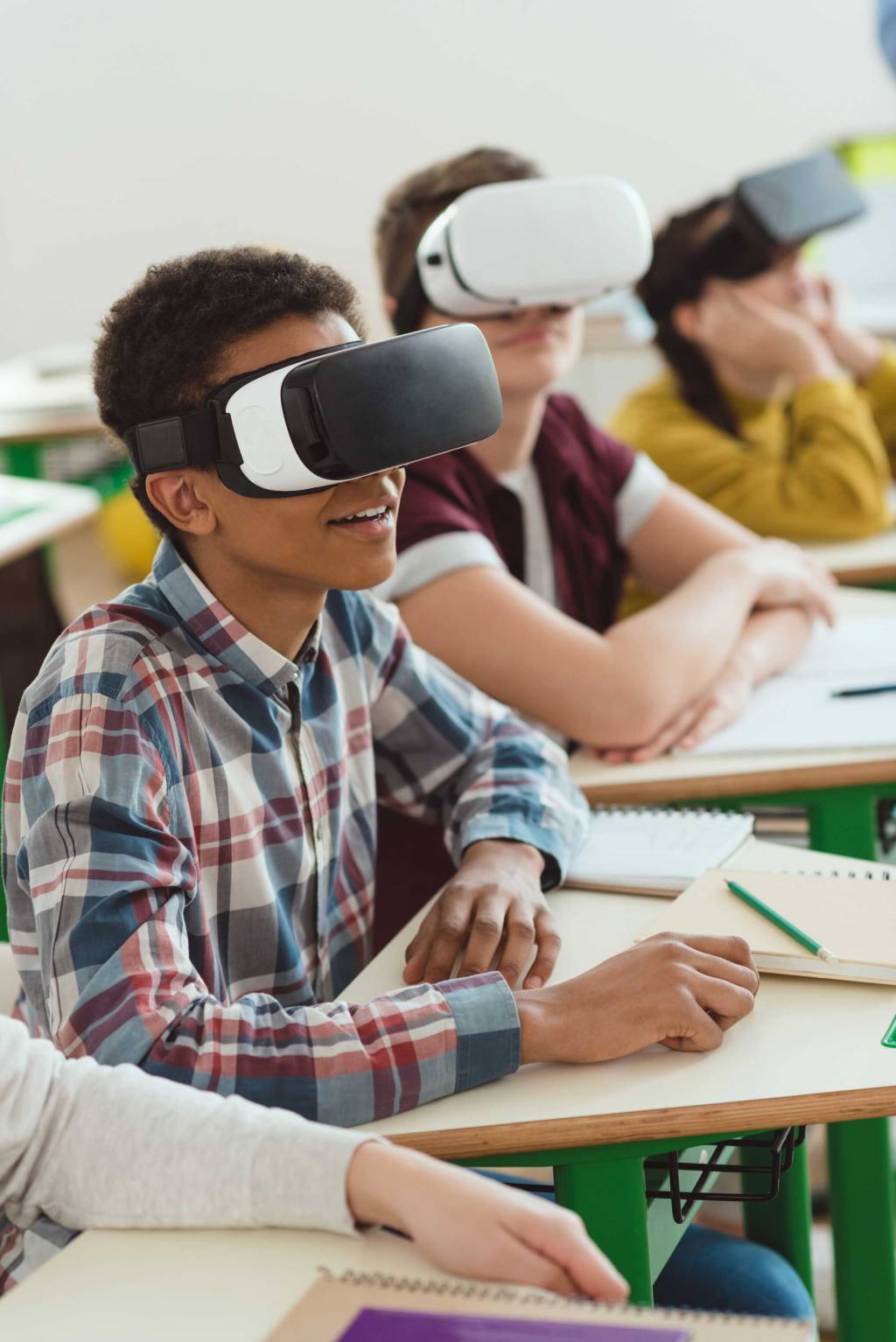
Virtual Reality: A Revolutionary Tool in Alternative Education
In recent years, the advancement of technology has paved the way for innovative and immersive learning experiences. Virtual reality (VR), once considered a futuristic concept, has now become a powerful tool that is transforming the landscape of alternative schooling and education. With its ability to create simulated environments, VR offers students endless possibilities for exploration, engagement, and active learning.
One of the key advantages of virtual reality in alternative education is its capacity to provide experiential learning opportunities that are often challenging or impossible to recreate within a traditional classroom setting. Through VR simulations, students can explore historical events, travel to far-off places they may never have the opportunity to visit otherwise, or even delve into complex scientific phenomena.
For example, imagine studying ancient civilization through textbooks alone. It can be difficult for students to truly grasp the scale and grandeur of structures like the Great Pyramids of Giza. However, with virtual reality technology, students can step inside these architectural marvels virtually and gain a deeper understanding by experiencing them firsthand. This level of immersion enhances comprehension and retention while fostering curiosity and enthusiasm.
Moreover, virtual reality allows educators to personalize instruction based on individual student needs. With VR applications tailored to various subjects and skill levels, teachers can cater their lessons according to each student’s pace and abilities. This adaptability enables personalized learning experiences that promote better engagement and achievement among learners.
Additionally, virtual reality provides an inclusive environment for all students regardless of physical limitations or disabilities they may have. Students with mobility impairments who may find it challenging or impossible to participate in certain activities can now engage with educational content through VR platforms designed specifically for accessibility purposes. This ensures equal access to educational opportunities for all learners while promoting inclusivity within alternative education settings.
Another area where virtual reality excels is in cultivating creativity through hands-on projects within a safe yet realistic digital environment. Students can design 3D models using specialized software or create virtual art installations. This opens up new avenues for self-expression and encourages students to think critically, problem-solve, and collaborate with peers on creative endeavors.
Furthermore, virtual reality offers an interactive platform that can foster collaboration and communication skills among students. Whether they are working together on a science experiment virtually or collaborating on a group project in a simulated workspace, VR allows learners to connect with their peers in shared immersive experiences. This enhances teamwork abilities while preparing them for future collaborative endeavors in the professional world.
However, like any tool, virtual reality also comes with its challenges. The cost of VR technology may still be prohibitive for some alternative education institutions, limiting access to this transformative learning experience. Additionally, educators need proper training and support to effectively integrate VR into their teaching practices and ensure it aligns with the curriculum objectives.
In conclusion, virtual reality is revolutionizing alternative education by offering immersive learning experiences that go beyond what traditional methods can provide. From experiential learning opportunities to personalization and inclusivity benefits, VR has the potential to transform how students engage with educational content. As technology continues to advance and become more accessible, integrating virtual reality into alternative schooling environments will undoubtedly open doors for limitless possibilities in education.
 Alternative Amie
Leave a comment