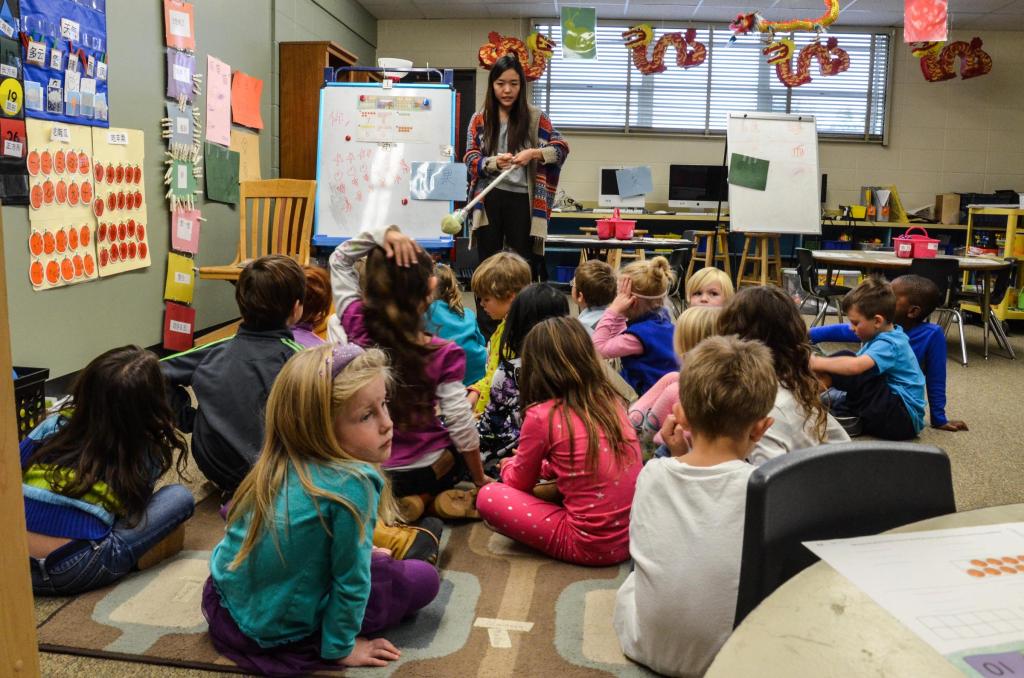
Bilingual education is an approach to schooling that values and promotes the use of multiple languages in the classroom. It has gained significant attention and support over the years, as it offers numerous benefits to students. In this article, we will explore various subtopics related to bilingual education, ranging from dual language immersion programs to immigrant integration through bilingual programs.
1. Dual language immersion programs:
Dual language immersion programs are a popular form of bilingual education that aims to develop proficiency in both English and another target language. These programs typically divide instructional time equally between the two languages, providing students with ample opportunities for practice and exposure. The goal is not only linguistic mastery but also cultural competence and academic achievement.
Research has shown that dual language immersion programs yield positive outcomes for all participating students, regardless of their native language or background. Students who participate in these programs tend to demonstrate higher levels of cognitive flexibility, problem-solving skills, and metalinguistic awareness compared to their monolingual peers.
2. Bilingual education in early childhood education:
Early childhood is a critical period for language acquisition, making it an ideal time for implementing bilingual education initiatives. Research suggests that young children have a remarkable ability to learn multiple languages simultaneously without confusion or interference.
In early childhood settings, bilingual education can be integrated into daily activities such as storytelling, playtime discussions, songs, and rhymes conducted in both languages. This approach not only helps children develop strong language skills but also fosters cultural appreciation and understanding from an early age.
3. Heritage language maintenance in bilingual education:
Heritage language maintenance refers to preserving a student’s home or community language while they acquire proficiency in the dominant societal language (e.g., English). Bilingual education plays a crucial role in supporting heritage-language learners by valuing their linguistic assets and incorporating their cultural backgrounds into the curriculum.
By maintaining connections with their heritage languages through formal instruction or informal conversations at school, students develop stronger self-identity and a sense of belonging. Furthermore, bilingual education helps prevent the loss of heritage languages, ensuring their preservation for future generations.
4. Bilingual education and cognitive development:
Bilingualism has been linked to enhanced cognitive abilities across various domains. Research shows that bilingual individuals often exhibit higher levels of attention control, cognitive flexibility, problem-solving skills, and metalinguistic awareness compared to monolingual individuals.
In bilingual classrooms, students engage in tasks that require switching between languages or comprehending information presented in different linguistic contexts. These experiences strengthen their executive functioning skills and contribute to improved overall cognitive development.
5. Bilingual education for students with special needs:
Bilingual education is inclusive by nature and can benefit students with special needs as well. It provides additional avenues for communication and expression while promoting socialization among peers from diverse linguistic backgrounds.
Teachers who are trained in both special education strategies and bilingual instruction can effectively support these students’ unique learning needs. Moreover, incorporating assistive technologies into the classroom can enhance accessibility for students with disabilities in a bilingual context.
6. Bilingual education and social-emotional learning:
Social-emotional learning (SEL) focuses on developing interpersonal skills, self-awareness, empathy, responsible decision-making, and other socioemotional competencies essential for holistic development. Bilingual classrooms offer an ideal environment to foster SEL as they promote cultural diversity appreciation and understanding.
Through engaging activities like cooperative group work or discussions centered around cultural similarities and differences, students develop empathy towards others’ perspectives while strengthening their own social-emotional skills.
7. The role of technology in bilingual education:
Technology has revolutionized many aspects of modern life – including language learning – providing new opportunities within the realm of bilingual education. Various digital tools such as educational apps, online resources, virtual reality platforms, video conferencing tools facilitate language acquisition by offering interactive content tailored to individual learners’ needs.
Additionally,
technology allows teachers to create authentic language-learning environments, expose students to real-life situations, and connect with native speakers of the target language. By integrating technology into bilingual education, educators can enhance engagement and bridge geographical barriers.
8. Bilingual education and multiculturalism:
Bilingual education inherently embraces multiculturalism by recognizing the value of diverse languages, cultures, and perspectives. By incorporating culturally responsive pedagogy into the curriculum, teachers can create inclusive learning environments that celebrate students’ linguistic and cultural backgrounds.
In a multicultural classroom setting,
bilingual education encourages cross-cultural communication, mutual respect, and appreciation for diversity. Students develop intercultural competence – an essential skill in today’s globalized world.
9. Bilingual education policies and legislation:
Policies regarding bilingual education vary across different countries and regions. Some countries adopt official bilingualism or multilingualism as part of their educational system through legislation or constitutional provisions. These policies provide support for bilingual programs in schools, allocate resources, establish standards for teacher certification, and ensure equitable access to quality bilingual education.
Understanding these policies is crucial for educators,
administrators,
and policymakers involved in implementing effective bilingual education programs that adhere to legal requirements while meeting students’ needs.
10. Community involvement in bilingual education programs:
Community involvement is vital for successful implementation of bilingual education initiatives.
Engaging families,
community leaders,
and local organizations fosters collaboration between various stakeholders.
It also helps create a supportive network that reinforces language use outside the classroom environment.
By involving communities in decision-making processes related to curriculum development or program evaluation,
bilingual educators can build stronger partnerships that enrich students’ learning experiences.
11. Assessment methods in bilingual education:
Assessing student progress accurately is essential within any educational context.
However,
traditional assessment methods designed primarily for monolingual settings may not adequately capture the abilities of bilingual learners.
Therefore,
it is important to develop appropriate assessment tools that align with the goals
of bilingual instruction.
These assessments should consider both content knowledge and language proficiency in a fair and unbiased manner.
12. Teacher training for bilingual classrooms:
Effective teacher training is paramount to the success of bilingual education programs.
Teachers need specialized knowledge and skills to create supportive learning environments,
implement instructional strategies that promote language development,
and address the unique needs of diverse learners.
Professional development opportunities should focus on equipping educators with culturally responsive teaching practices,
language acquisition theories, second-language pedagogy, and strategies for differentiating instruction.
13. Bilingualism and biliteracy development:
Bilingual education aims not only to develop oral language proficiency but also to foster literacy skills in both languages.
Students engage in reading, writing, and comprehension activities in both their native language and the target language.
This approach ensures that students become proficient readers and writers in multiple languages,
empowering them academically while preserving their linguistic heritage.
14. Bilingual education and academic achievement:
Research consistently demonstrates that bilingual education positively impacts students’ academic achievement across various subject areas.
Bilingual learners often outperform their monolingual peers on standardized tests,
demonstrate higher levels of critical thinking,
and excel academically due to enhanced cognitive abilities developed through bilingual instruction.
15. Translanguaging practices in bilingual classrooms:
Translanguaging refers to the fluid switching between two or more languages within an educational context.
It allows students to draw upon all their linguistic resources when communicating or engaging with content matter.
In a translanguaging classroom environment,
teachers actively encourage students’ use of all available languages
to facilitate understanding, expression,
and deeper engagement with academic concepts.
16. Parental perspectives on bilingual education:
Parents play a crucial role as partners in promoting student success within a bilingual education framework.
Understanding parental perspectives helps educators tailor communication strategies effectively
and address any concerns or misconceptions parents may have about bilingual programs.
Creating open lines of communication fosters collaboration between teachers, parents, and families towards supporting students’ linguistic and academic growth.
17. Bicultural identity formation through bilingualism:
Bilingual education supports the development of bicultural identities
by providing students with opportunities to engage with diverse cultures and languages.
Students gain a deep understanding of their own cultural heritage while fostering appreciation for others’ perspectives.
This process contributes to the development of well-rounded individuals who can navigate multiple cultural contexts confidently.
18. Linguistic diversity in alternative schooling approaches:
Alternative schooling approaches often embrace linguistic diversity as a core value.
These models recognize the importance of multilingualism in an increasingly interconnected world
and aim to provide students with meaningful experiences that celebrate linguistic diversity while nurturing academic excellence.
19. Indigenous languages in bilingual education:
Bilingual education programs have gained significant recognition as tools for preserving and revitalizing indigenous languages.
By incorporating indigenous languages into formal education,
bilingual programs help preserve linguistic heritage, foster intergenerational continuity,
and empower indigenous communities.
These initiatives support both language reclamation efforts and educational equity for indigenous learners.
20. Immigrant integration through bilingual programs:
Bilingual education plays a vital role in facilitating immigrant integration within host societies by promoting language proficiency, cultural competency, and social inclusion.
By supporting immigrants’ access to quality bilingual instruction,
these programs enable newcomers to participate fully in their new communities while maintaining connections with their home culture.
In conclusion, bilingual education encompasses various subtopics that highlight its significance and impact on students’ lives. From dual language immersion programs to immigrant integration through bilingual programs, each aspect offers unique insights into how this approach enhances cognitive development, promotes multiculturalism, fosters biliteracy skills, and supports student success across diverse populations. By embracing these subtopics within alternative schooling approaches or traditional educational settings alike, we can create inclusive learning environments that value linguistic diversity while empowering learners for future success.
 Alternative Amie
Leave a comment