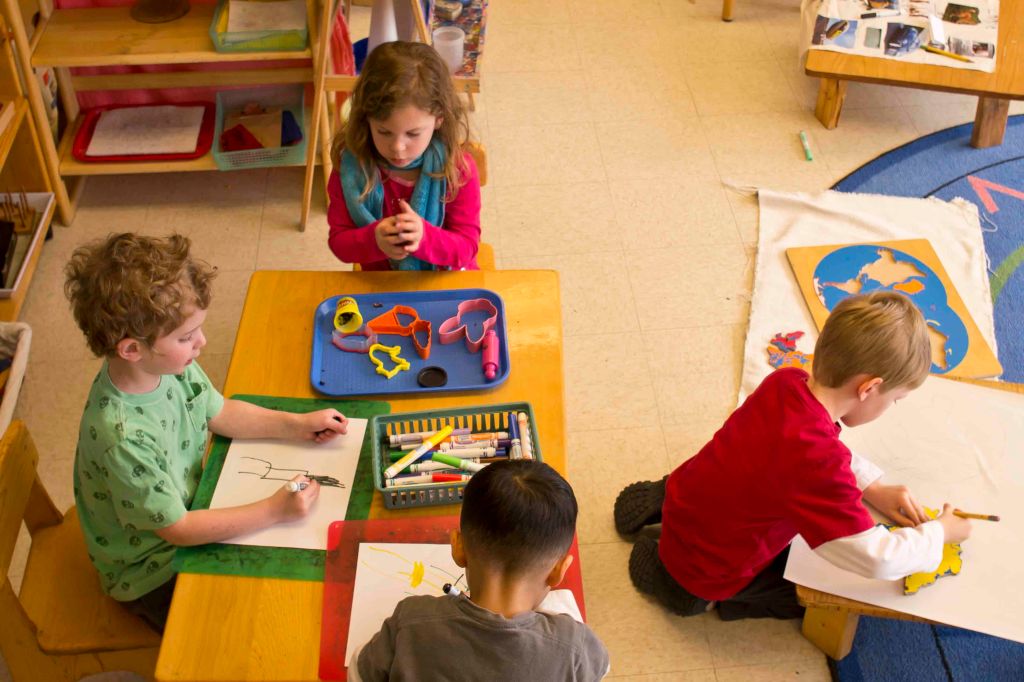
Montessori-inspired microschools have been gaining popularity in recent years as an alternative form of education that focuses on personalized learning and child-centered approaches. These small-scale schools offer a unique educational experience, combining the principles of Montessori philosophy with the flexibility and innovation of microschooling.
One key aspect of Montessori-inspired microschools is their commitment to individualized instruction. Unlike traditional classrooms where students are expected to learn at the same pace, these microschools allow children to progress at their own speed. Each student receives personalized attention from teachers who tailor their lessons based on the child’s interests, strengths, and developmental needs. This approach not only fosters a love for learning but also ensures that each child reaches their full potential.
Another fundamental element of these schools is the emphasis on hands-on learning. The Montessori method encourages children to engage in practical activities that enhance cognitive development and fine motor skills. In a microschool setting, this aspect is further amplified as students have more space and time for experiential learning. From gardening to cooking, woodworking to coding – children are encouraged to explore various subjects through hands-on projects that pique their curiosity.
The mixed-age classrooms found in Montessori-inspired microschools also play a significant role in fostering social-emotional growth among students. Older children act as mentors for younger ones, reinforcing concepts they’ve already mastered while developing leadership skills themselves. Younger kids benefit from observing older peers’ behaviors and abilities, inspiring them to take on new challenges confidently. This dynamic creates a sense of community within the classroom where collaboration and empathy thrive.
Sustainability is another pillar often integrated into Montessori-inspired microschools’ curriculum design. The focus extends beyond teaching environmental awareness; it encompasses sustainable practices within daily school operations as well. Students may engage in composting programs or maintain school gardens where they learn about responsible resource management firsthand. By incorporating sustainability into every aspect of school life, these microschools instill a sense of stewardship and environmental consciousness in their students.
One significant advantage of Montessori-inspired microschools is the flexibility they offer. With smaller class sizes, educators can adapt schedules and activities to meet individual student needs effectively. This flexibility extends beyond traditional classrooms’ constraints, allowing for more field trips, community involvement, and project-based learning opportunities. Teachers have the freedom to design customized curricula that cater to students’ interests while ensuring mastery of essential concepts.
The role of technology in these microschools cannot be overlooked either. While Montessori education traditionally emphasizes hands-on materials rather than screens, modern microschooling incorporates technology thoughtfully. In today’s digital age, children need to develop digital literacy skills early on, which can complement their overall learning experience. However, the focus remains on balancing screen time with real-world interactions and experiences.
Parental involvement is highly encouraged in Montessori-inspired microschools as well. Parents are seen as partners in their child’s education journey rather than mere spectators or consumers of educational services. Regular communication between teachers and parents helps create a strong support system for each student’s growth and development.
In terms of assessment methods used in these schools, traditional grading systems are often replaced with narrative evaluations that provide a comprehensive overview of a child’s progress across various areas – academic, social-emotional, and physical development. This holistic approach to assessment ensures that every aspect of a child’s growth is considered rather than solely focusing on test scores or grades.
Cost is one factor that may deter some families from considering Montessori-inspired microschools as an option for their children’s education. These schools often rely heavily on tuition fees since they receive minimal government funding compared to public schools. However, many institutions offer financial aid programs or scholarships to make this form of education accessible to families from diverse socioeconomic backgrounds.
In conclusion, Montessori-inspired microschools provide an innovative alternative to mainstream education by combining the principles of Montessori philosophy with the flexibility and adaptability of microschooling. With individualized instruction, hands-on learning experiences, mixed-age classrooms, a focus on sustainability, and technology integration in a flexible setting, these schools offer a holistic education that nurtures each child’s unique potential. While costs may be a factor for some families, the long-term benefits of this form of education make it worth considering as an alternative schooling option.
 Alternative Amie
Leave a comment