Circuitry: Understanding the Basics
In today’s digital age, understanding circuitry has become an essential skill for students interested in fields such as engineering, robotics, and computer science. Circuitry forms the foundation of electronic devices by enabling the flow of electricity and controlling its path. In this article, we will explore the basics of circuitry to provide a solid starting point for those eager to dive into this captivating field.
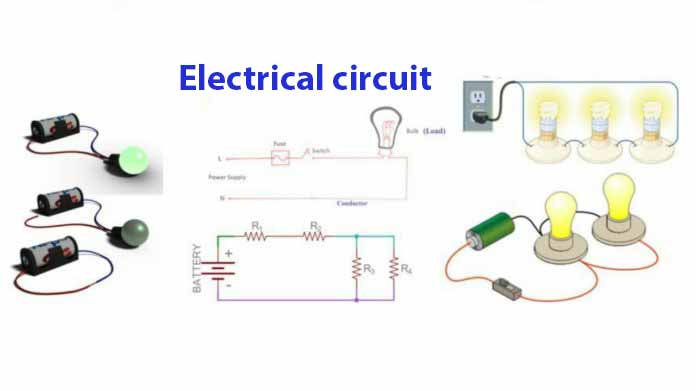
At its core, a circuit is a closed loop through which current can flow. It comprises several key components: power source, wires or conductors, resistors, capacitors, diodes, transistors, and integrated circuits (ICs). The power source provides electrical energy needed to drive the circuit; commonly used sources include batteries or outlets. Wires act as pathways for electric current to travel from one component to another.
Resistors are crucial elements that limit the amount of current flowing through a circuit. They are designed with specific resistance values measured in ohms (Ω). Capacitors store electrical charge temporarily and release it when needed. Diodes allow current to flow only in one direction while blocking it in reverse.
Transistors are semiconducting devices widely used for amplification and switching purposes in circuits. They control the flow of current based on input signals received from other components. Integrated circuits (ICs) consist of multiple electronic components integrated onto a single chip. These small but powerful chips serve various functions like processing information or storing data.
Understanding how these components work together is essential for designing functional circuits capable of performing desired tasks. Students can start learning about basic circuit construction using breadboards – prototyping tools that allow easy assembly and disassembly without soldering.
Experimenting with simple projects like LED light circuits helps familiarize students with fundamental concepts such as connecting wires correctly and reading schematic diagrams – graphical representations showing how components should be connected within a circuit.
Furthermore, online resources like interactive circuit simulators and educational videos provide an engaging way to learn and experiment with different circuit configurations. These resources allow students to simulate circuits virtually, enabling them to test ideas and troubleshoot problems without the need for physical components.
By gaining a solid understanding of circuitry, students can unleash their creativity and tackle more complex projects in fields like robotics or automation. The ability to design and build circuits empowers learners to bring their innovative ideas to life, making it an indispensable skill in today’s technology-driven world.
In conclusion, learning about circuitry is crucial for students interested in engineering, robotics, or computer science. By comprehending the basic components and principles of circuits, students can embark on exciting projects that harness the power of electricity. With countless online resources available, mastering circuitry has never been easier. So grab a breadboard and start exploring this fascinating field today!
 Alternative Amie
Leave a comment