Personalized learning is an approach to education that tailors instruction and learning experiences to meet the unique needs, interests, and abilities of individual students. It recognizes that every learner is different and aims to provide a more flexible and student-centered learning environment.
In traditional classrooms, teachers typically deliver lessons to the entire class at the same pace and expect all students to grasp the concepts equally. However, this one-size-fits-all approach often leaves some students bored and unchallenged while others struggle to keep up. Personalized learning seeks to address these challenges by allowing students to progress through their coursework at their own pace.
One of the key components of personalized learning is individual goal-setting. Instead of being given predefined objectives, students actively participate in setting their own goals based on their strengths, weaknesses, interests, and aspirations. This process empowers them to take ownership of their education and encourages intrinsic motivation.
To achieve these goals effectively, personalized learning employs various instructional methods tailored specifically for each student’s needs. For instance, adaptive technology plays a significant role in providing customized content delivery. Adaptive software continuously assesses a student’s performance and adapts its recommendations accordingly. This allows learners to receive targeted support or enrichment activities based on their current level of understanding.
Another important aspect of personalized learning is differentiated instruction. Teachers use various strategies such as small group work or one-on-one coaching sessions to provide targeted interventions for struggling students or challenge advanced learners further. By catering instruction directly towards individual needs, educators can ensure that every student receives appropriate support without feeling overwhelmed or left behind.
Furthermore, personalization extends beyond academic content alone; it also encompasses factors such as preferred learning styles and interests. Recognizing that individuals have diverse ways of processing information – whether they are visual learners who benefit from diagrams or kinesthetic learners who thrive through hands-on activities – teachers incorporate multiple modalities into lesson plans to engage all types of learners effectively.
Additionally, personalized learning emphasizes real-world connections and the application of knowledge. By linking classroom concepts to practical, authentic contexts, students can see the relevance and purpose behind their learning. This approach fosters critical thinking skills, problem-solving abilities, and prepares students for future success in higher education or the workforce.
One prominent model of personalized learning is competency-based education (CBE). CBE shifts the focus from seat time to mastery of specific skills or competencies. Instead of progressing only based on a predetermined timeline, students advance once they have demonstrated proficiency in each skill area. This allows learners to move ahead as soon as they are ready while ensuring a solid foundation before moving forward.
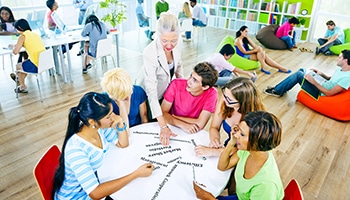
Personalized learning also promotes collaboration and peer-to-peer interaction. Students are encouraged to work together on projects, share ideas, give constructive feedback, and learn from one another’s perspectives. Collaborative activities not only enhance social-emotional development but also build essential skills such as communication, teamwork, and empathy – qualities highly valued in today’s interconnected world.
While personalized learning offers numerous benefits for students’ academic growth and personal development, it does require careful planning and implementation. Effective integration of technology tools is crucial for efficient data collection and analysis to inform instruction appropriately. Professional development opportunities for educators are also necessary to equip them with the knowledge and skills needed to effectively manage personalized learning environments.
Moreover, equitable access to resources must be ensured so that all students can benefit from personalized learning opportunities regardless of their socioeconomic background or geographical location. It is essential that schools invest in infrastructure improvements and provide adequate support systems for both students and teachers.
In conclusion, personalized learning has the potential to revolutionize traditional educational practices by putting individual student needs at the forefront. By tailoring instruction based on unique strengths, interests, abilities, preferred modalities of learning, and goals set by learners themselves; this approach fosters engagement, motivation while promoting deeper understanding of content areas. As we continue exploring innovative approaches within alternative schooling systems, personalized learning emerges as a promising avenue for creating more inclusive and effective educational experiences.
 Alternative Amie
Leave a comment