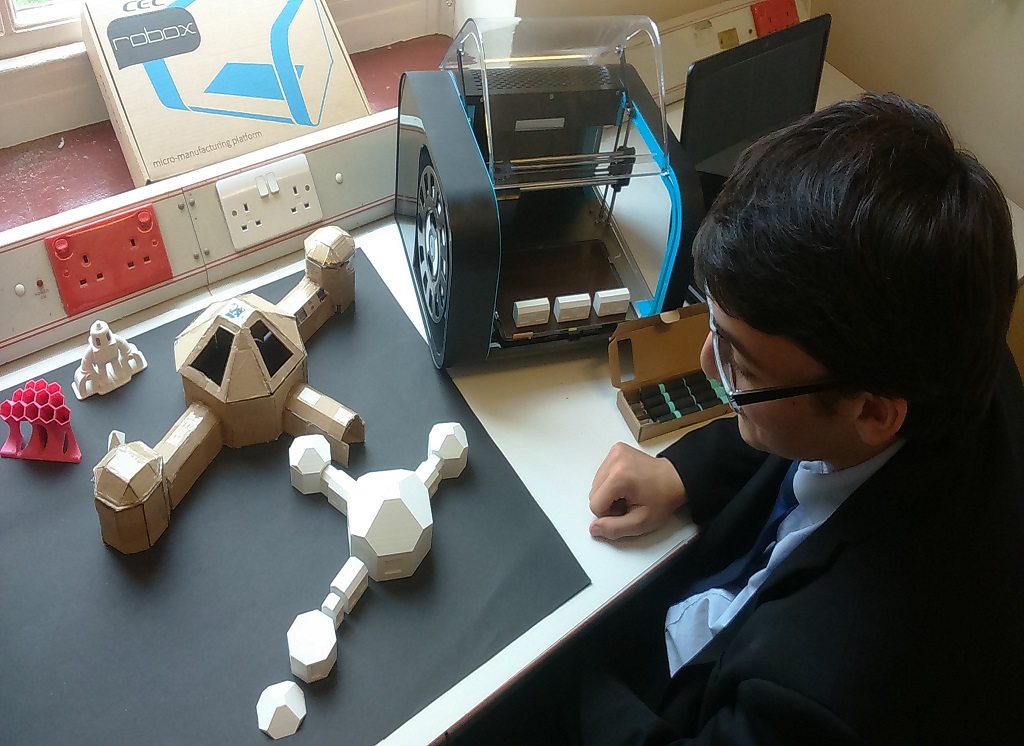
3D Printing: Empowering Alternative Schooling and Education
In recent years, 3D printing has emerged as a powerful tool that holds immense potential in transforming various industries. One field where it is making significant strides is education. Traditional schooling methods are being challenged by alternative approaches, and 3D printing is at the forefront of this revolution.
Gone are the days when students were confined to textbooks and two-dimensional learning materials. With 3D printing, educators now have the ability to bring concepts to life, fostering creativity, engagement, and critical thinking among learners. This groundbreaking technology allows students to explore complex ideas through hands-on experiences that were previously unimaginable.
So how exactly does 3D printing work? Simply put, it involves creating three-dimensional objects from digital files using a layer-by-layer additive manufacturing process. The possibilities are endless – from building models of historical landmarks or scientific structures to designing intricate prototypes for engineering projects.
One of the greatest advantages of 3D printing in alternative schooling and education lies in its ability to cater to different learning styles. Not all students thrive within traditional classroom settings; some require more hands-on or visual approaches to truly grasp concepts. By incorporating 3D printing into their curriculum, teachers can provide a multi-sensory experience that accommodates diverse learning preferences.
Take mathematics as an example. Many students struggle with abstract mathematical concepts because they cannot visualize them in real-life scenarios. However, with 3D printing technology, geometric shapes can be transformed into tangible objects that students can hold and manipulate. This approach not only enhances their understanding but also sparks curiosity and encourages independent exploration.
Similarly, science subjects such as biology or anatomy become more accessible through the use of 3D-printed models of cells or organs. Instead of relying solely on textbooks or illustrations, students can examine physical replicas up close, gaining a deeper understanding of complex biological processes like never before.
Another area where alternative schooling can benefit from 3D printing is in the realm of art and design. Traditional art classes often focus on two-dimensional mediums like painting or drawing, limiting students’ exploration of sculptural forms. However, with 3D printing technology, students can bring their imagination to life by creating three-dimensional sculptures or even functional objects.
Imagine a student designing and printing a custom-made phone case or a piece of jewelry. This not only fosters creativity but also introduces practical aspects such as product design and entrepreneurship. By integrating 3D printing into artistic pursuits, alternative schools empower students to develop skills that go beyond traditional academic boundaries.
Furthermore, the introduction of 3D printers in alternative education settings encourages collaboration and problem-solving skills among students. Working together on projects that require designing and prototyping helps foster teamwork, communication, and critical thinking abilities.
The process of creating a 3D-printed object involves trial-and-error iterations, allowing students to learn from their mistakes while developing resilience and perseverance. These real-world experiences are invaluable for preparing students for future careers where adaptability and problem-solving capabilities are highly sought after.
Additionally, incorporating 3D printing into alternative schooling environments provides an opportunity for interdisciplinary learning. Students can collaborate across subjects to create comprehensive projects that incorporate elements from various disciplines.
For instance, history classes could involve recreating ancient artifacts using historical references combined with engineering principles learned in physics class. This cross-pollination of knowledge not only enhances subject understanding but also encourages creative thinking by applying concepts in novel ways.
Despite its numerous benefits for alternative schooling environments, the integration of 3D printing does present some challenges. The cost associated with acquiring printers and materials may be prohibitive for some institutions. However, as technology advances and becomes more accessible over time, these barriers will likely diminish gradually.
To overcome financial constraints initially, schools can explore partnerships with local businesses or seek grants specifically earmarked for educational purposes related to emerging technologies. Collaboration with community organizations or other educational institutions can also help share resources and reduce costs.
In conclusion, 3D printing is a powerful tool that has the potential to revolutionize alternative schooling and education. By providing hands-on experiences, catering to different learning styles, fostering interdisciplinary learning, promoting collaboration, and developing problem-solving skills, this technology empowers students in ways traditional methods cannot match.
As we continue to explore the possibilities of 3D printing in education, it is important for educators and policymakers to embrace this transformative tool. Alternative schools should seize the opportunity to introduce 3D printing into their curricula as a means of enriching student learning experiences and preparing them for the future. Let us embrace the power of 3D printing as we embark on a new era of alternative schooling and education.
 Alternative Amie
Leave a comment