Mnemonic techniques for memorization have been used for centuries as a way to improve memory retention. The use of mnemonic devices, such as acronyms or rhymes, helps individuals remember information more effectively by creating associations between new information and existing knowledge. One popular technique is the Method of Loci, which involves mentally placing items to be remembered in specific locations within a familiar physical space.
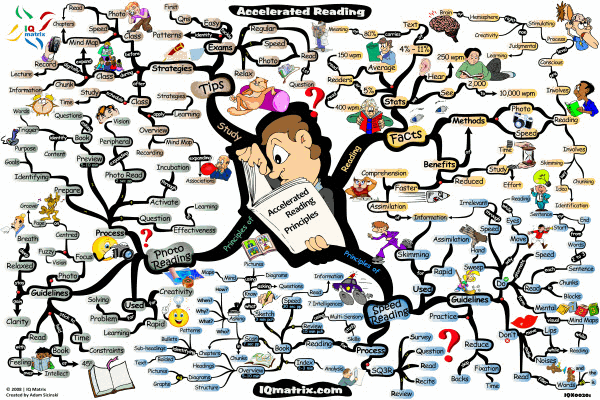
Speed reading strategies are essential tools for those seeking to enhance their reading skills and absorb large amounts of information quickly. Techniques such as skimming and scanning allow readers to identify key points without getting bogged down in unnecessary details. Additionally, practicing eye movement exercises can help increase reading speed by training the eyes to move smoothly across the page.
Mind mapping is an effective tool for organizing ideas and enhancing learning outcomes. By visually representing concepts using diagrams or flowcharts, individuals can see connections between different pieces of information, facilitating comprehension and recall. Mind maps also encourage creative thinking and problem-solving by allowing learners to explore multiple perspectives on a topic.
Neuroplasticity refers to the brain’s ability to reorganize itself based on experiences. This concept has significant implications for accelerated learning as it suggests that through targeted practice and repetition, individuals can strengthen neural pathways associated with specific skills or knowledge areas. By engaging in deliberate practice with feedback mechanisms in place, learners can optimize their brain’s capacity for learning.
Dual coding theory proposes that combining verbal and visual representations enhances memory encoding and retrieval processes. When learners engage with material both verbally (reading or listening) and visually (through images or diagrams), they create two separate but interconnected memory traces, increasing the likelihood of successful recall later on.
The role of music in improving learning outcomes has gained attention recently due to its impact on mood regulation and cognitive processing. Studies have shown that background music during study sessions can improve focus and concentration while also reducing stress levels. Moreover, certain types of music (such as classical compositions) have been associated with increased memory retention and enhanced creativity.
Gamification, the integration of game elements into educational experiences, has proven to be an effective tool in alternative education settings. By incorporating elements such as points, levels, and rewards into learning activities, gamification promotes engagement and motivation while fostering a sense of accomplishment. This approach can make complex subjects more accessible and enjoyable for students.
The impact of sleep on cognitive abilities cannot be overstated. Adequate sleep is crucial for consolidating newly acquired information and enhancing memory formation. Research has shown that individuals who get sufficient quality sleep perform better on tasks requiring attention, problem-solving, and decision-making skills.
Nootropics are substances claimed to enhance cognitive function, including memory, focus, and creativity. While some people may find temporary improvements in their learning abilities from using nootropics like caffeine or omega-3 fatty acids found in fish oil supplements, it’s important to note that long-term effects are still under investigation.
Learning styles refer to individual preferences for how information is presented and processed. Personalized instruction takes these preferences into account by tailoring teaching methods to match students’ unique learning styles. By accommodating different modalities (visual, auditory, kinesthetic), educators can create a more inclusive learning environment that caters to diverse student needs.
Mindfulness practices involve intentionally focusing one’s attention on the present moment without judgment. These techniques help improve concentration skills by training the mind to observe thoughts without becoming entangled in them. Incorporating mindfulness practices into daily routines can enhance focus during study sessions and reduce distractions caused by wandering thoughts.
Virtual reality (VR) technology has revolutionized accelerated learning programs by providing immersive environments where learners can actively engage with content instead of being passive recipients of information. VR simulations allow learners to practice real-life scenarios safely while receiving immediate feedback on their performance.
Brain-based teaching methods leverage knowledge about how the brain learns best to inform instructional strategies in alternative schooling settings. These methods emphasize active learning, multisensory experiences, and project-based activities to engage students’ cognitive processes fully.
Physical exercise has been shown to have a positive impact on cognitive function. Regular physical activity increases blood flow to the brain, which enhances memory, attention, and problem-solving abilities. Incorporating movement breaks into the school day can help improve academic performance and overall well-being.
Multisensory approaches to learning capitalize on the fact that individuals process information through different sensory channels. By integrating visual, auditory, tactile, and kinesthetic elements into lessons or activities, educators can cater to diverse learning styles and enhance comprehension for all students.
Nutrition plays a vital role in brain health and academic performance. A diet rich in nutrients such as omega-3 fatty acids found in fish, antioxidants found in fruits and vegetables, and complex carbohydrates from whole grains supports optimal brain function. Conversely, diets high in processed foods or lacking essential nutrients may impair cognitive abilities.
Developing critical thinking skills is crucial for preparing students for success in today’s complex world. Techniques like Socratic questioning encourage analytical thinking by challenging assumptions and exploring multiple perspectives. Engaging learners in problem-solving activities that require them to evaluate evidence and make informed decisions fosters independent thinking skills.
Building resilience and grit are important aspects of accelerated learning programs as they equip students with the mindset necessary to overcome challenges effectively. By providing opportunities for failure followed by reflection and growth-oriented feedback, alternative education settings can foster perseverance and determination among learners.
Creative problem-solving strategies empower students to think outside the box when faced with challenges or unfamiliar situations. Encouraging divergent thinking through brainstorming sessions or design-thinking exercises allows learners to explore multiple solutions before settling on the most viable one.
Harnessing curiosity is a powerful tool for effective learning because it motivates individuals to seek out knowledge actively rather than passively absorbing information presented to them. By nurturing curiosity through inquiry-based approaches that encourage exploration and discovery, educators can cultivate lifelong learners.
In conclusion, alternative schooling and education settings offer a range of techniques and strategies to promote effective learning. From mnemonic techniques for memorization to harnessing the power of curiosity, these approaches engage learners’ cognitive processes while fostering motivation, critical thinking skills, and resilience. By incorporating these methods into educational practices, students can unlock their full potential and thrive in an ever-changing world.
 Alternative Amie
Leave a comment