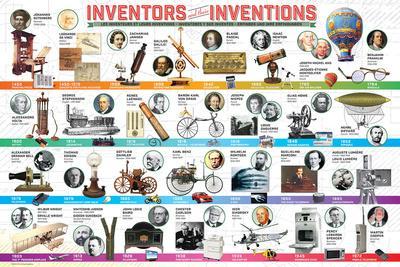
Inventors and Inventions: Unleashing the Power of Creativity
Throughout history, inventors have played a crucial role in shaping our society. Their boundless creativity and insatiable curiosity have resulted in groundbreaking discoveries that have revolutionized the way we live. From Thomas Edison’s invention of the light bulb to Alexander Graham Bell’s creation of the telephone, these inventors have left an indelible mark on our world. In this article, we will explore some notable inventors and their inventions, highlighting their impact on education.
One renowned inventor whose work has greatly influenced education is Johannes Gutenberg. In the 15th century, Gutenberg invented the printing press, which facilitated mass production of books for the first time in history. This invention made knowledge accessible to a wider audience and laid the foundation for modern education systems by promoting literacy.
Moving forward several centuries, we encounter another influential figure: Louis Braille. Born blind in 1809, Braille developed a system of raised dots that allowed visually impaired individuals to read and write independently. The invention of Braille not only empowered blind people but also opened up educational opportunities for them.
Another revolutionary inventor who transformed education is Seymour Papert. Known as one of the pioneers of artificial intelligence (AI), Papert created Logo programming language in the 1960s – an innovative tool that introduced children to computational thinking through coding. By making computer programming accessible to young learners, Papert paved the way for incorporating technology into education and fostering critical thinking skills from an early age.
In recent times, Salman Khan has emerged as a prominent figure in alternative education with his creation Khan Academy – a non-profit organization providing free online educational resources covering various subjects such as math, science, arts, and humanities. Through video lessons and interactive exercises, Khan Academy has democratized access to quality education worldwide by breaking down barriers like geography or socio-economic background.
Moreover, Mary Anderson’s invention changed the way we travel and made transportation safer. In 1903, Anderson patented the windshield wiper system, which ultimately became a standard feature in automobiles. This invention greatly improved visibility during inclement weather conditions, ensuring safer journeys for drivers and passengers.
Inventors continue to shape education today by developing innovative tools and technologies. From interactive whiteboards that facilitate dynamic classroom experiences to educational apps that make learning engaging and accessible beyond traditional classrooms, these inventions have transformed the learning landscape.
In conclusion, inventors have revolutionized education through their remarkable creations. Their relentless pursuit of knowledge and innovation has paved the way for progress in various fields. By acknowledging their contributions, we appreciate how their inventions have shaped our world while also inspiring future generations of inventors to embrace curiosity and creativity.
 Alternative Amie
Leave a comment