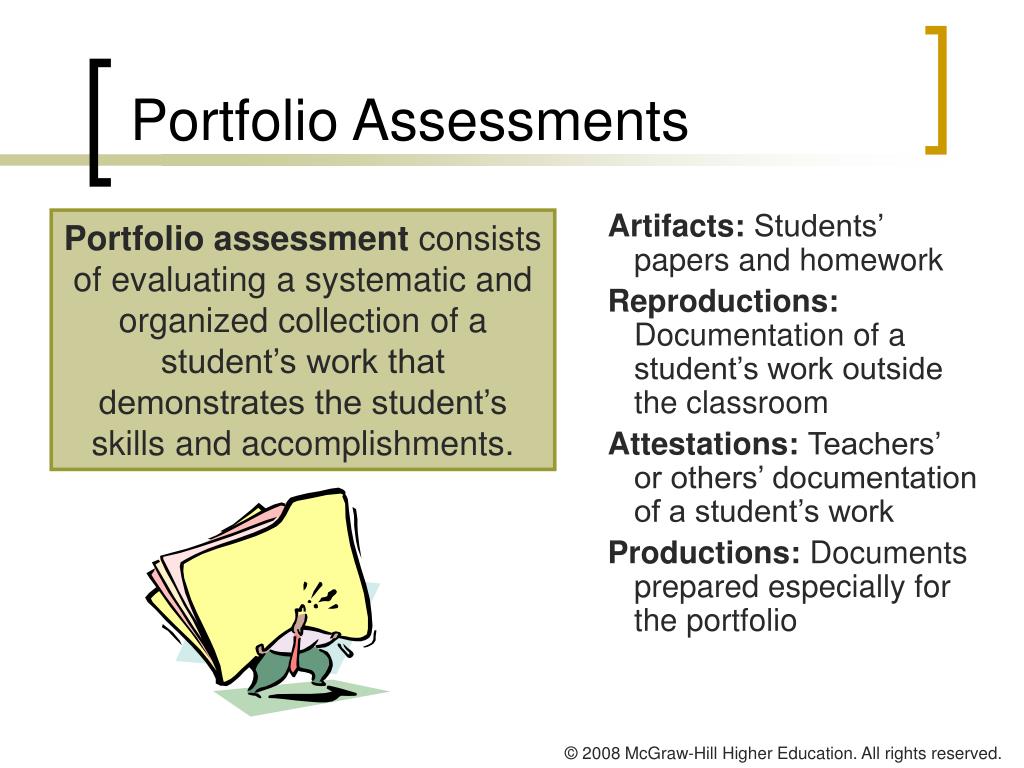
Authentic Assessment in Portfolio Assessment
Authentic assessment is a valuable approach to evaluate student learning that goes beyond traditional methods such as standardized tests or multiple-choice exams. It focuses on real-world and meaningful tasks that allow students to demonstrate their knowledge, skills, and understanding in a more authentic context. When it comes to portfolio assessment, incorporating authentic assessment strategies can greatly enhance the overall effectiveness of the process.
Portfolio assessments provide students with an opportunity to showcase their work samples, projects, and reflections over a period of time. These collections of evidence allow teachers and students alike to gain insights into the progress made throughout a course or academic year. Here are some ways in which authentic assessment can be integrated into portfolio assessment:
1. Real-world Tasks: Including real-world tasks in portfolios allows students to apply their learning to practical situations. This could involve solving complex problems, conducting research projects, creating multimedia presentations, or participating in community service initiatives.
2. Performance Assessments: Performance-based assessments require students to demonstrate specific skills or competencies through hands-on tasks or simulations. In portfolio assessments, these performance-based tasks can be included as evidence of student achievement and growth.
3. Authentic Audience: By including an authentic audience for student work within portfolios (e.g., peers, experts from the field), students have the opportunity to receive feedback from those who are knowledgeable about the subject matter being assessed. This not only enhances motivation but also provides an external perspective on their work.
Self-reflection and Goal-setting in Portfolio Assessment
Self-reflection is a critical component of portfolio assessment as it encourages students to become active participants in their own learning process. By reflecting on their strengths and weaknesses, setting goals for improvement, and monitoring progress over time within portfolios, students develop metacognitive skills that contribute significantly to their overall growth as learners.
Here’s how self-reflection and goal-setting can be incorporated into portfolio assessments:
1. Reflection Prompts: Providing reflective prompts or questions within portfolios prompts students to think deeply about their learning experiences, challenges faced, and strategies employed to overcome those challenges. These prompts can be tailored to specific learning objectives or competencies being assessed.
2. Goal-setting: Students should be encouraged to set both short-term and long-term goals related to their learning journey. These goals can be included in the portfolio along with evidence of progress made towards achieving them. This not only helps students take ownership of their learning but also promotes self-regulation skills.
3. Progress Monitoring: Regularly reviewing and updating portfolios allows students to monitor their progress over time. By comparing earlier work samples with more recent ones, they can track how they have grown academically, creatively, or personally.
Peer Assessment in Portfolio Assessment
Peer assessment is a powerful tool that not only reduces the workload on teachers but also promotes active engagement among students as they assess each other’s work samples within portfolios. It enhances critical thinking skills, encourages collaboration and constructive feedback, and fosters a sense of responsibility for one’s own learning as well as supporting others’ growth.
Here’s how peer assessment can be integrated into portfolio assessments:
1. Clear Criteria: Establishing clear criteria for assessing different components of portfolios is essential for effective peer assessment. This ensures that all students understand what is expected from them when evaluating their peers’ work.
2. Rubrics: Providing rubrics or scoring guides help standardize the assessment process and make it easier for peers to evaluate each other’s work objectively. Rubrics should align with the learning outcomes being assessed and offer specific descriptors for different levels of achievement.
3. Training in Assessment Skills: Before engaging in peer assessment within portfolios, it is crucial to provide explicit instruction on how to give constructive feedback, use appropriate language while providing criticism or praise, and maintain a supportive environment throughout the process.
Assessing Creativity and Innovation in Portfolios
Creativity is an essential skill that students need to develop in order to thrive in the 21st-century workforce. Portfolio assessments provide an ideal platform for showcasing and assessing creativity and innovation. Here are some strategies for assessing creativity within portfolios:
1. Showcasing Creative Work: Portfolios should include a variety of creative work samples such as artwork, designs, multimedia projects, or innovative solutions to problems. These artifacts can be accompanied by reflections that highlight the student’s creative process.
2. Divergent Thinking Exercises: Including divergent thinking exercises within portfolios allows students to demonstrate their ability to generate multiple ideas or solutions. This could involve brainstorming sessions, mind maps, or concept sketches.
3. Peer Feedback on Creativity: Peer assessment can play a significant role in evaluating creativity within portfolios. Peers can provide feedback on the originality, uniqueness, and effectiveness of creative work samples.
Assessing Critical Thinking Skills through Portfolios
Critical thinking is a crucial skill that equips students with the ability to analyze information critically, evaluate arguments and evidence, make reasoned judgments, solve problems effectively, and think independently. Assessing critical thinking skills through portfolio assessments can help identify areas where students excel and areas where improvement is needed.
Here are some ways in which critical thinking skills can be assessed within portfolios:
1. Analysis of Complex Issues: Students should be encouraged to include samples of their work that require analysis of complex issues or topics from different perspectives. These could include research papers, case studies, debate transcripts or multimedia presentations that showcase critical thinking skills.
2. Reflections on Decision-making Processes: Asking students to reflect on their decision-making processes when solving problems or making choices related to their learning experiences helps assess their ability to think critically about various options before arriving at a conclusion.
3. Artifacts Demonstrating Evidence-based Reasoning: Including artifacts such as scientific experiments reports, data analyses with appropriate justifications based on evidence collected enables evaluation of how well students apply logical reasoning and critical thinking skills.
In conclusion, portfolio assessment offers a comprehensive approach to evaluate student learning that goes beyond traditional methods. By incorporating authentic assessment strategies, encouraging self-reflection and goal-setting, engaging in peer assessments, and assessing various skills such as creativity, critical thinking, problem-solving, communication, collaboration through portfolios; educators can gain a holistic understanding of student growth and achievements over time. Moreover, the use of technology provides opportunities for personalized learning experiences while ensuring that students’ social-emotional skills are nurtured. Portfolios can also serve as valuable tools for career exploration and planning by showcasing students’ achievements to colleges or potential employers. As educators continue to explore innovative ways to assess student progress effectively, portfolio assessment remains a powerful tool in alternative schooling and education settings.
 Alternative Amie
Leave a comment