Authentic Assessments: Promoting Meaningful Learning and Growth
In traditional education systems, assessments often focus on multiple-choice tests or standardized exams that measure a student’s ability to recall information. While these methods have their place, they may not provide a complete picture of a student’s true understanding and skills. This is where authentic assessments come into play.
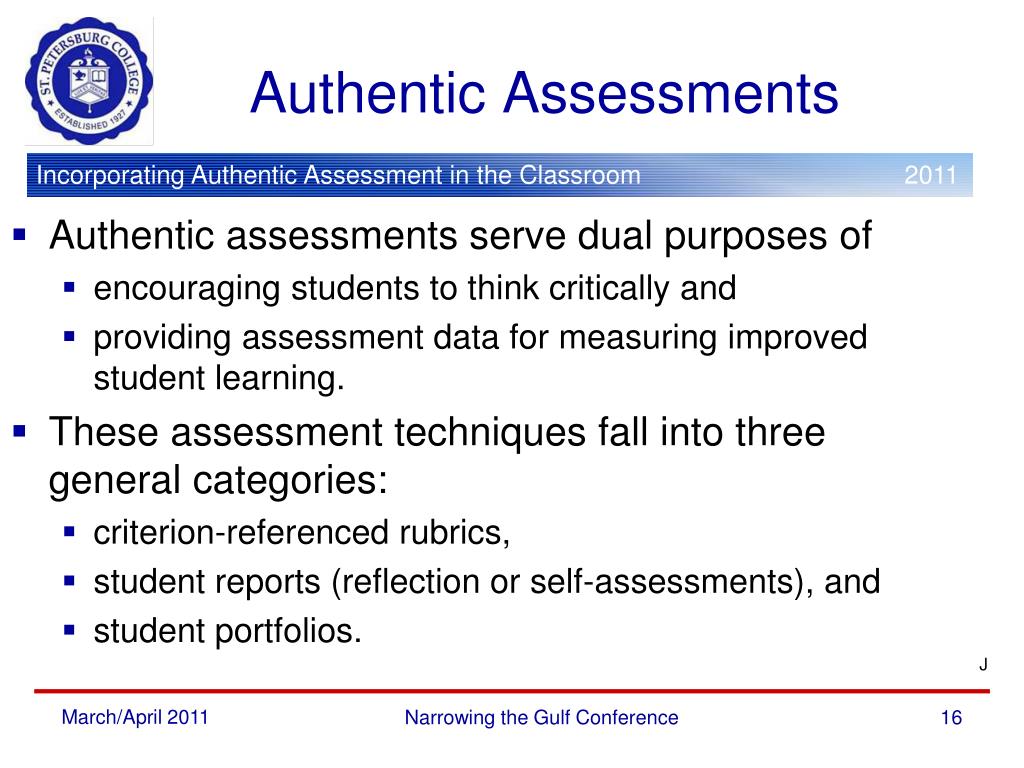
Authentic assessments are designed to evaluate students’ abilities in real-life contexts, allowing them to apply what they have learned in meaningful ways. These assessments aim to go beyond memorization and promote critical thinking, problem-solving, creativity, collaboration, and communication skills – all essential for success in the modern world.
One example of an authentic assessment is project-based learning (PBL). In PBL, students tackle complex problems or real-world challenges by working collaboratively on projects that require research, analysis, synthesis of information, and the development of innovative solutions. These projects often culminate in presentations or exhibitions where students showcase their work to an audience beyond the classroom walls.
Another form of authentic assessment is performance tasks. Instead of simply regurgitating facts or formulas on a test paper, students demonstrate their knowledge by performing specific tasks relevant to the subject matter. For instance, in mathematics class, they might solve real-world problems using mathematical concepts rather than answering theoretical questions.
Portfolios are also commonly used as an authentic assessment tool. Students compile samples of their best work over time across various subjects or domains. Portfolios allow them to reflect on their growth and progress while showcasing their abilities through diverse pieces such as essays, artwork, videos, coding projects – whatever represents their strengths and interests.
Authentic assessments not only assess what students know but also how well they can transfer that knowledge into practical situations. By engaging learners actively in hands-on activities aligned with real-world scenarios or challenges within different disciplines like science experiments or historical reenactments—teachers can ascertain if students possess deep conceptual understanding rather than surface-level memorization.
Furthermore, authentic assessments foster a growth mindset and intrinsic motivation among students. Instead of focusing solely on grades or scores, these assessments emphasize the process of learning rather than just the end result. Students are encouraged to take risks, learn from failures, and continuously improve their skills.
To implement authentic assessments effectively, teachers need to provide clear criteria and rubrics for evaluation. This ensures transparency in expectations while allowing students to understand what is required for success. Additionally, ongoing feedback and reflection play a vital role in guiding student progress and fostering self-assessment skills.
In conclusion, authentic assessments offer numerous benefits over traditional assessment methods by encouraging critical thinking, problem-solving abilities, creativity, collaboration skills development while promoting deeper understanding of subject matter. By engaging students actively in real-life contexts through projects, performances tasks or portfolios—educators can better evaluate their knowledge application within practical situations. Authentic assessments not only measure student performance but also inspire lifelong learners who are prepared for future challenges beyond the classroom walls.
 Alternative Amie
Leave a comment