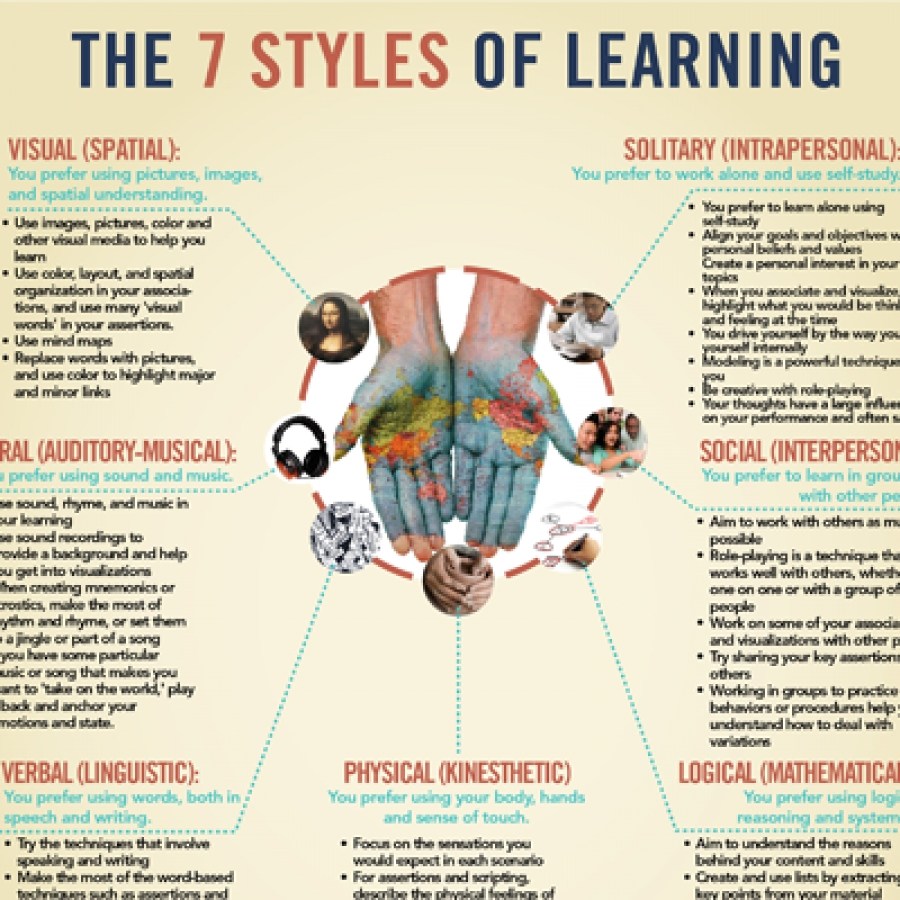
In the realm of education, there is a growing recognition that not all students learn in the same way. Traditional teaching methods tend to rely heavily on lecture-style instruction, which may not effectively engage all learners. This has led to a shift towards incorporating different learning styles into educational practices.
Learning styles refer to the various ways individuals prefer to receive and process information. While some people may thrive in auditory environments, others may excel in visual or kinesthetic settings. Understanding and catering to these preferences can greatly enhance the learning experience for students of all ages.
One prominent model of learning styles is the VARK model, developed by Neil Fleming. According to this model, there are four main types of learners: visual, auditory, reading/writing, and kinesthetic/tactile learners.
Visual learners primarily rely on visual aids such as diagrams, charts, and images to understand new concepts. They often benefit from seeing information presented in a clear and organized manner. Visual learners tend to have strong spatial awareness and can easily visualize ideas or processes mentally.
Auditory learners absorb information best through hearing it spoken aloud. They enjoy participating in discussions and lectures as well as engaging with audio materials like podcasts or recorded lectures. Auditory learners often possess excellent listening skills and are able to retain verbal instructions effectively.
Reading/writing learners thrive when they can read written material or write down their thoughts during the learning process. They appreciate textbooks, articles, note-taking activities, and writing assignments as effective tools for grasping new concepts. These individuals typically have strong linguistic abilities and find solace in expressing themselves through writing.
Kinesthetic/tactile learners learn best through hands-on experiences that engage their sense of touch or movement. They need physical interactions with objects or materials related to what they are trying to learn – experiments, role-playing exercises, building models – allowing them an opportunity for practical application of knowledge.
While many people exhibit dominant preferences for one particular learning style outlined above, it is important to note that most individuals possess a combination of learning styles. This means that they may benefit from incorporating multiple approaches to accommodate their diverse needs.
Implementing learning style strategies can enhance the educational experience and improve student engagement and understanding. For instance, visual learners might benefit from using mind maps or graphic organizers to visualize information. Auditory learners could participate in class discussions or listen to recorded lectures as supplementary resources. Reading/writing learners might find outlining main ideas or summarizing concepts in writing useful for retention. Kinesthetic/tactile learners can engage in hands-on activities such as experiments or role-playing scenarios.
Alternative schools often embrace a more holistic approach towards education, valuing individuality and recognizing the importance of catering to different learning styles. These institutions often offer flexible teaching methods that allow students to learn at their own pace while providing opportunities for experiential learning.
One example is Montessori education, which places emphasis on self-directed activity, hands-on learning materials, and collaborative work. Montessori classrooms provide a rich environment where students are encouraged to explore and discover knowledge through independent exploration guided by trained teachers.
Another alternative approach known as Waldorf education emphasizes creativity and imagination alongside academics. Students engage in artistic activities like drawing, painting, music, movement, and drama as part of their everyday curriculum. The integration of arts allows children with different learning styles to express themselves effectively while connecting with academic content through various mediums.
In conclusion, recognizing and addressing different learning styles is essential for creating an inclusive educational environment that caters to all students’ needs. By incorporating strategies tailored towards visual, auditory, reading/writing, and kinesthetic/tactile learners into classroom practices – whether in traditional or alternative schooling settings – educators can foster greater engagement and understanding among their students.
 Alternative Amie
Leave a comment