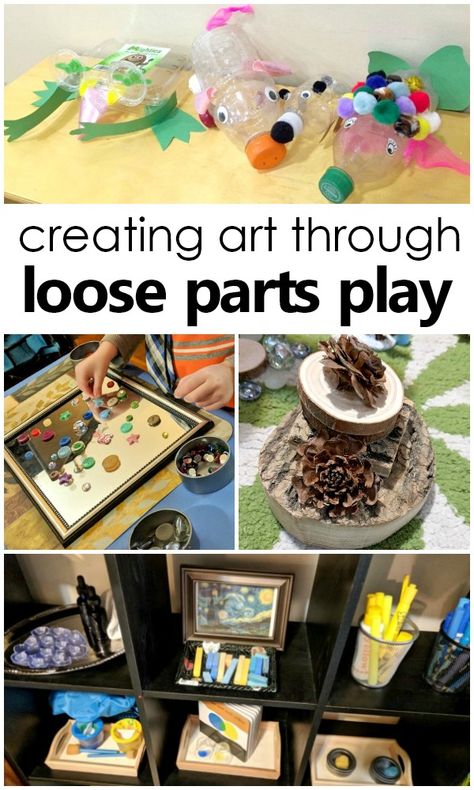
Nurturing creativity through loose parts play and open-ended materials
Creativity is a fundamental aspect of human nature that should be nurtured from an early age. It allows individuals to think outside the box, explore new ideas, and find innovative solutions to problems. In alternative schooling and education, there are various approaches that encourage creativity in children, one of which is through loose parts play and open-ended materials.
Loose parts play refers to the use of open-ended objects that can be moved, manipulated, combined, and transformed by children during play. These objects can include natural materials like rocks, sticks, leaves, shells or man-made items such as fabric scraps, cardboard tubes or plastic containers. The key characteristic of these loose parts is their ability to be used in multiple ways without predefined rules or limitations.
By providing children with access to a variety of loose parts during their playtime, educators foster creativity by encouraging them to imagine different possibilities for each item. For example, a simple wooden block can become a car in one instance or a building in another. This type of free exploration allows children’s imaginations to flourish as they experiment with different combinations and uses for these objects.
Open-ended materials also contribute significantly to nurturing creativity among students. Unlike toys with specific functions or predetermined outcomes like puzzles or construction sets with fixed designs; open-ended materials offer infinite possibilities for creation and problem-solving.
In an alternative school setting inspired by the Reggio Emilia approach – an educational philosophy originating from Italy – teachers adopt collaborative problem-solving techniques using open-ended materials. They facilitate group discussions where students brainstorm ideas together on how they could use certain materials imaginatively.
For instance, if given clay as an open-ended material during art time; students may decide collectively what they would like it transformed into – perhaps animals sculptures or abstract forms representing emotions. Through collaboration and dialogue within the group setting facilitated by the teacher’s guidance; this process encourages divergent thinking while also developing social skills such as active listening and respectful communication.
This approach not only fosters creativity but also teaches students how to work together, respect others’ ideas, and compromise when necessary. By engaging in these collaborative problem-solving techniques, students become more adept at thinking critically and finding innovative solutions to challenges that arise during their projects.
Furthermore, loose parts play and open-ended materials provide opportunities for children to develop their fine motor skills. Manipulating various objects like small beads or threading buttons onto strings requires precise hand-eye coordination and dexterity. These activities enhance the development of finger muscles while simultaneously encouraging creativity.
It is essential for educators to create an environment that supports loose parts play and open-ended materials. Having dedicated spaces within classrooms or outdoor areas where children can freely explore these resources is crucial. Organizing shelves with neatly arranged loose parts allows easy access for children while maintaining a sense of orderliness within the learning space.
Additionally, it is important for teachers to regularly rotate the available loose parts so that children are continuously presented with new possibilities for play and creation. This keeps their imagination fresh and encourages them to think beyond what they have previously experienced or explored.
In conclusion, nurturing creativity through loose parts play and open-ended materials is an effective way of promoting holistic development among students in alternative schooling settings. By providing opportunities for free exploration, collaboration, problem-solving, fine motor skill development, and imaginative thinking; educators empower children to become creative thinkers who can thrive in various aspects of life.
 Alternative Amie
Leave a comment