The Reggio Emilia Approach: Where Creativity Meets Chaos
Alternative schooling and education have been gaining popularity in recent years, with parents and educators seeking out innovative approaches to nurture children’s curiosity and individuality. One such approach that has caught the attention of many is the Reggio Emilia Approach – a pedagogical philosophy rooted in Italy.
The Reggio Emilia Approach takes its name from the small town in northern Italy where it was developed after World War II. Loris Malaguzzi, an educator and psychologist, spearheaded this unique educational model as a response to the oppressive regime under Mussolini. The approach emphasizes collaboration, creativity, and community involvement as key components for children’s holistic development.
At first glance, one might assume that the Reggio Emilia Approach is just another hippie-dippie ideology centered around unstructured playtime. However, diving deeper into its principles reveals a method that encourages critical thinking skills, problem-solving abilities, and social-emotional growth – all while embracing chaos.
One fundamental aspect of the Reggio Emilia Approach is its belief in children’s innate capability to construct their knowledge through exploration. Unlike traditional classrooms where teachers are considered authorities on knowledge dissemination, here they act more like facilitators or guides who help students navigate their own learning journeys. This shift in power dynamics promotes independence among learners and allows them to take ownership of their education.
A cornerstone of this approach is project-based learning – an immersive experience where students delve deep into subjects that interest them. Projects can range from investigating insects found near the school grounds to exploring cultural diversity through art installations. By focusing on topics relevant to their immediate environment or personal experiences, students develop a sense of agency over their learning process.
In these projects, collaboration plays a vital role as well. Students work together in small groups or sometimes even as a whole class to conduct research, problem-solve challenges they encounter along the way, and present their findings to one another. This collaborative aspect fosters communication skills, teamwork, and empathy – important life skills that extend beyond the confines of the classroom.
Critics argue that this emphasis on collaboration may hinder individual achievement or lead to a lack of discipline. However, proponents of the Reggio Emilia Approach contend that it is through these group experiences that children learn valuable lessons about compromise, negotiation, and respecting diverse perspectives.
One unique feature of the Reggio Emilia Approach is the use of documentation as a means to capture and reflect upon children’s learning process. Teachers meticulously document students’ ideas, questions, artwork, and conversations in what are known as “learning journals.” These journals serve multiple purposes: they help teachers better understand each child’s development; they act as visual records for parents to witness their child’s growth; and they provide students with an opportunity for self-reflection.
Documentation also serves as a powerful tool for assessment in this approach. Instead of relying solely on standardized tests or grades, educators assess students based on their ability to think critically, express themselves creatively, and collaborate effectively. By observing how children engage with projects over time and evaluating their problem-solving strategies along the way, teachers gain insight into each student’s unique strengths and areas for growth.
While many praise the Reggio Emilia Approach for its focus on creativity and child-led learning experiences, others find fault with its perceived lack of structure. Traditionalists argue that without clear guidelines or predetermined curriculum objectives imposed by adults in authority roles (i.e., teachers), chaos ensues.
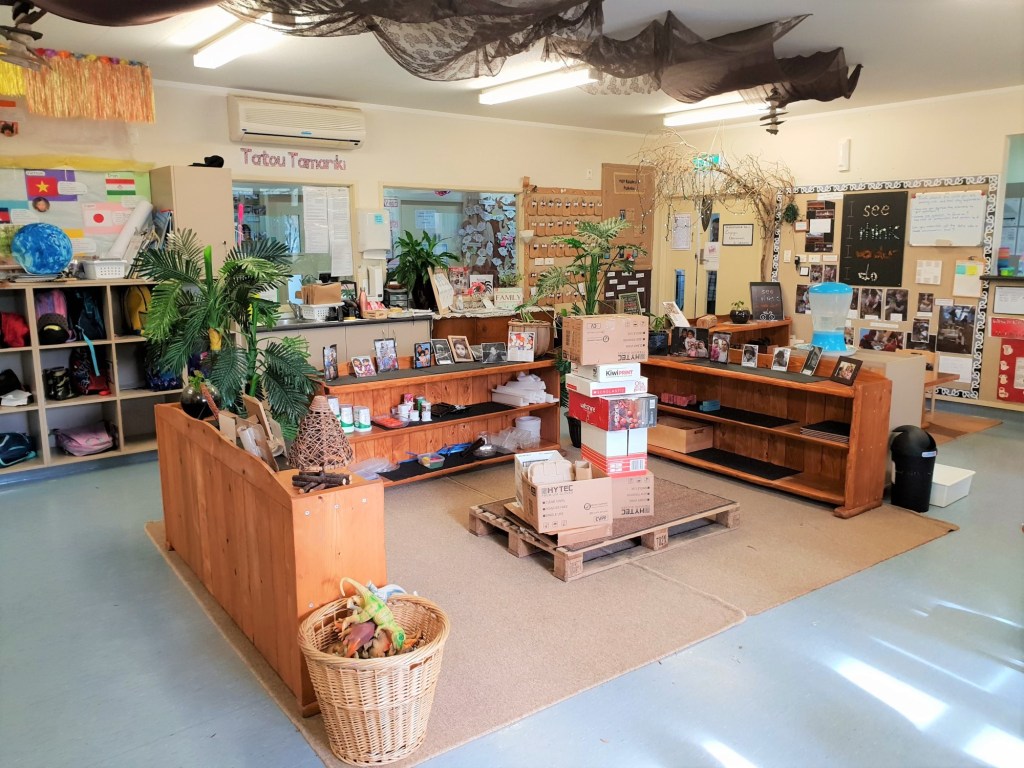
However chaotic it may appear at first glance though – with children engaged in various activities simultaneously throughout the classroom – there is actually an underlying order within this apparent disorder. The environment itself becomes a third teacher in this approach.
Reggio Emilia classrooms are intentionally designed to be open-ended spaces filled with natural materials such as wood blocks, shells collected during nature walks, mirrors reflecting light from large windows, and plants. These carefully curated materials invite children to explore, experiment, and create. The physical environment acts as a provocation for learning – sparking curiosity and inspiring investigations.
Teachers also play an active role in shaping the classroom environment by setting up “atelier” spaces where students can engage in artistic expression using various media such as paints, clay, or found objects. This emphasis on art as a language of communication allows children to express their ideas and emotions in ways that traditional academic subjects may not always capture.
The Reggio Emilia Approach challenges conventional notions of education by embracing chaos as a catalyst for creativity and critical thinking. It recognizes that through exploration and collaboration, children develop important life skills necessary for success beyond the classroom walls.
While it may not be suitable for every child or every educational setting, this approach serves as a refreshing alternative to more traditional methods. By giving children agency over their own learning experiences, fostering collaboration among peers, and valuing documentation as evidence of growth, the Reggio Emilia Approach offers a unique perspective on what education could be – an adventure filled with endless possibilities.
 Alternative Amie
Leave a comment