World Religions: Exploring the Diversity of Beliefs
Religion has always been a fundamental aspect of human civilization. It shapes our beliefs, guides our moral compass, and provides answers to life’s most profound questions. Throughout history, countless religions have emerged across the globe, each offering its unique perspective on spirituality and existence. In this article, we will delve into some of the world’s major religions.
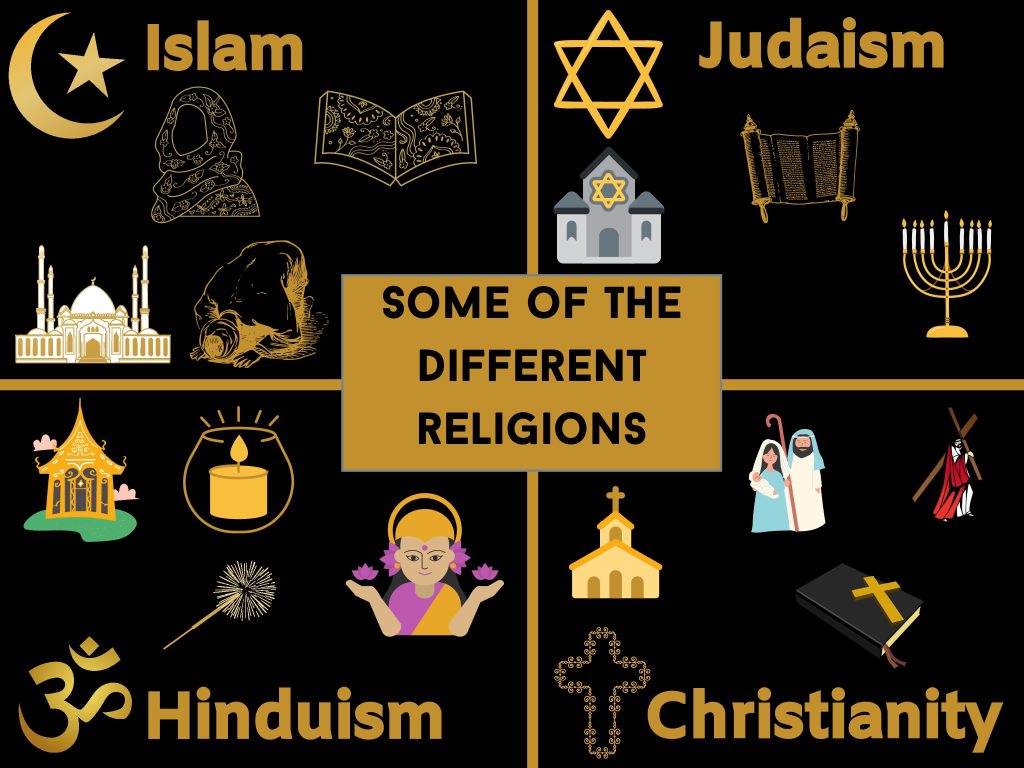
Christianity is one of the most widely practiced religions globally. Its roots trace back to Jesus Christ’s teachings in ancient Palestine over two thousand years ago. Christians believe that Jesus is the Son of God who sacrificed himself for humanity’s salvation. The Bible serves as their holy text, encompassing both the Old Testament (Hebrew scriptures) and New Testament (life and teachings of Jesus). Christianity encompasses various denominations such as Catholicism, Protestantism, and Eastern Orthodoxy.
Islam emerged in Arabia during the 7th century CE when Prophet Muhammad received divine revelations from Allah through the angel Gabriel. Muslims follow the teachings outlined in their holy book known as the Quran. They believe that Muhammad is Allah’s final prophet and adhere to five essential pillars: Shahada (faith), Salat (prayer), Zakat (charity), Sawm (fasting during Ramadan), and Hajj (pilgrimage to Mecca).
Buddhism originated in India around 2,500 years ago with Siddhartha Gautama, also known as Buddha or “the enlightened one.” Buddhism revolves around Four Noble Truths: suffering exists; desire causes suffering; ending desire ends suffering; following Eightfold Path leads to enlightenment. Buddhists seek enlightenment through meditation practices such as mindfulness.
Hinduism is one of humanity’s oldest surviving religions originating from ancient India approximately four thousand years ago. Unlike other faiths, Hinduism lacks a single founder or central religious authority but instead consists of diverse traditions united by common themes. Hinduism encompasses belief in reincarnation, karma (the law of cause and effect), and the pursuit of moksha (liberation from the cycle of birth and death).
Judaism emerged over three thousand years ago among the ancient Hebrews. It is based on the covenant between God (Yahweh) and Abraham, Moses receiving the Ten Commandments, and other teachings found in their holy book called the Torah. Jewish worship takes place in synagogues, with rabbis serving as spiritual leaders.
These are just a few examples of world religions that have shaped societies throughout history. Each religion offers its followers a unique path to understanding life’s mysteries and finding meaning in existence. Exploring different religious traditions can foster respect, empathy, and an appreciation for diversity within our global community – essential values for alternative education systems aiming to cultivate open-mindedness and tolerance among students.
In conclusion, studying world religions provides valuable insights into diverse cultures’ beliefs, values, and practices across time. By including discussions about religion within educational settings while promoting critical thinking skills, we can nurture well-rounded individuals who appreciate humanity’s rich tapestry of faiths.
 Alternative Amie
Leave a comment