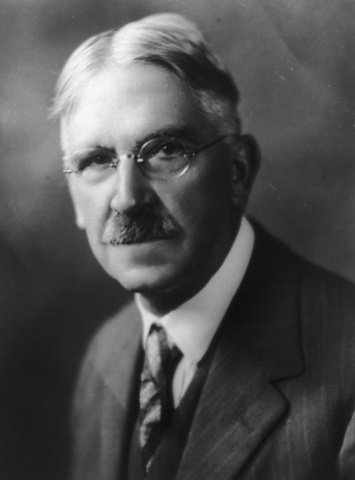
John Dewey’s Progressive Education Theory: A Pathway to Empowering Students
In the early 20th century, John Dewey revolutionized the field of education with his progressive education theory. Frustrated by traditional educational practices that focused solely on memorization and rote learning, Dewey proposed a student-centered approach that emphasized active learning, critical thinking, and problem-solving skills. His ideas continue to shape alternative schooling and education today.
At the heart of Dewey’s philosophy is the belief that education should not be confined to textbooks and classroom walls. Instead, he advocated for an experiential approach where students engage in real-world experiences to develop practical knowledge. According to Dewey, learning should be meaningful, relevant, and connected to students’ interests and experiences.
One of the key principles of progressive education is hands-on learning. Instead of passively listening to lectures or reading textbooks, students actively participate in their own learning process through experiments, projects, field trips, and group discussions. By encouraging curiosity and exploration, this approach fosters a deeper understanding of concepts while developing problem-solving skills.
Dewey also emphasized the importance of social interaction in education. He believed that schools should serve as democratic communities where students learn not only from teachers but also from each other. Collaborative activities such as group projects or debates provide opportunities for students to communicate their ideas effectively while respecting diverse perspectives.
Another fundamental aspect of progressive education is its focus on individuality. Dewey recognized that every student has unique strengths, weaknesses, interests, and ways of learning. Therefore, he argued against standardized approaches that treat all learners as if they were identical cogs in a machine. Instead, teachers must adapt their instruction methods based on individual needs and provide personalized support for each student’s growth.
Dewey further suggested that educators should prioritize intrinsic motivation over external rewards or punishments when it comes to motivating students. He believed that true passion for learning comes from within and that external pressures can hinder students’ natural curiosity. By creating a supportive environment where students feel empowered, valued, and free to make choices, teachers can foster a love for learning that goes beyond grades or extrinsic incentives.
One of the most significant contributions of Dewey’s progressive education theory is its emphasis on connecting classroom learning with real-life experiences. He argued that education should not be isolated from society but rather integrated into it. For example, instead of solely focusing on abstract mathematical equations, teachers could incorporate real-world applications to demonstrate how math relates to everyday life situations. This approach helps students understand the relevance of what they are learning and encourages them to become active participants in their communities.
Furthermore, Dewey believed that education should be an ongoing process throughout one’s entire life. Rather than viewing schooling as confined to a specific period in childhood or adolescence, he advocated for lifelong learning. In today’s rapidly changing world, this aspect of his theory becomes even more relevant as individuals need to continuously adapt and acquire new skills.
While Dewey’s progressive education theory has had a profound impact on alternative schooling and education methods worldwide, some critics argue that it neglects the importance of foundational knowledge and discipline. They contend that without a solid base of factual information, students may struggle to think critically or solve complex problems effectively.
However, proponents argue that progressive education does not dismiss traditional subjects entirely but rather seeks to integrate them into meaningful contexts. It promotes an interdisciplinary approach where different subjects are interconnected rather than treated as isolated silos.
In conclusion, John Dewey’s progressive education theory offers a powerful framework for empowering students through active learning experiences while fostering critical thinking skills and problem-solving abilities. By emphasizing hands-on learning, social interaction, individuality, intrinsic motivation, real-world connections, and lifelong learning principles; alternative schools can create environments where students thrive both academically and personally.
 Alternative Amie
Leave a comment