The Montessori method, developed by Maria Montessori in the early 20th century, has gained popularity worldwide for its child-centered approach to education. While often associated with traditional classroom settings, the Montessori method can also be successfully implemented in various geographic environments, including urban areas.
1. Montessori Method in Urban Environments:
In urban environments where space is limited and resources may be scarce, adapting the Montessori method requires creativity and flexibility. One key aspect is creating a prepared environment that allows children to explore and engage with their surroundings independently. In an urban setting, this could involve utilizing small outdoor spaces or converting indoor areas into inviting learning zones.
2. Montessori Education in Rural Areas:
Rural areas offer unique opportunities for implementing the Montessori approach due to their connection with nature and close-knit communities. The rural environment provides abundant natural resources for hands-on exploration and encourages children to develop a deep appreciation for their surroundings. Additionally, smaller class sizes allow for more individualized attention and foster strong relationships between students and teachers.
3. Implementing the Montessori Approach in Suburban Schools:
Suburban schools often have larger campuses than urban counterparts but may still face challenges related to limited access to nature or cultural diversity compared to rural or urban settings. However, by incorporating field trips, guest speakers from diverse backgrounds, and multicultural materials into daily lessons, suburban schools can provide students with a well-rounded understanding of geography while embracing local resources such as parks and community centers.
4. Montessori Principles for Teaching Geography:
Geography plays a crucial role in the Montessori curriculum as it helps children develop a sense of place within their world. The principles of orderliness, simplicity, concrete learning experiences through manipulative materials like maps and globes are at the heart of teaching geography using the Montessori method.
5.Geography Curriculum in aMontesssori Classroom:
A Montessori geography curriculum typically begins with the child’s immediate environment and gradually expands to encompass broader concepts such as continents, countries, landforms, and climate. Children are introduced to maps, globes, and other geographic tools that help them explore different regions of the world in a hands-on manner.
6. Exploring Continents and Countries through the Montessori Method:
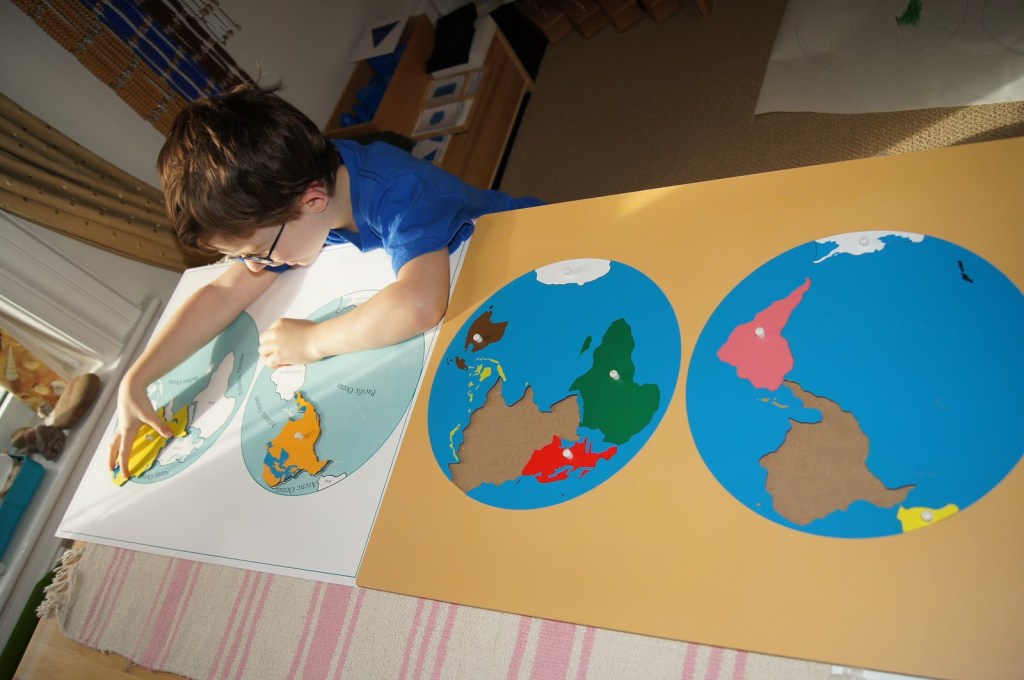
The Montessori method emphasizes a multi-sensory approach to learning about continents and countries. For example, children can trace the outlines of different continents using sandpaper maps or match miniature flags to their respective countries on a world map puzzle. This hands-on exploration enables students to develop spatial awareness while fostering their curiosity about diverse cultures.
7. Integrating Cultural Studies into Montessori Geography Lessons:
Cultural studies are an integral part of a Montessori geography curriculum as they allow children to appreciate cultural diversity around the world. Teachers can introduce artifacts from different cultures, share stories or legends, and encourage discussions about traditions and customs associated with specific regions.
8. Using Maps and Globes in aMontesssori Setting:
Maps and globes are essential tools for teaching geography within a Montessori setting. By providing children with opportunities to handle these materials independently, they learn how to read maps, identify cardinal directions, understand latitude and longitude lines, measure distances between places accurately.
9.Teaching Landforms and Bodies of Water with theMontesssori Approach:
The Montessori method encourages students to explore landforms through tactile experiences using three-dimensional models or by creating their own representations using clay or playdough. Similarly,bodies of water can be explored through sensory activities like pouring water into trays or containers representing lakes,rivers,and oceans.
10.Understanding Climateand Weather inaMontesssori Environment:
Incorporating weather stations where children observe temperature changes,daily weather patterns,and record data fosters understanding of climate and weather. Hands-on activities like creating rain gauges or wind vanes allow children to engage with the natural elements, leading to a deeper understanding of how climate varies across different regions.
In conclusion, the Montessori method offers a flexible and child-centered approach to geography education in various geographic environments. Whether in urban areas, rural settings, or suburban schools, educators can adapt the Montessori principles to create engaging learning experiences that foster spatial awareness, cultural appreciation, and environmental stewardship among students. By incorporating hands-on materials, field trips, and interdisciplinary connections, geography lessons within a Montessori framework can inspire children’s curiosity about the world around them while nurturing their love for learning.
 Alternative Amie
Leave a comment