Socratic Questioning in STEM Subjects: Fostering Critical Thinking and Problem-Solving Skills
Introduction:
In the realm of education, Socratic questioning has long been recognized as an effective tool for promoting critical thinking and deepening understanding. Stemming from the teaching methods of the Greek philosopher Socrates, this approach encourages students to actively engage with their learning by asking probing questions that challenge assumptions and encourage them to think critically about complex problems.
While traditionally associated with humanities subjects, such as philosophy or literature, Socratic questioning can also be successfully applied to STEM (Science, Technology, Engineering, and Mathematics) subjects. In fact, incorporating this method into STEM education not only enhances problem-solving skills but also fosters a deeper understanding of scientific concepts.
1. Encouraging Inquiry-Based Learning:
One of the fundamental tenets of Socratic questioning is encouraging inquiry-based learning. By posing thought-provoking queries related to specific scientific topics or problems, educators prompt students to explore multiple perspectives and seek evidence-based solutions on their own. This approach helps cultivate curiosity and self-directed learning among students – essential qualities for success in any STEM field.
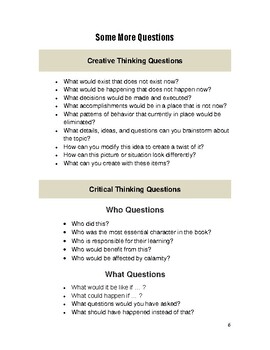
For example, instead of simply providing a formula for solving a mathematical equation or explaining scientific phenomena outright, teachers can pose questions like “Why does this equation work?” or “What evidence supports your conclusion?” Such inquiries compel students to analyze underlying principles and mechanisms rather than relying on rote memorization.
2. Enhancing Critical Thinking Skills:
Critical thinking is crucial for tackling complex problems in STEM fields where analytical reasoning plays a significant role. Through Socratic questioning techniques such as challenging assumptions or evaluating evidence critically, educators can help develop these essential skills among their students.
When discussing science experiments or engineering projects during class discussions or group activities, instructors can employ open-ended questions like “What other variables could impact our results?” or “How might we test alternative hypotheses?” These prompts push learners beyond surface-level comprehension towards deeper analysis and critical evaluation of the subject matter.
3. Deepening Conceptual Understanding:
Socratic questioning also promotes a more profound understanding of scientific concepts by encouraging students to articulate their thoughts, reasoning, and explanations. By engaging in dialogues with their peers or the teacher, learners can clarify misconceptions, identify gaps in their knowledge, and refine their understanding of complex STEM ideas.
For instance, when studying a challenging physics concept like quantum mechanics, teachers can ask questions such as “How does this theory challenge our classical understanding?” or “What implications might these principles have on future technologies?” Such discussions provoke students to think beyond memorizing formulas and encourage them to grasp the underlying principles that govern these phenomena.
4. Fostering Collaboration and Communication Skills:
Effective collaboration and communication are essential skills for success in any STEM career. Socratic questioning provides an ideal platform for fostering these skills within a classroom setting.
By promoting active student participation through Socratic dialogue sessions or group discussions centered around scientific problems or case studies, educators create opportunities for students to articulate their ideas clearly and defend their arguments logically. This process encourages respectful debate among peers while nurturing effective communication skills necessary for presenting research findings or collaborating on team projects later in life.
5. Encouraging Metacognition:
Metacognition refers to thinking about one’s own thinking processes – being aware of how we learn best and monitoring our own comprehension. Incorporating Socratic questioning into STEM education helps develop metacognitive skills by prompting students to reflect on their learning experiences.
Teachers can guide learners towards metacognition by asking questions such as “How did you arrive at your conclusion?” or “What strategies helped you solve this problem efficiently?” This approach not only enhances self-awareness but also empowers students to take ownership of their learning process by identifying effective strategies they can apply across various STEM subjects.
Conclusion:
Incorporating Socratic questioning techniques into STEM education is a powerful way to foster critical thinking, problem-solving skills, and deeper understanding of scientific concepts. By encouraging inquiry-based learning, enhancing critical thinking skills, deepening conceptual understanding, fostering collaboration and communication skills, and promoting metacognition, educators can empower students to become active participants in their own learning journey.
As we strive to prepare the next generation for the challenges of a rapidly evolving world driven by science and technology, integrating Socratic questioning into STEM subjects is an invaluable tool that equips students with the necessary cognitive abilities to navigate complex problems effectively. Through this approach, we can cultivate a generation of innovative thinkers who will shape our future through their scientific endeavors.
 Alternative Amie
Leave a comment