Montessori Education: Nurturing Independent Thinkers
In the modern world, where traditional forms of education dominate mainstream schools, alternative educational approaches are gaining popularity. One such approach that has been praised for its effectiveness in fostering independent thinking and self-directed learning is Montessori education. Developed by Italian physician and educator Maria Montessori in the early 20th century, this method focuses on guiding children to explore their interests and develop at their own pace. In this article, we will take a closer look at the principles of Montessori education and its impact on students’ intellectual, social, and emotional development.
One fundamental principle of Montessori education is respect for each child’s individuality. The curriculum is designed to cater to different learning styles, allowing children to engage with materials that match their unique preferences and abilities. Rather than adhering strictly to standardized testing or rigid syllabi, Montessori educators emphasize hands-on experiences that encourage critical thinking skills. This approach promotes a love for learning while also nurturing problem-solving abilities.
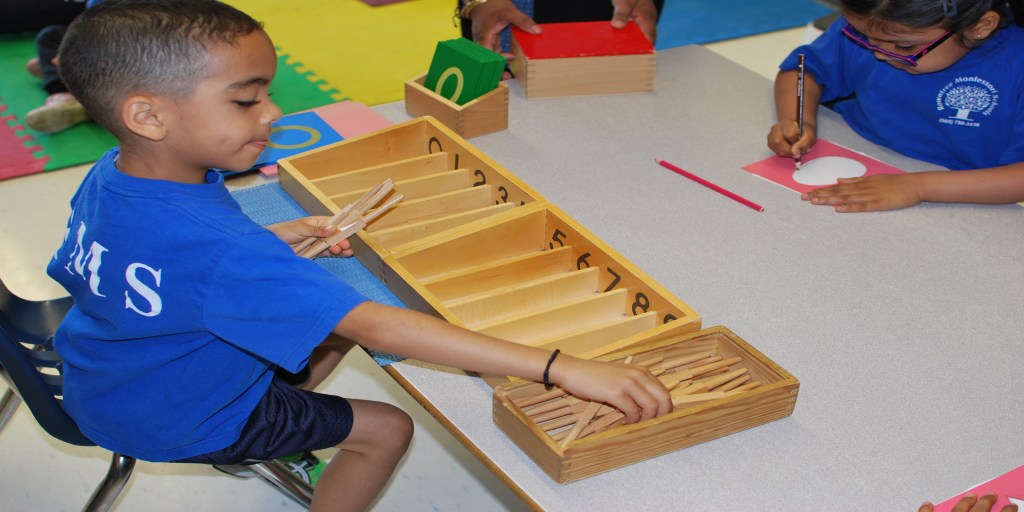
A distinguishing feature of Montessori classrooms is the use of carefully selected educational materials known as “Montessori materials.” These materials are specifically designed to be self-correcting, enabling children to independently learn from their mistakes without constant intervention from teachers. By working with these manipulative tools—such as sandpaper letters for language development or colored beads for mathematical concepts—children gain a deep understanding of abstract ideas through practical exploration.
Another key aspect of Montessori education is mixed-age classrooms. Instead of grouping students solely based on age or grade level, children within an age range (typically three years) learn together in one classroom environment under the guidance of a trained teacher called a “directress.” This allows older students to serve as mentors and role models for younger ones while reinforcing their own knowledge through teaching others. Through daily interactions with peers across various ages, children develop empathy, collaboration skills, and a sense of responsibility towards their community.
Freedom within limits is a crucial component of Montessori education. While students are encouraged to explore their interests independently, they also learn to respect boundaries and engage in activities that benefit the broader classroom community. The teacher acts as a facilitator, observing each child’s progress and providing guidance when necessary. This approach not only fosters self-discipline but also encourages children to take ownership of their learning journey.
The role of the teacher in Montessori education is different from that of a traditional educator. Rather than being the sole source of knowledge, teachers act as guides who observe each child’s unique needs and interests. They provide individualized attention and support based on continuous observation and assessment. By maintaining a supportive environment where mistakes are seen as opportunities for growth, teachers encourage students’ perseverance and self-motivation.
Montessori education places great importance on nurturing practical life skills. Children are actively involved in everyday tasks such as cooking, cleaning, gardening, or caring for animals within the classroom environment. These activities help them develop independence, concentration, coordination, fine motor skills, and an understanding of personal responsibility from an early age.
In addition to cognitive development through academic subjects like math or language arts, Montessori classrooms focus on holistic development by incorporating arts, music, movement activities (such as yoga), nature exploration, foreign languages, and cultural studies into the curriculum. This diverse range of experiences nurtures creativity while fostering an appreciation for diversity and global citizenship among students.
Research indicates several positive outcomes associated with Montessori education. Studies have found that children who attend Montessori schools demonstrate higher levels of executive functioning skills—such as problem-solving abilities—in comparison to their peers in traditional educational settings. Moreover, graduates of Montessori programs tend to exhibit greater social competence traits including empathy and conflict resolution skills.
While there may be some misconceptions about Montessori education—such as the idea that it is only suitable for certain types of children—it is important to recognize that this approach can benefit students from all backgrounds and abilities. By fostering independence, self-motivation, and a lifelong love for learning, Montessori education equips children with the necessary skills to thrive in an ever-changing world.
In conclusion, Montessori education offers a unique and effective approach to learning by nurturing independent thinkers and fostering holistic development. Through its emphasis on individuality, hands-on experiences, mixed-age classrooms, freedom within limits, practical life skills, and diverse curriculum content, this method has proven successful in promoting critical thinking skills, social competence traits, and executive functioning abilities among students. As alternative schooling gains momentum worldwide, Montessori education continues to empower young learners to become active participants in their own educational journeys.
 Alternative Amie
Leave a comment