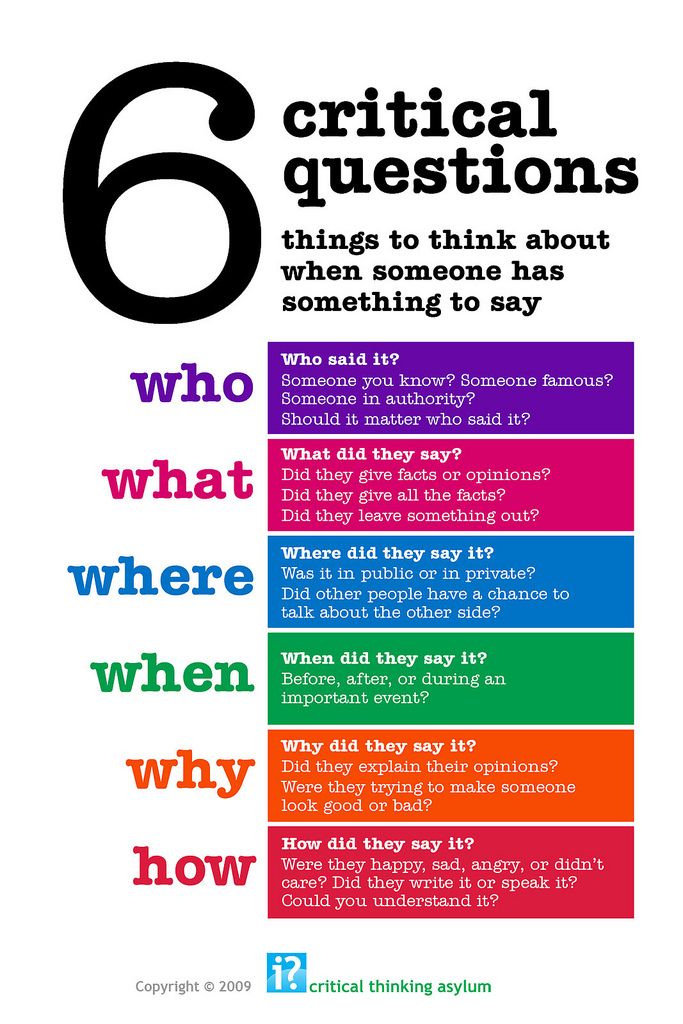
Critical thinking is a fundamental skill that is highly valued in today’s society. It goes beyond simply memorizing facts and regurgitating information; instead, it encourages individuals to analyze, evaluate, and interpret information in a logical and rational manner. By developing critical thinking skills, students are better equipped to navigate the complexities of the world and make informed decisions.
One of the key aspects of critical thinking is being able to question assumptions. Critical thinkers do not take things at face value but instead delve deeper into the underlying reasons and evidence behind statements or claims. They challenge preconceived notions and biases, allowing them to see different perspectives and consider alternative explanations. This ability to critically examine ideas fosters intellectual curiosity and helps students develop an open-minded approach towards learning.
Another crucial aspect of critical thinking is being able to identify reliable sources of information. In today’s digital age where misinformation can spread rapidly, this skill has become more important than ever before. Critical thinkers have a keen eye for evaluating the credibility of sources by examining factors such as author expertise, publication reputation, supporting evidence, and potential bias. They understand the importance of fact-checking and verifying information before accepting it as true.
Problem-solving is another area where critical thinking shines. Whether it’s solving complex mathematical equations or addressing real-life issues like climate change or poverty alleviation, critical thinkers approach problems with a systematic mindset. They break down problems into smaller components, analyze patterns or trends within those components, generate multiple possible solutions, weigh their pros and cons objectively before arriving at a well-reasoned conclusion.
Communication skills are also enhanced through critical thinking. Being able to articulate thoughts clearly and effectively requires careful analysis of ideas before expressing them verbally or in writing. Critical thinkers know how to structure arguments logically using evidence-based reasoning while considering counterarguments against their own position. This enables them to engage in meaningful discussions with others while fostering empathy for differing opinions.
Furthermore, critical thinking empowers students to become independent learners. It encourages them to take responsibility for their own learning by questioning, investigating, and seeking out new knowledge. Critical thinkers are not passive recipients of information but active constructors of knowledge. They continuously seek opportunities for self-improvement, engage with diverse perspectives, and adapt their thinking based on new evidence or insights.
In addition to academic benefits, critical thinking also has practical applications in everyday life. It helps individuals make informed decisions about their health, finances, relationships, and career choices. By being able to weigh the pros and cons objectively and critically evaluate potential risks or benefits, critical thinkers can navigate these areas more effectively.
To foster critical thinking skills in students, alternative schooling approaches often employ various strategies. These may include project-based learning where students work collaboratively on real-world problems that require critical analysis and problem-solving skills. Socratic discussions encourage students to explore complex topics through open-ended questions that promote critical thinking. Debate clubs provide opportunities for students to present arguments supported by evidence while considering counterarguments from their peers.
In conclusion, critical thinking is an essential skill that empowers individuals in all aspects of life. Through questioning assumptions, evaluating sources of information, problem-solving abilities, effective communication skills, independent learning habits, and practical decision-making capabilities – critical thinkers are equipped with the tools necessary to thrive in today’s complex world. Alternative schooling approaches play a crucial role in nurturing these skills among students by employing innovative teaching methods that prioritize analytical reasoning over rote memorization
 Alternative Amie
Leave a comment