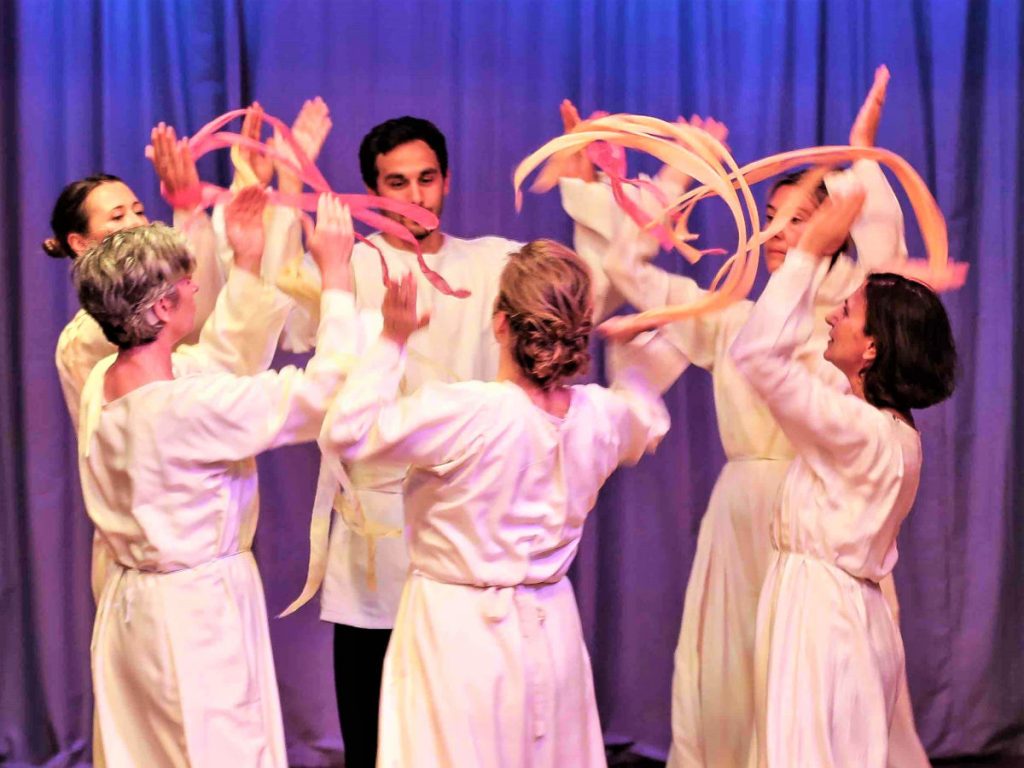
Welcome to our panel discussion on eurythmy, a unique form of movement and expression that has become increasingly popular in alternative schooling and education. Today, we have gathered a group of experts in the field to explore the benefits, challenges, and overall impact of eurythmy on students’ development.
Before we dive into the discussion, let’s establish a common understanding of what eurythmy is. Eurythmy is an art form that combines movement, music, and spoken word to create a harmonious blend of expression. It was developed by Rudolf Steiner as part of his educational philosophy known as Waldorf Education.
One key aspect of eurythmy is its emphasis on body awareness and control. Through specific movements that correspond with sounds or words, students develop their coordination skills while simultaneously engaging their imagination and creativity. This connection between movement and language helps foster not only physical agility but also linguistic abilities.
To start off our conversation today, let’s discuss the benefits that eurythmy brings to students’ holistic development. Dr. Sarah Thompson, an expert in child psychology and education research at Greenfield University, shares her insights: “Eurythmy offers children an embodied experience of language which can greatly enhance their learning abilities,” she says. “By connecting gestures with sounds or words, children are able to internalize concepts more effectively.”
Indeed, numerous studies have shown that eurythmy can improve concentration levels among students. By engaging both mind and body in synchronized movements, learners develop better focus and attention span.
Dr. Robert Myers from Harmony Academy adds another perspective: “Beyond cognitive improvements,” he explains,”eurythmy fosters emotional intelligence by allowing students to express themselves through movement.” Through this art form, children learn how to channel their emotions constructively while developing empathy towards others as they collaborate in group performances.
Furthermore,eurythmical exercises promote self-confidence as students gain mastery over their bodies and movements. This increased self-assurance can positively impact other areas of their lives, such as public speaking or performing arts.
However, it is essential to acknowledge that eurythmy also presents its own set of challenges. One common concern raised by educators is the availability of trained teachers. Eurythmy requires specialized training, and finding qualified instructors can be a hurdle for schools interested in implementing this practice.
Additionally, some skeptics question the scientific basis behind eurythmy’s claimed benefits. Critics argue that more research is needed to substantiate its impact on cognitive development and emotional well-being.
To address these concerns, Dr. Thompson emphasizes the need for further investigation: “While the existing research provides promising evidence, we should continue to explore eurythmy’s effects through rigorous scientific studies,” she suggests. “This will not only help build confidence among educators but also contribute to our understanding of how movement-based practices influence learning.”
Another challenge lies in integrating eurythmy into traditional school curricula. As Dr. Myers points out, “Finding time within an already packed schedule can be difficult.” However, he believes that creative scheduling solutions can allow schools to offer eurythmy without compromising core academic subjects.
The panelists also shed light on the broader impact of eurythmy beyond individual students’ development. Emma Johnson from Creative Education Foundation highlights how this art form promotes community building: “Through group performances and collaborative exercises,” she explains,”students learn cooperation and develop a sense of belonging.”
Indeed,eurythmy fosters a sense of unity among participants as they synchronize their movements with others in harmonious expressions. This collective experience cultivates a supportive environment where students learn to appreciate diversity while working towards shared goals.
In conclusion,eurythmy offers a unique approach to education that integrates movement, language, and expression into one cohesive practice.This art form has shown various benefits for students’ holistic development, including improved concentration, emotional intelligence, and self-confidence. However, challenges such as the availability of trained teachers and integration into traditional curricula need to be addressed.
As we wrap up this panel discussion, it is clear that eurythmy has the potential to contribute positively to alternative schooling and education. With further research and increased awareness of its benefits, eurythmy can continue to thrive as a valuable tool for nurturing students’ physical, cognitive, and emotional growth.
 Alternative Amie
Leave a comment