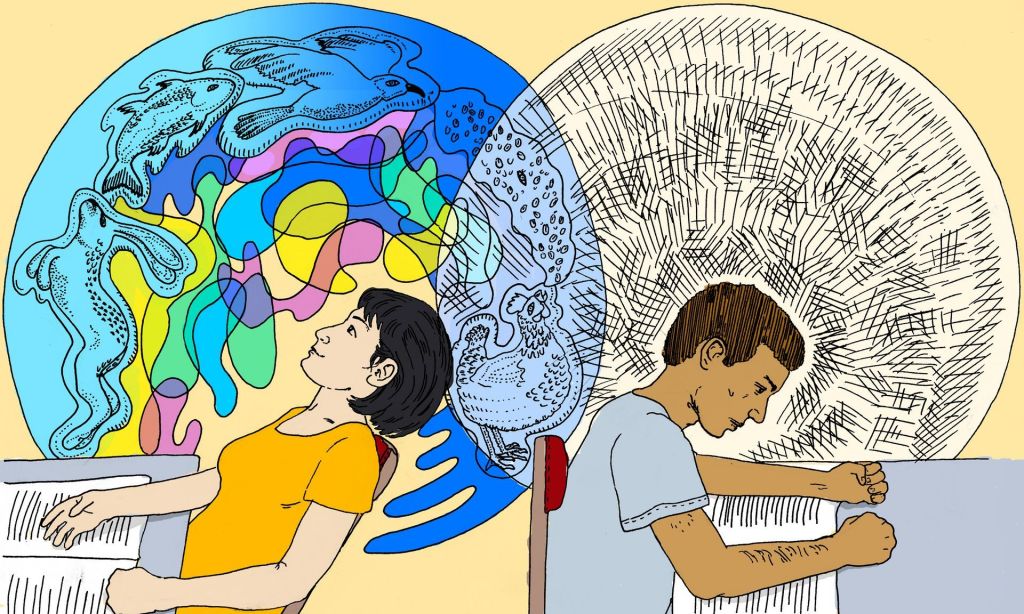
In the realm of education, imagination plays a vital role in the learning process. It allows students to explore and understand concepts beyond what is presented directly to them. Imagination can be seen as the catalyst for creativity, critical thinking, problem-solving, and innovation. By engaging their imaginations, learners are able to think outside the box and develop unique perspectives on various subjects.
One of the primary benefits of incorporating imagination into education is its ability to foster creativity. When students are encouraged to use their imaginations, they become more inclined to come up with original ideas and solutions. By exploring different possibilities through imaginative thinking, students can break away from conventional approaches and truly tap into their creative potential.
Furthermore, imagination aids in developing critical thinking skills by allowing learners to analyze information from multiple angles. It enables them to question assumptions, consider alternative viewpoints, and evaluate evidence objectively. This type of thinking helps students develop a deeper understanding of complex topics while also honing their analytical abilities.
Imagination also plays a crucial role in problem-solving. When faced with challenges or obstacles, individuals who possess strong imaginations can envision various scenarios and anticipate potential outcomes – enabling them to devise effective strategies for overcoming difficulties. This skill not only makes learning more enjoyable but also equips students with valuable tools they can apply throughout their lives.
Moreover, integrating imagination into education encourages innovative thinking among learners. By encouraging students’ imaginations during the learning process, educators create an environment where unconventional ideas are embraced rather than dismissed outright. This approach cultivates an entrepreneurial mindset that prepares young minds for future success in various industries that require innovative thinking.
Imagination also serves as a bridge between theoretical knowledge and real-life application. Students often struggle with grasping abstract concepts unless they can visualize or contextualize them within familiar contexts using their imaginations. For example, when teaching mathematical equations or scientific principles through storytelling or visual aids that stimulate children’s imaginations—such as animations or experiments—students can comprehend and retain concepts more effectively.
Furthermore, imagination promotes empathy and understanding. Through imaginative exercises like role-playing or creative writing, students can put themselves in someone else’s shoes and gain a better understanding of different perspectives. This fosters open-mindedness, tolerance, and appreciation for diversity among learners.
In addition to its cognitive benefits, imagination also contributes significantly to emotional development. By engaging their imaginations, students can express their thoughts and emotions in a safe and creative manner. This process helps them build self-awareness, improve emotional intelligence, and develop healthy coping mechanisms for dealing with stress or difficult situations.
It is crucial for educators to create an environment that nurtures imagination in order to maximize its impact on learning outcomes. Incorporating elements such as storytelling, art projects, hands-on experiments, group discussions, and problem-based learning activities are effective ways to stimulate students’ imaginations within the educational setting.
However, it is important not to overlook the importance of playtime in fostering imagination. Allowing children ample time for unstructured play encourages them to explore their creativity freely. Play acts as a natural catalyst for imaginative thinking by enabling children to invent scenarios, stories, characters – ultimately enhancing their overall learning experience.
To conclude; the role of imagination in education cannot be overstated. It enhances creativity by encouraging originality; it fosters critical thinking skills by challenging assumptions; it promotes problem-solving abilities through envisioning various solutions; it stimulates innovation by embracing unconventional ideas; it bridges theoretical knowledge with real-life application; it cultivates empathy through perspective-taking; it supports emotional development by providing an outlet for expression; and finally plays a vital role in shaping well-rounded individuals who are prepared for success both academically and personally. Therefore incorporating imagination into education should be at the forefront of alternative schooling approaches aiming at holistic development of students
 Alternative Amie
Leave a comment