Physics and Simple Machines: Understanding the Foundations of Mechanics
When it comes to understanding how things work, physics is at the forefront. From the smallest particles to the vastness of space, physics explains the fundamental laws that govern our universe. One aspect of physics that plays a significant role in our everyday lives is mechanics – the study of motion and forces. And within this field, simple machines are essential tools for understanding how forces can be manipulated to make tasks easier.
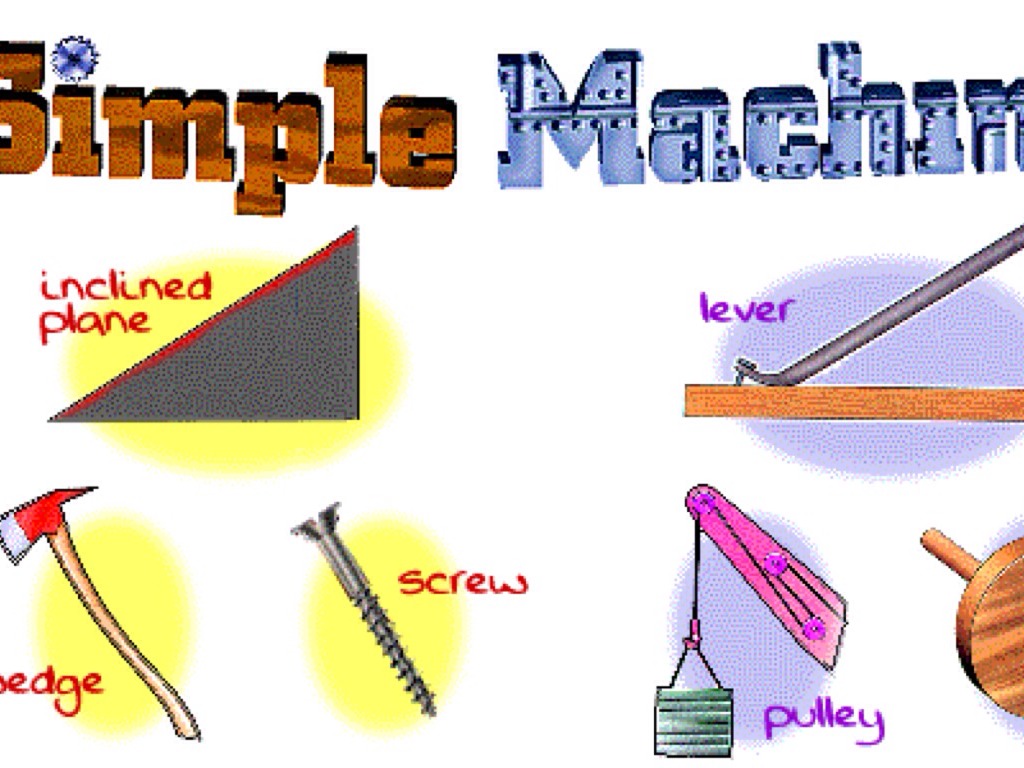
Simple machines are devices that use mechanical advantage to multiply or change the direction of an applied force. They are elementary building blocks from which more complex machines are constructed. The six basic types of simple machines include the lever, pulley, wheel and axle, inclined plane, wedge, and screw. Each machine has its unique design and function but operates on similar principles.
The lever is perhaps one of the most well-known simple machines. It consists of a rigid bar (the lever arm) that rotates around a fixed point called a fulcrum. By applying effort (force) at one end of a lever arm, you can generate a larger output force at the other end by taking advantage of leverage. Think about using a seesaw – pushing down on one side causes someone on the opposite side to rise into the air.
Pulleys provide another example of simple machines in action. A pulley consists of a grooved wheel with either a rope or chain passing through it and attached to an object being lifted or moved. By pulling downward on one end while holding onto another fixed point, you can lift heavy objects with less effort than if you had directly lifted them yourself.
The wheel and axle is another type of simple machine commonly used in everyday life — think about turning a doorknob or riding your bicycle! This machine combines two circular objects where one rotates around another axis called an axle. Applying force to either object allows movement or rotation around this central axis with ease.
Inclined planes are simple machines used to reduce the effort required to move an object vertically. By spreading the work over a longer distance, inclined planes allow us to exert less force. A classic example is a ramp – pushing a heavy box up a ramp requires less effort than lifting it straight off the ground.
Wedges and screws are also essential components of our daily lives. Wedges are used for splitting, cutting, or gripping objects by applying force along two inclined planes meeting at a sharp edge. Knives and axes are prime examples of wedges in action. Screws, on the other hand, consist of an inclined plane wrapped around a cylinder-shaped shaft. They convert rotational motion into linear motion as they move through materials like wood or metal.
Understanding simple machines is critical for grasping more complex mechanical systems that we encounter regularly. From construction equipment to vehicles and beyond, these machines build upon the principles established by their simpler counterparts. By studying physics and exploring how simple machines function, students can develop problem-solving skills while gaining an appreciation for how our world works.
By incorporating hands-on experiments into educational curricula, students can witness firsthand the concepts discussed in physics class come alive before their eyes. Building miniature levers or pulley systems using everyday items such as rulers, pencils, strings, and weights helps solidify understanding while fostering creativity and critical thinking skills.
Ultimately, learning about physics and simple machines provides students with valuable knowledge that extends far beyond the classroom walls. It empowers them to understand how forces shape our world and equips them with tools to invent new solutions that make life easier for everyone.
So let’s explore together – embrace your inner physicist and start experimenting with simple machines!
 Alternative Amie
Leave a comment