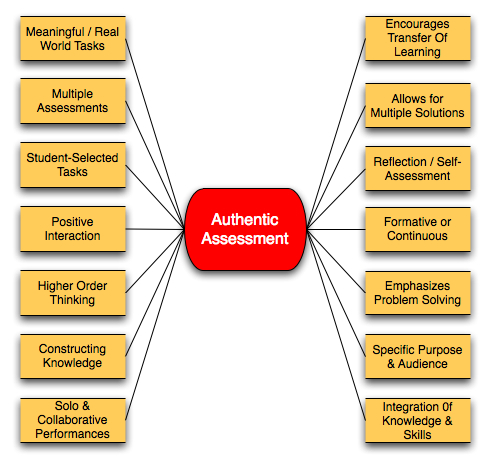
Authentic Assessment Methods in Alternative Schooling
In alternative education settings, traditional methods of assessment may not effectively capture the unique learning experiences and outcomes of students. As such, alternative schools often employ authentic assessment methods that align with their philosophy and goals. Authentic assessment focuses on evaluating and measuring real-world skills and knowledge acquisition through performance-based tasks, projects, portfolios, self-reflection, peer collaboration, and other interactive activities. This article will explore various authentic assessment methods used in alternative schooling.
1. Self-Assessment and Reflection:
Self-assessment is a powerful tool for fostering student ownership of learning in alternative education. By encouraging learners to reflect on their progress and evaluate their own strengths and areas for growth, educators empower them to take responsibility for their academic journey. Self-assessment can be facilitated through structured reflection prompts or rubrics that guide students in analyzing their work against specific criteria or learning objectives.
2. Peer Assessment Strategies:
Peer assessment fosters collaboration, communication skills, critical thinking abilities, and enhances social-emotional development within the alternative school environment. Students learn from each other by providing constructive feedback on peers’ work using predetermined criteria or rubrics developed collaboratively with teachers.
One effective strategy is the “two stars and a wish” approach where students provide two positive aspects (stars) of their peer’s work along with one suggestion for improvement (wish). This method helps build a culture of supportiveness while promoting critical evaluation skills.
3. Portfolio-Based Assessment:
Portfolios are valuable tools for capturing the holistic development of learners in non-traditional educational settings. They showcase evidence of students’ progress over time by including samples of work across multiple subjects or projects undertaken during an academic year or semester.
Portfolios allow students to demonstrate mastery across various disciplines while enabling educators to assess individualized learning plans tailored to each student’s needs. Teachers can review portfolios periodically alongside students’ reflections to gain insights into their growth trajectory.
4. Project-Based Assessments:
Project-based assessments are widely employed in alternative schools as they align with the hands-on, experiential learning approach often emphasized. These assessments require students to apply knowledge and skills to real-world problems or scenarios, fostering creativity, critical thinking, collaboration, and innovation.
Teachers can design rubrics that assess not only the final product but also the process involved in completing the project. This allows for a comprehensive evaluation of students’ problem-solving abilities, communication skills, time management, and project management skills.
5. Performance Assessments:
Performance assessments provide an opportunity for students to demonstrate their understanding through live presentations or exhibitions. These can take various forms such as oral presentations, debates, performances (e.g., music or drama), demonstrations of practical skills (e.g., cooking or carpentry), or even simulations.
Performance assessments enable educators to evaluate not just content knowledge but also presentation skills, confidence levels, creativity in delivery methods, and ability to engage an audience effectively.
6. Assessing Creativity and Innovation:
Alternative education often emphasizes nurturing creativity and innovation among learners. Assessing these qualities requires methods that go beyond traditional tests or exams. Alternative schools may use open-ended tasks that allow for divergent thinking and multiple solutions.
Assessment strategies like brainstorming sessions followed by idea mapping exercises can be used to measure creative thinking abilities. Additionally, instructors can assign creative projects where students have the freedom to explore innovative approaches while solving problems related to specific subjects or themes.
7. Assessing Critical Thinking Skills:
Critical thinking is a crucial skill developed in alternative schooling environments due to their emphasis on inquiry-based learning and questioning conventional wisdom. Educators employ various strategies such as Socratic seminars where students engage in thoughtful discussions around complex issues.
To assess critical thinking skills effectively, teachers must create rubrics that focus on evaluating how well students analyze information from multiple perspectives, make reasoned judgments based on evidence provided during discussions or assignments.
8. Assessing Social-Emotional Learning Outcomes:
Alternative schools often prioritize social-emotional learning to foster students’ personal growth and well-being. Assessing these outcomes requires methods that go beyond traditional academic measures.
Teachers can use surveys, reflection journals, or observations of student behavior to assess their social skills, self-awareness, empathy, and responsible decision-making abilities. Additionally, projects or assignments focused on community service or collaborative problem-solving can provide evidence of students’ ability to work effectively in teams and contribute positively to society.
9. Formative Assessment Techniques:
Formative assessments are ongoing evaluations conducted throughout the learning process to monitor progress and adjust instruction accordingly. In alternative education settings, formative assessment techniques such as exit tickets (brief reflections at the end of a lesson), one-minute papers (brief written responses summarizing key concepts), or peer feedback sessions can be employed.
These techniques help teachers identify areas where learners may need additional support and tailor instruction accordingly. They also provide students with regular opportunities for self-reflection and feedback on their own progress.
10. Summative Assessment Approaches:
Summative assessments are typically used to evaluate student achievement at the end of a unit, semester, or year-long course in alternative schooling environments. While alternative schools may still use some traditional exams or tests as summative assessments, they often supplement these with other methods mentioned above like portfolios, projects presentations/exhibitions.
Rubrics aligned with specific learning objectives can guide teachers in evaluating students’ performance holistically while providing valuable feedback for future improvement.
In conclusion,
Authentic assessment methods align closely with the values and goals of alternative schooling by focusing on real-world skills development rather than rote memorization of facts. Self-assessment, peer collaboration, portfolio-based assessment project-based assessments promote active engagement critical thinking creativity innovation among learners while promoting holistic evaluation individualized learning plans within non-traditional educational settings.
By employing strategies tailored to diverse learners needs using differentiated approaches, alternative schools can ensure that assessments accurately capture students’ growth progress. Additionally, leveraging technology can enhance assessment practices by providing tools for data collection analysis while allowing for remote or asynchronous learning experiences.
Evaluating and reporting student progress to parents/guardians in alternative schooling may require innovative grading methodologies like narrative reports visual representations rather than traditional letter grades percentages.
Ultimately, authentic assessment methods play a crucial role in evaluating interdisciplinary learning experiences, individualized learning plans, collaboration teamwork skills fostering student engagement motivation within the alternative school setting. By embracing these strategies, educators empower learners to become active participants in their own education and prepare them for success beyond the classroom walls.
 Alternative Amie
Leave a comment