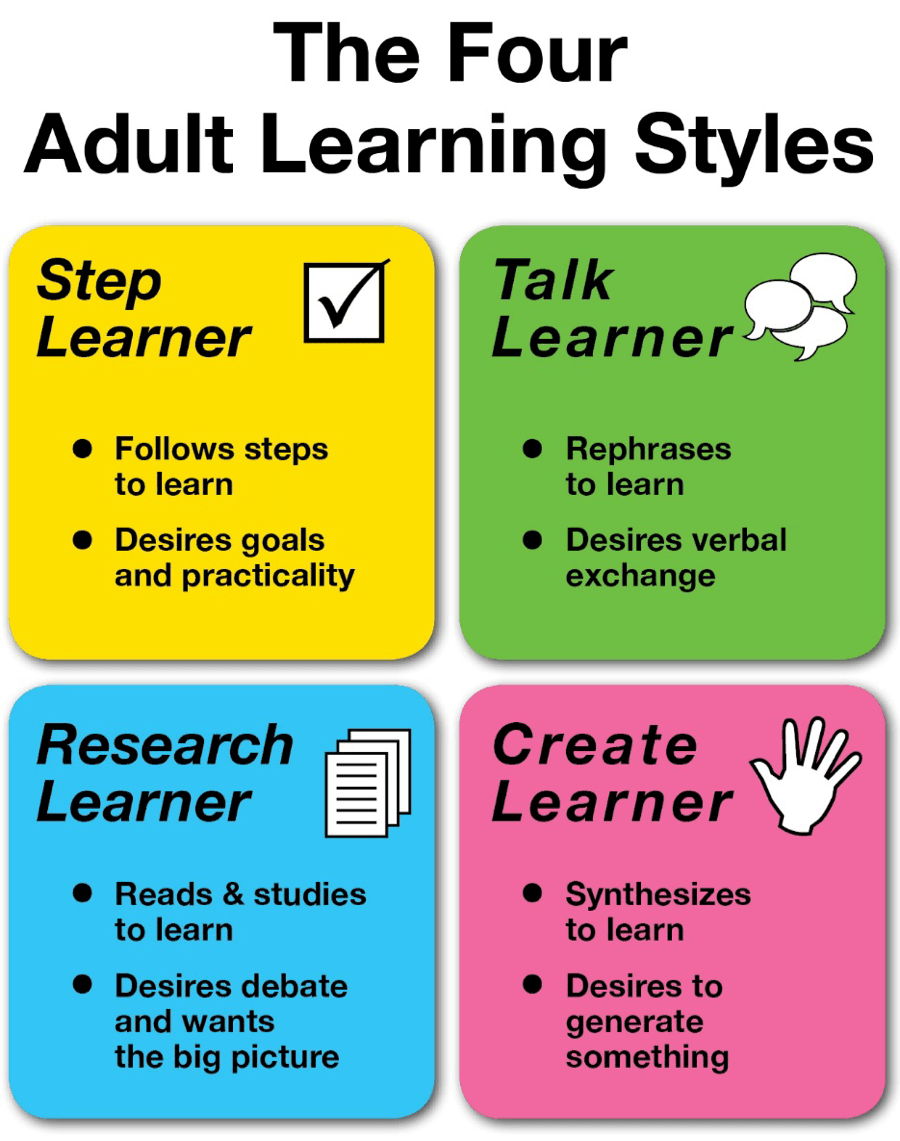
4. Exploring different learning styles within self-directed learning
In a self-directed learning environment, understanding and embracing different learning styles is crucial for success. Traditional education often caters to a one-size-fits-all approach, but self-directed learners have the freedom to tailor their education based on their unique preferences and strengths.
One common framework for identifying learning styles is the VARK model, which categorizes individuals into four types: visual learners who prefer visual aids like diagrams and charts, auditory learners who benefit from listening and discussing information, reading/writing learners who thrive through written materials and note-taking, and kinesthetic learners who learn best through hands-on experiences and movement.
Self-directed learners can use this knowledge to optimize their study methods. For example, visual learners may find it helpful to create mind maps or use online videos for explanations. Auditory learners can record lectures or participate in group discussions. Reading/writing learners might take detailed notes or create written summaries of key concepts. Kinesthetic learners can engage in experiments or simulations that allow them to actively apply what they’ve learned.
By recognizing their preferred learning style(s) and incorporating corresponding strategies into their self-directed curriculum, students can enhance comprehension, retention, and overall engagement with the material at hand. Ultimately, by accommodating diverse learning styles within a self-directed learning environment, individuals are empowered to maximize their potential for growth and achievement.
 Alternative Amie
Leave a comment