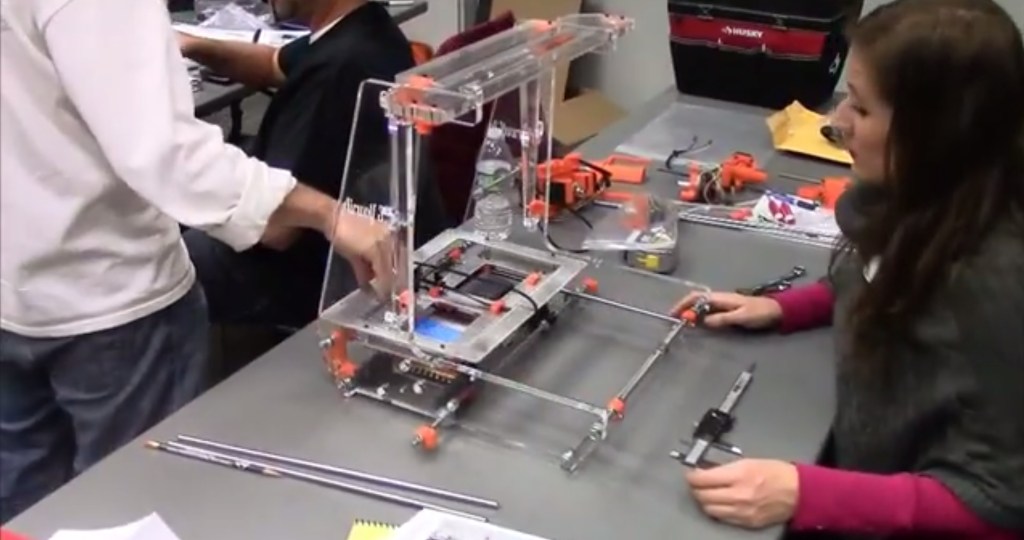
3D Printing: A Transformative Tool in Alternative Schooling and Education
Introduction
The world of education has witnessed significant changes over the past decade, with technological advancements revolutionizing traditional teaching methods. One such innovation that holds immense potential for alternative schooling and education is 3D printing. This technology allows students to transform their ideas into tangible objects, enhancing their learning experience through hands-on engagement. In this article, we will explore how 3D printing can be used as a transformative tool in alternative schooling and education.
Understanding 3D Printing
Before delving into its educational applications, it is important to understand what 3D printing entails. Also known as additive manufacturing, this process involves creating three-dimensional objects by depositing successive layers of material based on digital designs or blueprints. These materials can range from plastic and metal to ceramics and even food substances.
There are several types of 3D printers available today, each utilizing different techniques to create objects layer by layer. The most common type is Fused Deposition Modeling (FDM), where a thermoplastic filament is melted and extruded through a nozzle onto a build plate according to the design specifications. Other technologies include Stereolithography (SLA), Selective Laser Sintering (SLS), and Digital Light Processing (DLP).
Benefits of 3D Printing in Education
1. Enhancing Creativity
One of the primary advantages of incorporating 3D printing into alternative schooling environments is its ability to foster creativity among students. By allowing them to convert abstract concepts into physical models, this technology sparks imagination while encouraging problem-solving skills and critical thinking.
With access to CAD (Computer-Aided Design) software, students can design intricate structures or prototypes before bringing them to life using a 3D printer. This hands-on approach empowers learners to experiment, iterate, and refine their creations until they achieve their desired outcomes.
2. Encouraging Collaboration
3D printing also promotes collaboration among students, as it often requires teamwork to execute complex projects successfully. By working together on designing and printing objects, learners develop communication skills, learn how to divide tasks, and leverage each other’s strengths.
Collaborative 3D printing projects can be integrated into various subjects such as science, mathematics, engineering, and art. For instance, students can work in groups to design and build functional models of solar-powered vehicles or architectural structures. This interdisciplinary approach not only enhances their understanding of different subjects but also nurtures important life skills like cooperation and effective communication.
3. Hands-on Learning Experience
Traditional education often relies heavily on textbooks and theoretical knowledge. However, 3D printing offers a tangible learning experience that bridges the gap between theory and practice. By physically creating objects from scratch using 3D printers, students gain a deeper understanding of concepts by engaging with them in a more tactile manner.
For instance, biology classes can utilize 3D-printed models of human organs for interactive learning sessions instead of relying solely on diagrams or illustrations. Similarly, history lessons could incorporate replicas of ancient artifacts or monuments that allow students to examine them up close without risking damage to valuable originals.
4. Customization and Personalization
Every student has unique learning preferences and needs. With 3D printing technology at their disposal, educators can tailor instructional materials specifically to meet these individual requirements.
By harnessing the power of customization through 3D printing, teachers can create personalized visual aids or tactile models for students with special needs who may benefit from alternative approaches to traditional teaching methods.
Moreover, this technology allows learners themselves to customize their educational resources according to their interests and abilities. Students can modify existing designs or develop entirely new ones based on their own research or creative inspiration—encouraging ownership over their learning journey.
5. Career Readiness
Incorporating 3D printing into alternative schooling and education equips students with valuable skills that are in high demand in today’s job market. Industries such as engineering, architecture, product design, and healthcare are increasingly embracing additive manufacturing technologies.
When students engage with 3D printing from an early stage, they develop a solid foundation in this emerging field. This not only enables them to explore future career options but also instills a mindset of innovation and adaptability—a crucial trait for success in the rapidly evolving world.
6. Cost-effective Prototyping
Another significant advantage of 3D printing is its cost-effectiveness when it comes to prototyping. In traditional manufacturing processes, creating prototypes can be expensive and time-consuming. However, 3D printers allow students to iterate their designs quickly at a fraction of the cost.
This enables learners to test their ideas without investing heavily in materials or specialized equipment. As a result, they gain practical experience in product development cycles while understanding the importance of trial-and-error iterations—a vital lesson for any aspiring innovator or entrepreneur.
Conclusion
The integration of 3D printing technology into alternative schooling and education opens up new avenues for creativity, collaboration, hands-on learning experiences, customization/personalization, career readiness, and cost-effective prototyping. By harnessing the power of this transformative tool within educational environments, we empower learners to become active participants rather than passive recipients of knowledge—an essential step towards shaping well-rounded individuals capable of thriving in an ever-changing world.
 Alternative Amie
Leave a comment