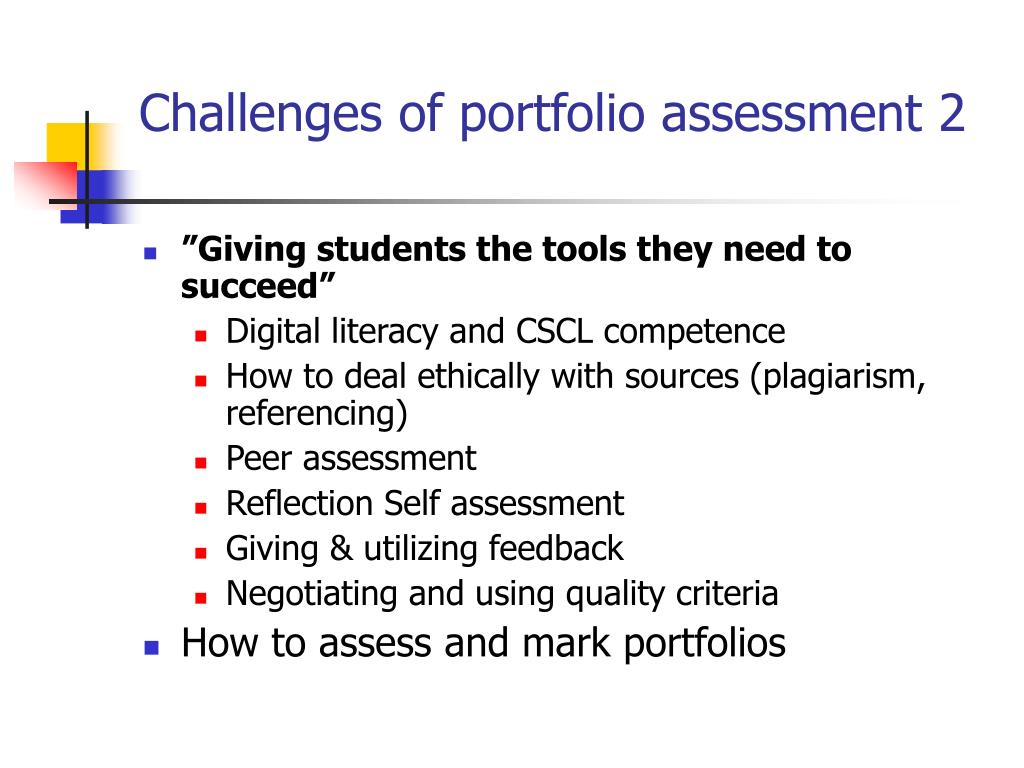
Portfolio assessment is an alternative form of evaluation that can provide a more comprehensive view of a student’s abilities, growth, and achievements compared to traditional tests and exams. It involves collecting samples of a student’s work over time, which are then reviewed and assessed by teachers or other evaluators. While portfolio assessment has numerous benefits for both students and educators, there are also challenges in implementing this approach effectively. In this article, we will explore the challenges faced in implementing portfolio assessment and discuss potential solutions to overcome them.
1. Time management:
One significant challenge in implementing portfolio assessment is the time required to collect, review, and assess multiple samples of students’ work. Teachers need to carefully plan their schedules to ensure they have enough time to thoroughly evaluate each portfolio. Additionally, students may struggle with managing their own time effectively when it comes to selecting appropriate pieces for their portfolios.
Solution: To address this challenge, schools can allocate dedicated time slots during the academic year for teachers to focus on reviewing portfolios. This could be done through faculty meetings or professional development sessions specifically aimed at discussing and assessing portfolios. Moreover, providing clear guidelines for students regarding the selection process can help them manage their time better.
2. Standardization:
Ensuring consistency in evaluating diverse portfolios is another hurdle faced by educators utilizing portfolio assessments. Since there are no uniform criteria like multiple-choice questions or rubrics used in traditional assessments, different evaluators might interpret the same piece differently.
Solution: Creating clear grading rubrics or scoring guides specific to each subject area can help standardize evaluations across different portfolios. These rubrics should outline expectations for quality work and clearly define what constitutes successful completion of tasks or assignments within each discipline.
3. Subjectivity:
Due to its open-ended nature, portfolio assessment often involves subjective judgments from evaluators as they analyze various artifacts submitted by students. This subjectivity can result in biases based on personal preferences or interpretations.
Solution: Training workshops focusing on fair and unbiased evaluation techniques can be organized for teachers involved in portfolio assessment. These workshops should emphasize the importance of examining each portfolio against established criteria rather than personal biases. Encouraging collaborative discussions among evaluators during the assessment process can also help reduce subjectivity.
4. Storage and organization:
Managing a large number of portfolios, especially in schools with significant student populations, can be quite challenging. Storing physical portfolios can take up valuable space, while digital portfolios may require robust storage systems and infrastructure.
Solution: Schools can consider adopting online platforms or electronic portfolio management systems that allow students to upload their work digitally. This not only saves physical space but also provides an efficient way to organize and access portfolios when needed. Investing in cloud-based storage solutions ensures secure backup and easy retrieval of digital portfolios.
5. Feedback and reflection:
Portfolio assessment is not just about evaluating student work; it is also an opportunity for self-reflection and growth. However, providing meaningful feedback on multiple artifacts within each portfolio proves to be time-consuming for educators.
Solution: Teachers can provide targeted feedback by focusing on essential aspects of the work samples rather than commenting on every detail individually. Using general comments alongside specific examples from different pieces helps guide students’ reflection processes effectively. Peer-assessment activities such as small-group discussions or partnerships provide additional opportunities for constructive feedback while reducing the workload on teachers.
6. Parental involvement:
Engaging parents in understanding the purpose and process of portfolio assessments is crucial for its successful implementation. However, some parents may struggle to grasp this alternative form of evaluation or question its efficacy compared to traditional exams.
Solution: Organizing informational sessions specifically aimed at parents can help address concerns while explaining how portfolio assessment aligns with broader educational goals like promoting critical thinking skills, fostering creativity, and encouraging self-reflection among students. Sharing success stories or testimonials from previous years’ experiences with portfolio assessments could further alleviate parental concerns.
7. Assessment overload:
In schools where portfolio assessment is used alongside traditional exams, teachers may face an increased workload due to the additional time required for reviewing and assessing portfolios.
Solution: Distributing the evaluation load among multiple teachers or forming assessment teams can help alleviate individual burdens. Collaborative scoring sessions where teachers collectively evaluate a subset of portfolios can streamline the process while ensuring consistent standards are maintained.
In conclusion, while implementing portfolio assessment in schools comes with its fair share of challenges, there are practical solutions available to overcome them. By addressing issues such as time management, standardization, subjectivity, storage and organization, feedback and reflection, parental involvement, and assessment overload through well-planned strategies and interventions, educators can successfully implement portfolio assessments that effectively capture students’ growth and accomplishments. Embracing this alternative form of evaluation can lead to a more holistic approach to education that focuses on individual strengths and promotes lifelong learning skills.
 Alternative Amie
Leave a comment