Multiple Intelligences Theory in Education: Unlocking the Potential of Every Student
Introduction:
In the realm of education, one size does not fit all. Each student possesses a unique set of skills and abilities that should be recognized and nurtured to facilitate optimal learning. Traditional educational models often focus on a narrow range of intelligences, predominantly linguistic and logical-mathematical. However, Howard Gardner’s theory of multiple intelligences offers an alternative approach that recognizes diverse forms of intelligence and provides a comprehensive framework for education. This article will explore the concept of multiple intelligences theory, its implications for teaching practices, and how it can empower students to reach their full potential.
Understanding Multiple Intelligences:
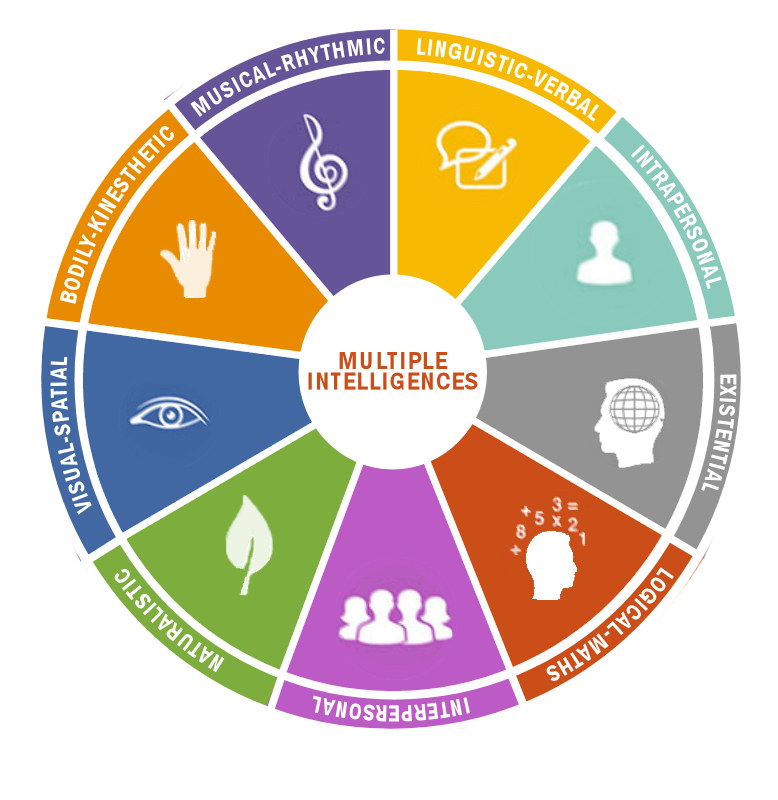
Gardner proposed that intelligence is not limited to a single dimension but rather encompasses various distinct forms or “intelligences.” He initially identified seven intelligences: linguistic, logical-mathematical, spatial, bodily-kinesthetic, musical, interpersonal, and intrapersonal. Later on, he added two more types – naturalistic intelligence (sensitivity towards nature) and existential intelligence (reflective thinking about life’s fundamental questions). According to this theory, individuals possess different strengths across these intelligences.
Linguistic Intelligence:
Students with high linguistic intelligence excel in verbal expression – both speaking and writing – as well as reading comprehension. They have strong language skills, enjoy storytelling or word games like crossword puzzles or Scrabble®. Teachers can engage these learners by incorporating activities such as debates or creative writing assignments into their curriculum.
Logical-Mathematical Intelligence:
Students who exhibit logical-mathematical intelligence are highly skilled at reasoning logically and solving complex problems using numbers or abstract patterns. They enjoy puzzles or strategy games like chess or Sudoku®. Educators can foster this type of intelligence by including hands-on experiments or inquiry-based activities that encourage critical thinking skills.
Spatial Intelligence:
Individuals with spatial intelligence have an exceptional ability to perceive and manipulate visual information. They excel in tasks involving spatial reasoning, such as map reading or graphic design. Teachers can support these learners by incorporating visual aids, diagrams, or mind maps into their teaching materials.
Bodily-Kinesthetic Intelligence:
Students with high bodily-kinesthetic intelligence exhibit exceptional physical coordination and dexterity. They often excel in sports, dance, or other activities that require body movement control. In the classroom setting, teachers can encourage these students through hands-on learning experiences like role-playing or interactive experiments.
Musical Intelligence:
Those with musical intelligence have a heightened sensitivity to rhythm, pitch, and melody. They possess excellent auditory skills and may be skilled singers or instrumentalists. Teachers can engage these learners by integrating music into lessons or encouraging them to create songs related to academic content.
Interpersonal Intelligence:
Students with interpersonal intelligence are highly perceptive of others’ emotions and motivations. They excel in social situations and are adept at resolving conflicts or working collaboratively in groups. Educators should provide opportunities for peer-to-peer interaction through group projects or class discussions to foster this type of intelligence.
Intrapersonal Intelligence:
Individuals with intrapersonal intelligence possess self-awareness and introspective abilities. They are reflective thinkers who understand themselves well – their strengths, weaknesses, values, and beliefs – making them independent learners. Educators should allow time for personal reflection through journaling exercises or individual goal-setting activities for students exhibiting this form of intelligence.
Naturalistic Intelligence:
This type of intelligence involves an affinity for nature and an ability to recognize patterns within the natural world. Students strong in naturalistic intelligence enjoy outdoor activities like gardening or observing wildlife habitats closely tied to science-based subjects like biology or environmental studies.
Existential Intelligence:
Existential intelligence refers to an individual’s capacity for contemplating deep philosophical questions relating to the meaning of life and existence itself. While challenging to incorporate directly into traditional curricula due to its abstract nature, educators can encourage students to explore these questions through literature or philosophical discussions.
Implications for Teaching Practices:
The multiple intelligences theory challenges the conventional instructional methods that primarily cater to linguistic and logical-mathematical intelligence. By recognizing and embracing the diversity of intelligences, educators can create a more inclusive and engaging learning environment. The following strategies can be implemented to support students with different types of intelligences:
1. Differentiated Instruction: Tailor teaching methods and materials to accommodate diverse learning styles, providing opportunities for all students to excel in their respective areas of strength.
2. Multidisciplinary Approach: Integrate various subjects into lesson plans, allowing students to explore connections between different disciplines and apply their strengths across multiple domains.
3. Project-Based Learning: Engage students in real-world projects that require collaboration, critical thinking, creativity, and problem-solving skills – thus encouraging the development of multiple intelligences simultaneously.
4. Varied Assessments: Provide assessments that go beyond traditional tests or exams and incorporate alternative forms such as portfolios, presentations, performances, or hands-on demonstrations.
Conclusion:
Incorporating the principles of multiple intelligences theory into education enables teachers to tap into every student’s potential by recognizing their unique strengths and fostering holistic development. By shifting focus from a one-size-fits-all approach towards individualized instruction tailored around diverse types of intelligence, we empower our learners to thrive academically while cultivating a lifelong love for learning.
 Alternative Amie
Leave a comment