Gamification in Online Learning
Online learning has become increasingly popular, especially in the context of alternative education. One of the key strategies that educators and online platforms have adopted to enhance engagement and motivation is gamification. Gamification refers to the integration of game elements into non-game contexts, such as education, with the aim of making learning more enjoyable and effective.
When implemented effectively, gamification can transform online learning experiences by creating a sense of challenge, competition, and achievement. It leverages our natural inclination towards play and rewards to motivate learners to actively participate in their own education. Here are some key benefits and examples of how gamification is being used in online learning:
1. Increased Engagement: Gamified elements like badges, levels, leaderboards, and rewards can capture students’ attention and keep them engaged throughout their educational journey. For example, Duolingo uses a leveling system where learners earn experience points (XP) for completing lessons or practicing regularly.
2. Personalized Learning: Gamified platforms often provide personalized learning paths based on individual progress and performance data. This allows learners to focus on areas that need improvement while progressing at their own pace. Khan Academy utilizes this approach by providing adaptive exercises that adjust difficulty based on student responses.
3. Immediate Feedback: Games provide instant feedback on performance, allowing learners to assess their understanding immediately after completing a task or activity. This prompt feedback helps identify strengths and weaknesses quickly so that students can make necessary adjustments for improvement.
4. Mastery-Based Learning: Many gamified systems promote mastery-based learning where students must demonstrate proficiency before advancing to higher levels or unlocking new content. This approach encourages deeper understanding rather than superficial memorization.
5. Collaboration Opportunities: Gamified platforms often include social features such as team challenges or cooperative gameplay that foster collaboration among learners from different backgrounds or locations.
6.Self-paced Learning: The flexibility offered by most online gaming systems allows learners to learn at their own pace without feeling rushed or pressured. This accommodates different learning styles and preferences.
7. Real-world Application: Gamification can bridge the gap between theoretical knowledge and real-world application by simulating practical scenarios through interactive games. For example, CodeCombat provides a gamified coding learning experience where learners must use programming concepts to navigate characters through various challenges.
8. Motivation and Persistence: The competitive nature of games encourages learners to set goals, persevere through challenges, and celebrate achievements along the way. The sense of accomplishment boosts motivation and fosters a growth mindset in students.
9. Data-Driven Insights: Gamified platforms collect data on student progress, performance, and engagement levels. Educators can leverage this data to gain insights into individual strengths and weaknesses, allowing for targeted interventions or personalized support.
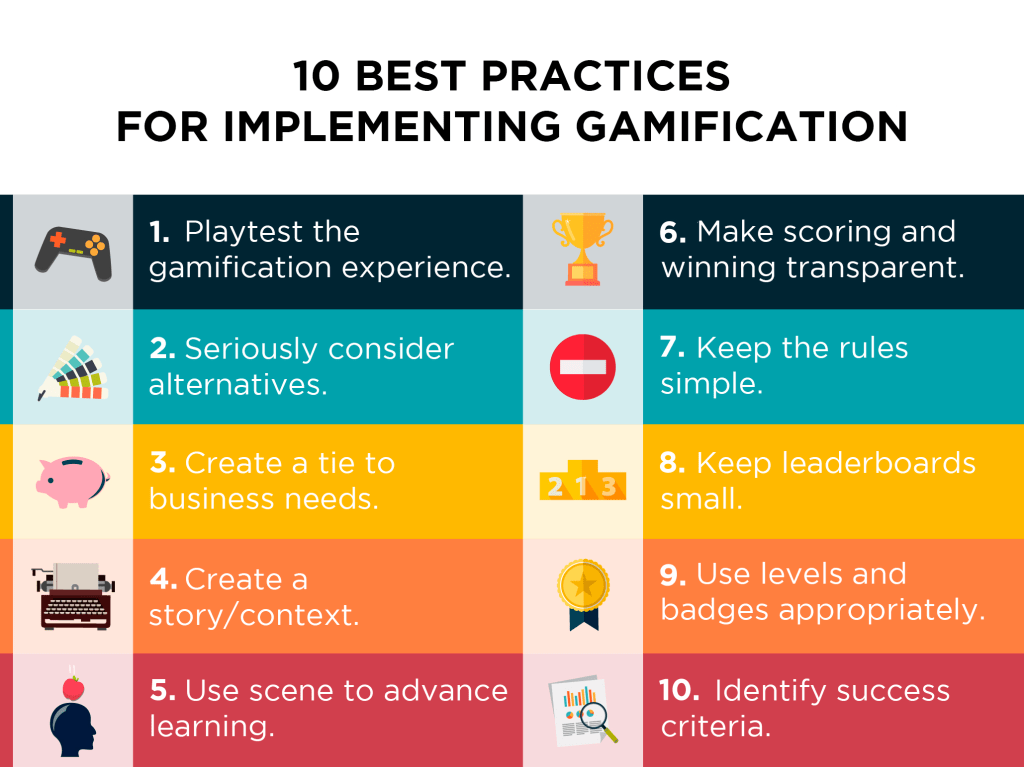
While gamification offers numerous benefits for online learning, it is essential to implement it thoughtfully with clear educational objectives in mind. Here are some best practices for integrating gamification effectively:
1. Align Game Elements with Learning Objectives: Ensure that game elements directly relate to the desired learning outcomes rather than being mere distractions or gimmicks.
2. Provide Clear Instructions: Clearly communicate how game mechanics work so that students understand what they need to do to succeed.
3.Offer Varied Challenges: Design games that offer a range of difficulty levels and challenge types so that learners are continually engaged without becoming overwhelmed or bored.
4.Provide Regular Feedback: Offer constructive feedback throughout the gaming experience to guide students’ progress without discouraging them from taking risks or making mistakes.
5.Reward Progression Appropriately: Use rewards strategically by balancing intrinsic (e.g., badges) and extrinsic motivators (e.g., points). Make sure rewards align with achievement milestones rather than simply rewarding participation alone.
6.Encourage Competition AND Collaboration : Incorporate both individual competition elements (like leaderboards) as well as opportunities for collaboration among peers through team challenges or group projects.
7. Monitor and Analyze Data: Regularly analyze data on student performance and engagement to identify areas for improvement in the gamified learning experience.
As online learning continues to evolve, incorporating gamification strategies can significantly enhance students’ motivation, engagement, and overall educational experience. By creating interactive and immersive environments, educators can transform online education into an exciting journey of discovery and growth.
 Alternative Amie
Leave a comment