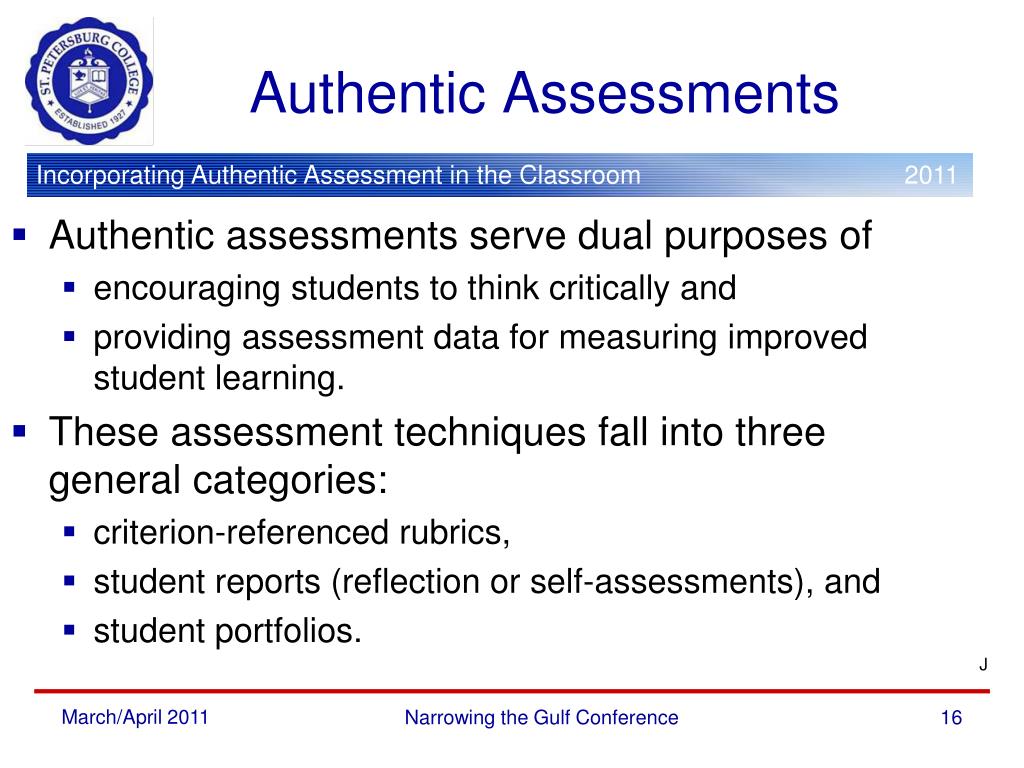
Authentic Assessment: A Pathway to Meaningful Learning
In the traditional education system, assessments often focus solely on measuring students’ ability to memorize and regurgitate information. However, there is a growing recognition that this approach fails to capture the true essence of learning and limits students’ potential for growth and development. As a result, alternative forms of assessment have gained traction in recent years, with authentic assessment emerging as a powerful tool for evaluating student progress while promoting deep understanding and skills application.
Authentic assessment can be defined as an evaluation method that measures students’ abilities by aligning tasks with real-world contexts or situations. Unlike traditional assessments that rely heavily on multiple-choice questions or standardized tests, authentic assessment encourages students to demonstrate their knowledge through meaningful projects, performances, or presentations. By doing so, it not only assesses what students know but also how well they can apply that knowledge in practical settings.
One of the key advantages of authentic assessment is its ability to foster critical thinking skills. Rather than simply memorizing facts and figures for a test, students are challenged to apply their knowledge in complex scenarios where problem-solving and analytical thinking are required. For example, instead of answering questions about historical events from a textbook, students might be asked to analyze primary sources or create a documentary about an important period in history. This type of assessment allows them to engage deeply with the subject matter while developing higher-order cognitive skills.
Furthermore, by incorporating real-life contexts into assessments, authentic assessment increases the relevance and motivation for learning among students. Traditional assessments often fail to establish connections between classroom content and its application outside school walls—leading many students to question the purpose behind their studies. Authentic assessments bridge this gap by presenting tasks that mirror real-world challenges or goals.
For instance, rather than writing an essay about climate change without any tangible outcome beyond receiving a grade, authentic assessment may involve organizing a community event focused on raising awareness about environmental issues. This approach not only enhances students’ understanding of the topic but also instills a sense of purpose and agency as they witness the impact of their actions in the community.
Authentic assessment also promotes collaboration, communication, and problem-solving skills through its emphasis on project-based tasks. In these assessments, students often work together in teams to tackle complex problems or complete multifaceted projects. By doing so, they learn how to effectively communicate their ideas, negotiate differences, and leverage collective intelligence – all crucial skills for success in today’s interconnected world.
Moreover, authentic assessment recognizes that learning is a continuous process rather than a one-time event. Traditional assessments tend to provide a snapshot of student performance at a specific moment, leaving little room for reflective practice or growth over time. In contrast, authentic assessment allows for ongoing feedback and revision opportunities throughout the learning journey.
For example, instead of receiving a final grade on an exam with no chance for improvement or reflection, students engaging in authentic assessment might receive feedback at various stages of their project or performance. This iterative process encourages self-reflection and empowers students to take ownership of their learning by identifying areas for improvement and implementing strategies accordingly.
Critics argue that authentic assessment can be challenging to standardize due to its contextual nature. However, supporters view this flexibility as an asset rather than a drawback. They believe that authenticity cannot be sacrificed for uniformity when it comes to assessing diverse talents and abilities among learners.
In conclusion, authentic assessment offers an alternative paradigm that prioritizes meaningful learning experiences over rote memorization and regurgitation of information. By aligning assessments with real-world contexts and tasks while promoting critical thinking skills, collaboration opportunities, relevance to students’ lives outside school walls—authentic assessments empower learners with the essential competencies needed for success in an ever-evolving society. As educators strive towards creating inclusive educational environments that foster deep understanding and skill development among students from diverse backgrounds—authentic assessment stands out as a powerful tool to achieve these goals.
 Alternative Amie
Leave a comment