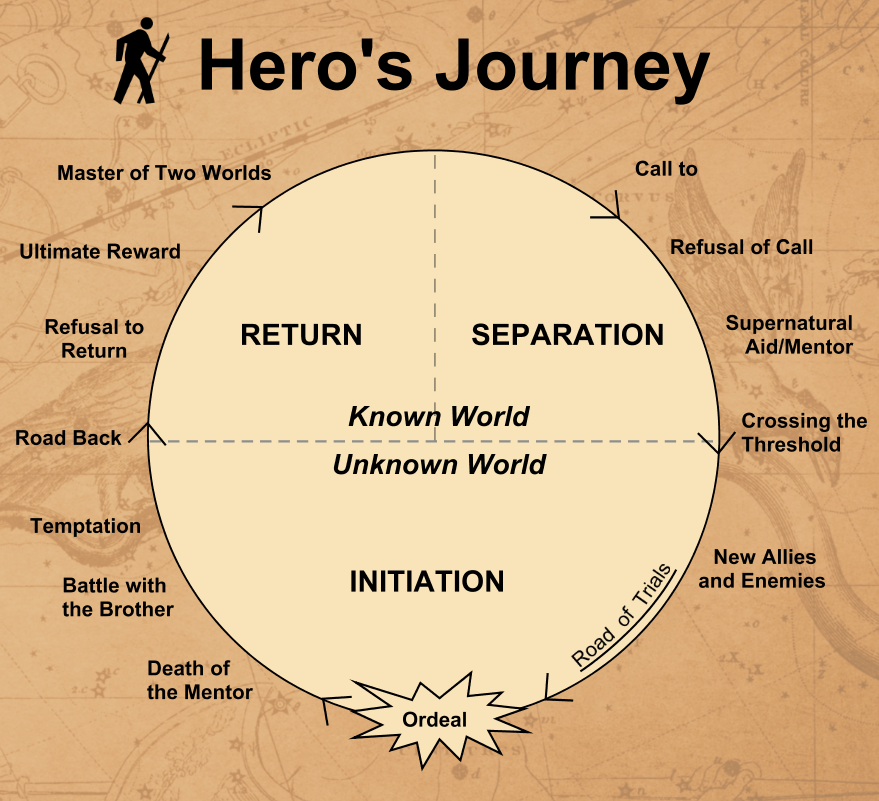
In the world of storytelling, there is a recurring pattern that has captivated audiences for centuries – the hero’s journey. This archetype can be found in myths, legends, and even modern narratives, as it resonates deeply with our human experiences and desires. The hero’s journey provides a framework for understanding personal growth, transformation, and overcoming adversity. In this article, we will explore the various stages of the hero’s journey archetype and its significance in alternative schooling and education.
The hero’s journey was first introduced by mythologist Joseph Campbell in his book “The Hero with a Thousand Faces.” Campbell studied numerous cultural myths from around the world and discovered similarities across different civilizations. He identified a universal narrative structure that follows a heroic character on their path to self-discovery and eventual triumph.
At its core, the hero’s journey consists of several distinct stages: the call to adventure, refusal of the call, meeting with mentors or helpers, crossing thresholds into unknown realms, facing trials and challenges, experiencing transformation or resurrection through death-like experiences, seizing victory or achieving goals against all odds, returning home transformed with newfound wisdom or treasure to share with others.
One may wonder how this ancient narrative structure relates to alternative schooling and education. Well-known alternative educational models such as Montessori schools often incorporate elements of the hero’s journey archetype into their curriculum design. By embracing this powerful storytelling tool within an educational context—students are given permission to embark on their own journeys of self-discovery while educators serve as guides along their paths.
The call to adventure marks the beginning of every hero’s journey; it is an invitation for students to step out of their comfort zones and embrace new challenges. In traditional schooling systems where conformity is often prioritized over individuality—alternative schools provide an environment where students are encouraged to explore their passions freely without fear of judgment or failure.
Refusal of the call represents a critical stage in any heroic tale. It reflects hesitation and self-doubt that students may experience when faced with unfamiliar opportunities. Alternative schools, however, create a supportive atmosphere where educators act as mentors to help students navigate their doubts and fears. By offering encouragement and guidance, these mentors empower students to overcome obstacles hindering their personal growth.
Meeting with mentors or helpers furthers the hero’s journey by providing crucial guidance and knowledge. Similarly, alternative schools foster strong teacher-student relationships where educators serve as guides rather than mere instructors. They provide mentorship by sharing their expertise, experiences, and wisdom while fostering an environment of trust and respect.
Crossing thresholds into unknown realms symbolizes stepping outside one’s comfort zone—a vital aspect of alternative schooling and education. These educational models often encourage experiential learning through field trips, community service projects, or internships—allowing students to explore new territories beyond the confines of traditional classroom settings.
Facing trials and challenges is an integral part of any hero’s journey—the moments that test character, resilience, and determination. In alternative schools focused on holistic development—they provide ample opportunities for students to face challenges head-on through project-based learning or real-world problem-solving activities. By nurturing a growth mindset in students—alternative education prepares them to tackle life’s obstacles with courage and adaptability.
Transformation or resurrection represents the turning point in every heroic tale—an experience that changes the protagonist irrevocably. In alternative schooling environments designed around personalized learning—students are encouraged to discover their passions, strengths, interests—and develop their unique identities along the way. This transformational process allows individuals to become more self-aware while cultivating essential skills necessary for success in the modern world.
Seizing victory or achieving goals against all odds signifies triumph over adversity—a theme commonly found in narratives inspired by the hero’s journey archetype. Alternative schooling approaches emphasize goal-setting tailored to individual student needs—fostering a sense of accomplishment when objectives are met despite initial setbacks or challenges faced along the journey.
Returning home transformed with newfound wisdom or treasure to share with others encapsulates the final stage of the hero’s journey—the moment when heroes return to their communities empowered by their experiences. In alternative education, this stage often manifests through collaborative projects, presentations, or exhibitions where students showcase their learning outcomes and inspire others within their community.
By incorporating elements of the hero’s journey archetype into alternative schooling and education, educators create a transformative environment that allows students to embark on personal journeys of growth, self-discovery, and empowerment. These educational models prioritize individuality, experiential learning, mentorship relationships—all contributing factors in nurturing well-rounded individuals capable of making meaningful contributions to society.
In conclusion, the hero’s journey archetype offers a powerful framework for understanding personal growth and transformation in narratives. When applied to alternative schooling and education contexts—this narrative structure becomes a valuable tool for empowering students on their unique paths towards self-discovery. By embracing the call to adventure, providing mentorship support, encouraging exploration beyond comfort zones, facing challenges head-on—alternative schools can guide students through a transformative experience that prepares them for success in an ever-changing world.
 Alternative Amie
Leave a comment