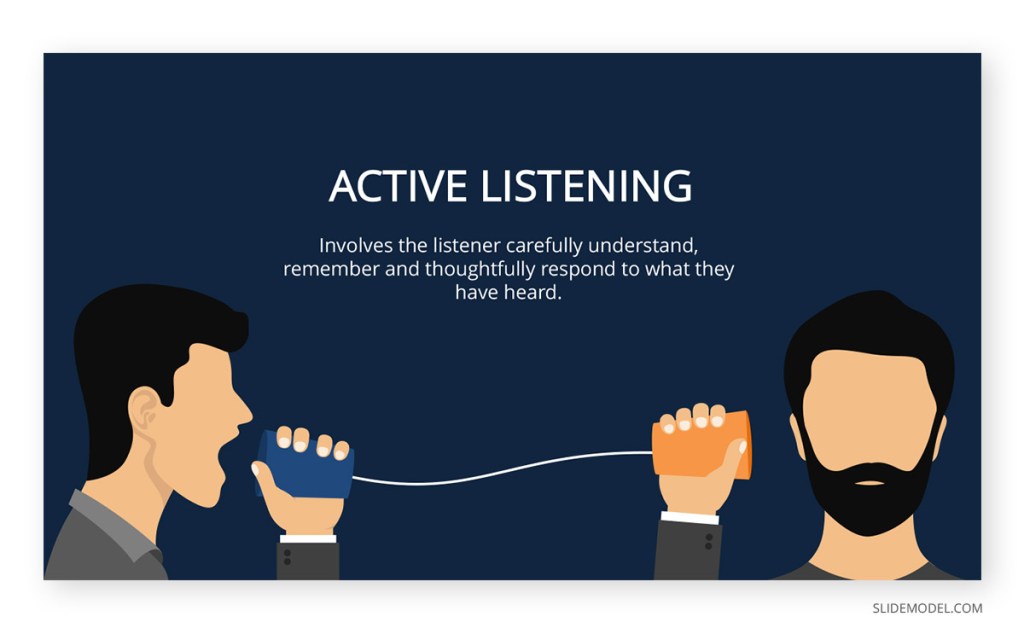
Active Listening: Unlocking the Hidden Secrets of Communication
In today’s fast-paced world, effective communication has become more important than ever. Whether it’s in personal relationships or professional settings, being able to truly understand and be understood is a valuable skill. And at the heart of this skill lies active listening.
Active listening is not just about hearing what someone says; it goes beyond that. It involves fully engaging with the speaker, mentally and emotionally, to comprehend their message and provide meaningful feedback. While it may sound simple enough, mastering active listening requires practice and intentionality.
So how exactly does one practice active listening? Let’s dive into some key strategies:
1. Give Your Undivided Attention: When someone is speaking to you, put away all distractions – yes, even your beloved smartphone – and focus solely on them. Maintain eye contact and nod occasionally to show that you are actively engaged in the conversation.
2. Show Empathy: Put yourself in the speaker’s shoes and try to understand their perspective without judgment or interruption. This empathetic approach allows for better comprehension of their thoughts and feelings.
3. Ask Open-Ended Questions: Encourage deeper conversation by asking open-ended questions that require more than a simple “yes” or “no” response. These questions invite the speaker to share more information while demonstrating your genuine interest in their words.
4. Paraphrase and Summarize: After the speaker has shared their thoughts, paraphrase what they said using your own words to ensure accurate understanding. Additionally, periodically summarize key points throughout the conversation to demonstrate that you are actively processing information.
5. Reflect Feelings: Active listeners don’t just focus on words; they also pay attention to emotions expressed by the speaker. Reflecting those feelings back can help validate their experiences and build trust within the conversation.
6. Avoid Interrupting or Finishing Sentences: Patience is crucial when practicing active listening. Allow the speaker to express themselves fully without interrupting or finishing their sentences. Remember, it’s their time to be heard.
7. Be Mindful of Non-Verbal Cues: Communication isn’t solely reliant on words; non-verbal cues play a significant role as well. Pay attention to the speaker’s body language, tone of voice, and facial expressions for additional insights into what they are trying to convey.
8. Suspend Judgment: As active listeners, our goal is not to pass judgment but rather understand and empathize with others. Set aside preconceived notions or biases that may cloud your ability to truly listen.
9. Provide Constructive Feedback: Once the speaker has had their say, offer thoughtful and constructive feedback if appropriate. Avoid criticizing or dismissing their thoughts; instead, focus on finding common ground and building upon shared ideas.
10. Practice Active Listening in Everyday Life: Active listening shouldn’t be limited to formal conversations; it should become a habit in daily interactions as well. Whether you’re talking with friends, family members, colleagues, or even strangers – make an effort to actively engage and understand others’ perspectives.
Mastering active listening takes time and practice but offers numerous benefits in return:
1. Strengthened Relationships: By genuinely understanding others’ thoughts and feelings, relationships can grow deeper and stronger over time.
2. Enhanced Problem Solving Skills: Active listening allows for better problem-solving by truly comprehending all aspects of a situation before offering solutions.
3. Increased Empathy: When we actively listen, we build empathy towards others by fully immersing ourselves in their experiences.
4.Improved Conflict Resolution: By practicing active listening during conflicts or disagreements, we can defuse tensions more effectively through understanding each party’s perspective.
5.Enhanced Learning Opportunities: Actively engaging with speakers helps us absorb information more effectively while providing them an opportunity to share knowledge openly.
In conclusion,
Active listening is an invaluable skill that can improve communication and understanding in all areas of life. By employing strategies such as giving undivided attention, showing empathy, asking open-ended questions, paraphrasing, reflecting feelings, and being mindful of non-verbal cues – we can become better listeners and foster more meaningful connections with those around us.
So the next time you find yourself engaged in a conversation, challenge yourself to actively listen. You might be surprised by how much you learn and how deeply you connect with others when you truly lend them your ears.
 Alternative Amie
Leave a comment