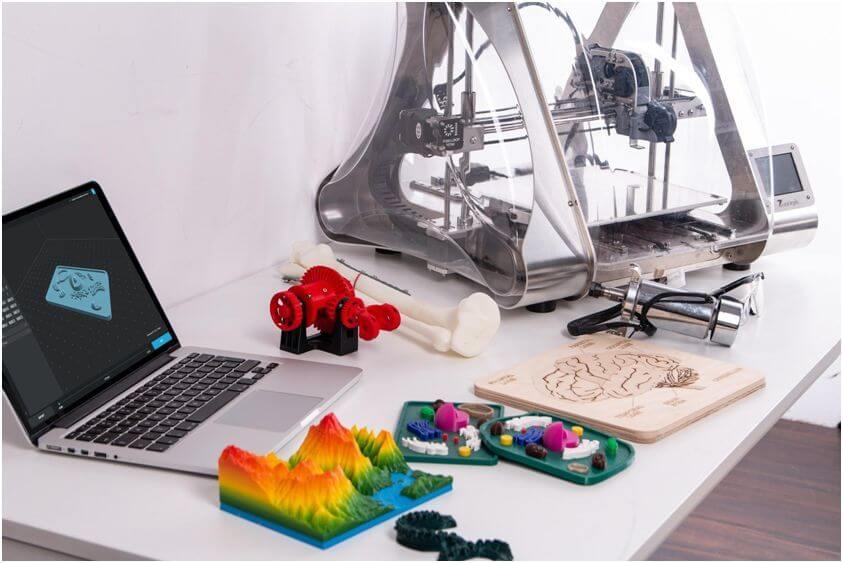
3D Printing: Revolutionizing Education
In recent years, 3D printing has emerged as a groundbreaking technology with the potential to revolutionize various industries. From manufacturing and healthcare to architecture and fashion, the applications of this technology seem endless. But perhaps one of the most exciting areas where 3D printing is making a significant impact is in education.
Traditional educational approaches often rely on textbooks, lectures, and theoretical learning methods. However, 3D printing offers an innovative approach that allows students to transform their ideas into tangible objects. By bringing concepts to life through hands-on experience, this technology engages students in a way that traditional methods cannot match.
One of the main advantages of 3D printing in education is its ability to enhance creativity and critical thinking skills. Students can design and create prototypes for their projects or ideas using computer-aided design (CAD) software. This process encourages them to think critically about the functionality and aesthetics of their designs while also considering real-world constraints. By experimenting with different iterations and refining their designs, students learn how to problem-solve effectively—a valuable skill applicable across various disciplines.
Moreover, 3D printing promotes collaboration among students as they work together on group projects. It allows them to share ideas, exchange feedback, and combine their strengths in order to bring complex designs into reality. This collaborative aspect not only enhances teamwork but also simulates real-world scenarios where professionals from different fields come together for interdisciplinary projects.
Another notable advantage of incorporating 3D printing into education is its ability to improve spatial understanding and visualization skills. With physical models created using this technology, abstract concepts become concrete visual representations that are easier for students to grasp. Whether it’s studying molecular structures in chemistry or exploring historical landmarks in social studies, three-dimensional models provide a more immersive learning experience than traditional diagrams or images.
Furthermore, 3D printing empowers educators by expanding access to resources that were previously limited or costly. Teachers can now create customized teaching aids, such as anatomical models or historical artifacts, to enhance their lessons. This technology also enables students to explore STEAM (Science, Technology, Engineering, Arts, and Mathematics) subjects in a more interactive manner. By creating their own 3D designs and printing them out, students gain a deeper understanding of these disciplines while developing valuable technical skills.
As with any emerging technology, there are challenges that need to be addressed when implementing 3D printing in education. Cost is one such challenge as procuring the necessary equipment and materials may strain limited budgets. Additionally, training teachers on how to effectively integrate this technology into the curriculum is essential for successful implementation.
Despite these challenges, the benefits of 3D printing in education far outweigh the drawbacks. Its ability to foster creativity, critical thinking, collaboration, spatial understanding, and resource accessibility make it an invaluable tool for alternative schooling and education approaches. By harnessing this groundbreaking technology’s potential in classrooms worldwide, we have the opportunity to shape a future generation of innovative thinkers ready to tackle complex problems across various fields.
 Alternative Amie
Leave a comment